.svg)


Healthcare organizations want to use patient texting. However, they find it hard to tell compliant cases from risky ones. Legal teams flag HIPAA violations. Operations worry about TCPA penalties.
The case for patient engagement and lighter staff workloads often gets lost in compliance checklists. This creates a risky gap. Healthcare leaders use texting programs but lack clear rules for compliance and measuring ROI.
This guide offers a framework for text messaging in healthcare. It links compliance needs to clear operational results. You'll learn which use cases are safe, what HIPAA and TCPA actually require, and how to evaluate texting platforms for compliance.
Main Takeaways
- Text messaging cuts patient handling time from 8 minutes down to roughly 30 seconds and drives twice the engagement of phone calls.
- TCPA penalties reach $1,500 per non-compliant message. HIPAA violations range from $141 to $2.1M per violation category.
- HIPAA-compliant texting requires end-to-end encryption and role-based access controls. Audit trails, user authentication, and BAA coverage are also required.
- Care teams can send patient orders via secure text platforms. But only if the orders are properly authenticated in the medical record.
What Text Messaging in Healthcare Covers and Why It Matters
Healthcare texting is the use of any mobile messaging to reach patients or coordinate care teams. This includes:
- Appointment reminders
- Test results delivery
- Payment collection
- Telehealth scheduling
- Internal staff coordination
The business case starts with measurable engagement gains. Patient texting drives twice the engagement of phone calls. Average handling time drops from 8 minutes to roughly 30 seconds. A 2026 JAMA Health Forum trial found that 25% of patients who got post-discharge texts reached out to benefits navigators. Of those who received paper flyers, 0% reached out.
Clinical outcomes support the engagement data. A 2024 JMIR paper found that 78% of trials with SMS-based reminders resulted in improvements in medication adherence.
However, these gains only materialize with compliant implementation. Non-compliant texting creates two types of exposure:
- TCPA penalties can be up to $1,500 per message.
- HIPAA violations run upward of $2.1M per year per violation category.
Healthcare Texting Use Cases by Compliance Risk Level
Knowing which use cases require different levels of protection is important. It helps you deploy safely. This understanding also lets you capture operational benefits.
Low-Risk Use Cases
These use cases work with de-identified messaging through HIPAA-compliant platforms. Risk comes from platform choice, not message content.
- Appointment reminders without clinical details, like "Your appointment is Thursday at 2 p.m."
- General health education, such as wellness tips and vaccination reminders
- Administrative notifications (billing updates, insurance changes, etc.)
- Staff coordination, including shift updates
Medium-Risk Use Cases
These require HIPAA-compliant platforms with proper patient consent. Content should be brief, but some protected health information (PHI) may be needed for effectiveness.
- Test result notifications, such as "Your lab results are ready"
- Medication reminders
- Telehealth scheduling, including appointment confirmations with provider names
High-Risk Use Cases
These demand full HIPAA-compliant platforms, documented consent, and audit trails. They often require integration with EHR systems for proper record-keeping.
- Specific test results, like lab values and diagnostic information
- Treatment instructions (medication dosages, care protocols)
- Patient orders (permitted under CMS guidance with proper documentation)
What HIPAA and TCPA Actually Require
HIPAA and TCPA create overlapping but distinct compliance requirements for healthcare texting. Both carry substantial penalties for violations.
HIPAA Technical Safeguards for PHI
The Security Rule requires five technical protections for any PHI transmission:
- End-to-end encryption
- Role-based access controls
- Audit trails
- User authentication
- Business Associate Agreement (BAA)
TCPA Requirements for Patient Consent
TCPA governs all text messaging to patients, regardless of PHI content. Key requirements include:
- Explicit written consent before first message
- Honor immediate opt-out keywords like "STOP," "QUIT," "END" immediately
- Central opt-out registry across all departments and campaigns
- Clear sender identification for every message
CMS Policy Change for Patient Orders
CMS memorandum QSO-24-05, issued February 8, 2024, permits care teams to text patient orders under three conditions:
- Orders placed through HIPAA-compliant secure texting platform
- Each order entered into medical record with authentication
- EHR records maintained as accurate and complete
Updating your policy to allow texting patient orders can boost efficiency and ensure compliance.
Secure Text Messaging for Healthcare Checklist
Choosing the right platform is key. It can make your texting program successful or lead to compliance problems. Use this checklist to evaluate vendors:
- Signed BAA provided: Vendor assumes liability for PHI handling
- End-to-end encryption: Messages protected in transit and at rest
- Role-based access controls: Granular user permissions by job function
- Complete audit trails: Detailed logs accessible for review
- Authentication controls: Multi-factor authentication required
- Message retention controls: Administrator-managed policies
- EHR integration depth: Easy connection with existing medical records
- Patient consent management: Built-in TCPA consent tools
- Automated opt-out handling: Real-time processing of patient requests
- Multi-department support: Compliance across departments
- API capabilities: Integration with other healthcare systems
- Message delivery analytics: Track delivery, read, and response rates
- Patient engagement metrics: Monitor appointment confirmations and no-show reductions
- Staff efficiency tracking: Measure time saved per message type
- Revenue attribution: Connect text campaigns to appointments and procedures
Healthcare Messaging Best Practices for Compliance and Impact
A compliant platform alone doesn't ensure program success. Implementation requires operational controls that connect compliance to measurable business outcomes.
1. Obtain Explicit Patient Consent Before Messaging
Secure explicit written consent before sending any patient texts. TCPA compliance demands it. Design consent forms that clearly explain message types, frequency, and opt-out procedures. Maintain central opt-out registries accessible to all departments in real time.
2. Limit Messaging to Approved Platforms Only
Ban personal devices and consumer SMS apps through policy. Route all patient messaging through approved platforms only. This prevents staff from using non-compliant channels that create organizational liability.
3. Strip Clinical Details While Maintaining Effectiveness
Remove clinical details from messages wherever possible while maintaining effectiveness. For example, "Your appointment is confirmed for Thursday at 2 p.m.". This accomplishes the goal without exposing diagnosis or provider information.
4. Track Metrics That Prove Business Impact
Monitor appointment confirmation rates, no-show reductions, and staff time saved per message type. Calculate cost per engagement compared to phone calls and other outreach methods. Focus on metrics that prove ROI, not just message delivery.
5. Measure Revenue Attribution From Text-Started Journeys
Connect text campaigns to downstream revenue outcomes. Text-started patient journeys often convert to phone calls. However, only 26% of hospital contact centers measure financial ROI from those calls, according to the HCCT.
Organizations using HIPAA-compliant call tracking with BAA support can close this attribution gap. They connect text-started digital journeys to phone conversations and appointment outcomes.
6. Conduct Regular Compliance Audits
Audit messaging logs, access rights, and BAA records regularly. Disable lock-screen message previews on staff devices to prevent unauthorized viewing. Keep detailed records of how you set up and manage encryption, authentication, and retention controls.
Put Your Healthcare Texting Strategy Into Action with Invoca
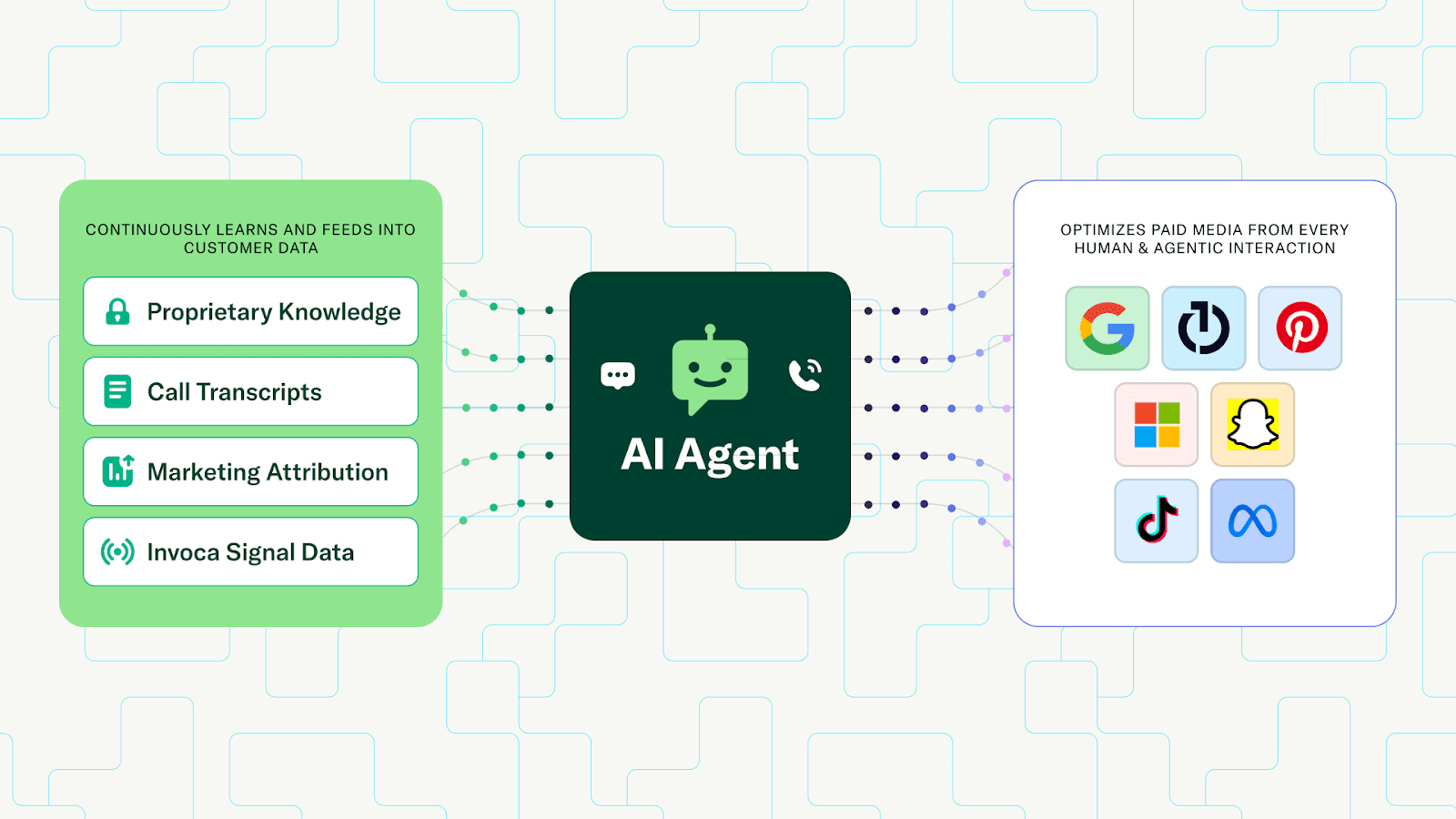
When calls go unanswered and patient journeys stall, Invoca's AI Messaging Agent for SMS can step in to help. It can instantly engage patients to answer their burning questions and schedule appointments. Since the AI is trained on your best agents' conversations, you can rest assured it will be on-brand and compliant from day one.
Our solution also connects SMS to appointment outcomes, so healthcare marketers can track their impact on patient acquisition.
See for yourself how Invoca supports compliance and boosts patient acquisition. Book a demo today.

FAQs about Text Messaging in Healthcare
Can I use regular SMS for appointment reminders if I don't include patient names or diagnosis?
No, compliance is platform-level, not message-level. Even de-identified messages sent via standard SMS lack the technical safeguards HIPAA requires. These are encryption, access controls, audit trails, user authentication, and BAA coverage. The platform itself must meet Security Rule requirements regardless of message content.
How do I know if a texting platform is actually HIPAA-compliant or just encrypted?
Look for five specific capabilities:
- Signed BAA
- Role-based access controls
- Complete audit logs
- Documented encryption and authentication controls
- Administrator-managed retention policies
Encryption alone is a security feature, not proof of HIPAA compliance. Request documentation of all technical safeguards before signing contracts.
What happens if a patient texts "STOP" to one department but we have multiple programs?
Honor opt-out keywords immediately for that specific sender or campaign. The delayed "revoke-all" rule will eventually require opt-outs to apply organization-wide. Maintain central opt-out registries accessible to all departments in real time. Clearly communicate opt-out scope to patients.
How do I measure ROI from text-initiated patient journeys that convert to phone calls?
Connect your texting platform's message logs to downstream actions. This includes:
- Appointment bookings in your EHR
- Website form submissions
- Inbound calls tagged with campaign identifiers
Use HIPAA-compliant call tracking with BAA support to tie phone calls to originating text campaigns. This reveals which messaging drives actual appointment revenue.
Do I need to update policies after the February 2024 CMS memorandum on texting orders?
Yes, if your organization currently prohibits texting patient orders entirely. CMS now permits texting orders via HIPAA-compliant secure texting platforms under three conditions:
- Platform compliance
- Medical record entry with authentication
- Accurate record-keeping
Update policies to reflect these new options while maintaining proper safeguards.
.svg)
.svg)