

.svg)


A lead can be inches from turning into an appointment when something trivial causes the patient's journey to stall. A form that feels too long. A request for sensitive information they weren’t expecting. A question they can’t get answered. A call to a practice that puts them on hold a little too long. You can almost picture the moment when friction becomes too great, and the patient journey grinds to a halt.
Patients want to move fast, and the amount of resistance that shifts them from “I’m ready to make an appointment now” to “This isn’t working, I’ll try another provider” has been reduced to a pebble in the path. And it’s becoming the most expensive gap in your funnel.
As digital journeys become more fragmented and AI reshapes how people research and decide on care, healthcare marketers are under increasing pressure to keep every lead progressing, because competitors are ready to snag them the moment you don’t.
Why the Patient Journey Stalls
Most healthcare consumers who begin the patient journey intend to complete it with the provider they started with. Comparing multiple providers is not usually part of their battle plan. They just want to get it over and done with and would rather not bail halfway through and start over. More often than not, they stall because the process slows down right when they’re trying to speed up.
Friction is one of the biggest culprits. A patient is ready to make an online appointment only to hit an unexpected roadblock, which could be anything from identifying symptoms, uploading a document, or completing a health questionnaire. Anything that feels like work becomes a reason to do it later. Or not at all.
Then there’s form fatigue, a growing issue as patients expect immediate answers instead of long, multi-step input journeys. A single confusing question or an unclear step in the form can instantly derail momentum. It’s all about instant gratification, and they just don’t want to wait around for you to get back to them.
And of course, unanswered questions remain one of the most common deal-breakers. When a potential patient can’t find what they need on your website, and they reach for the phone, they’re looking for confidence and clarity. But calls go unanswered every day — after hours, during peak surges, or when staffing is stretched thin. In fact, our data shows that over 40% of calls to healthcare providers are never answered by a person. The intent doesn’t disappear; it simply goes somewhere else.
Across channels and industries, the pattern is the same: stalling isn’t about lack of interest. It’s about a lack of speed. And in these moments, it’s not just the stalled lead you lose, it’s the ROI of the campaign that you spent your budget on to drive them to you.
But here’s the kicker: your goal isn’t just reviving stalled leads. It’s preventing them from stalling and from turning to your competitors in the first place.
How Delayed Follow-Up Drives Away Patients and Revenue
You know speed matters, but today, the cost of delay is steeper than ever. Research shows that 78% of customers buy from the first brand to respond — and after just one hour, your odds of qualifying a lead drop by 80%.
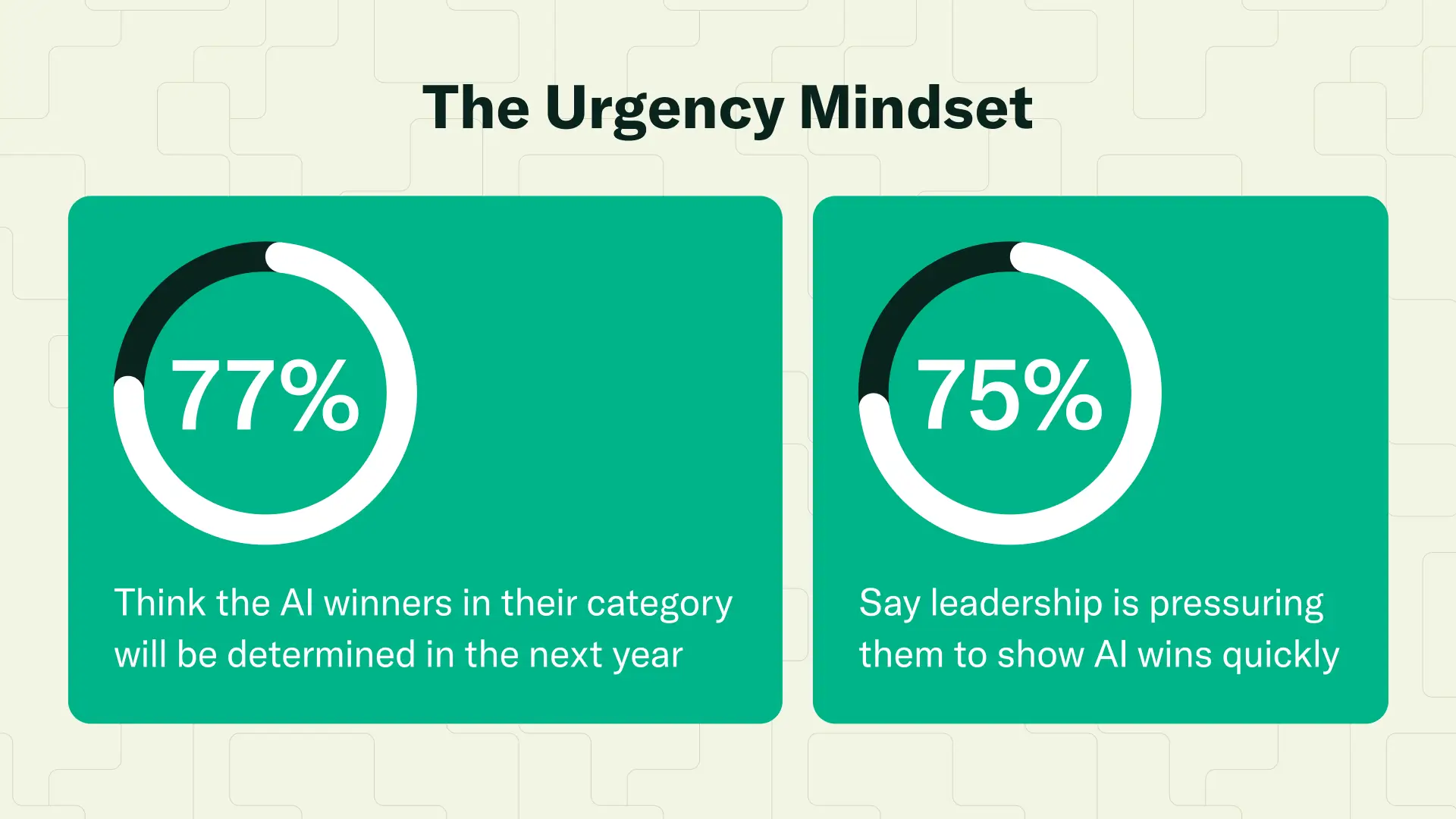
This urgency is playing out across the entire industry. According to Invoca’s new Healthcare Marketing AI Impact Report, over 75% of marketers believe the AI winners in their category will be determined in the next year. That kind of pressure reshapes expectations for your team, your tools, and, most importantly, your patients.
If your organization doesn’t use AI to keep buyers engaged, the competition will. And when you’re paying for every click, every call, and every form fill, you can’t afford to let high-intent leads cool off for even a few minutes.
But here’s the good news: the same shift in patient behavior that raises expectations also opens the door for a new kind of engagement — one built around speed, convenience, and continuous forward motion.
Keep Leads Engaged Instantly via AI SMS
Imagine a patient calls after seeing a search ad, only to find the office is closed. In the past, that was the end of the story. Today, it’s the moment an AI-powered SMS conversation can begin.
Invoca’s AI Messaging Agent transforms these moments of friction into forward movement. If a call goes unanswered, it can instantly text the lead, letting them continue the conversation without waiting. If a patient abandons an appointment form, the AI agent can meet them with a text right where the frustration occurred — answering the question that stopped them and guiding them through the next step.
What makes this powerful is that the agent doesn’t sound like a bot. It’s pre-trained on your call transcripts, so it already understands your brand voice, your services, buyer objections, and your best-performing agent behaviors. It retrieves context from the patient’s digital journey and past interactions, responding with accuracy and empathy rather than canned replies.
The result is a conversation that feels like talking to your best rep — available 24/7, responding instantly, and always ready to move the patient forward. It doesn’t just recover stalled leads; it stops stalls before they start.
Agentic AI Takes Automated Action to Convert Leads
What truly sets Invoca’s AI Messaging Agent apart is its ability to act, not just answer.
Picture a patient texting because an online scheduler didn’t display the availability they wanted. Instead of directing them to a web page, the agent books the appointment directly, with no delay or handoff. If they prefer a callback, the agent handles that as well, finding a time that works and routing it to the correct team with full context. And when leads hesitate or drop off mid-conversation, the agent can reach back out at the right moment, reviving interest before it fades.
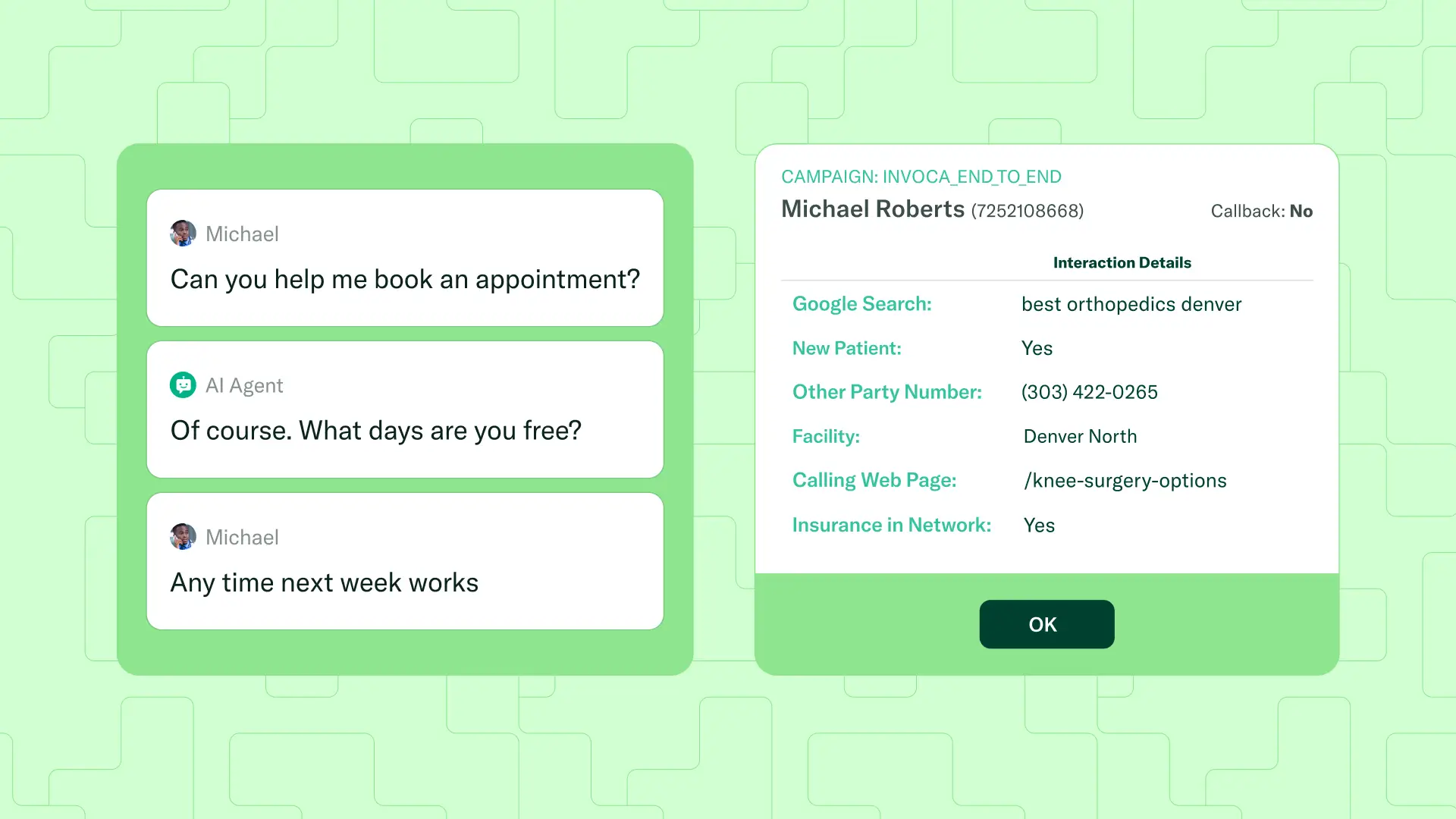
It continuously learns from your calls and outcomes, refining how it engages, qualifies, and progresses leads over time. These aren’t simple interactions — they’re conversion-driving tasks your team used to manage manually, though often slowly and inconsistently.
By automating these steps, the agent eliminates silent revenue leaks from missed calls, delayed responses, and manual follow-ups that you never have enough staff to complete. It performs with the consistency of your best agents, without adding headcount or relying on costly BPO coverage.
From the patient’s perspective, it feels like you are always ready to help. In your revenue reports, it looks like the funnel finally stopped leaking.
Measuring Lift with Closed-Loop Attribution
Re-engagement only matters if you can prove that it works, and most teams can’t. One of the top roadblocks to AI adoption is the difficulty of proving ROI to leadership, according to recent surveys. Healthcare marketers need more than anecdotes. They need attribution.
Invoca solves this by tying every SMS conversation, booked appointment, callback, and conversion back to the original marketing source. If an ad click led to a form drop-off, which led to an SMS conversation, which led to an appointment that converted, you see the complete chain. Every step is captured in closed-loop reporting.
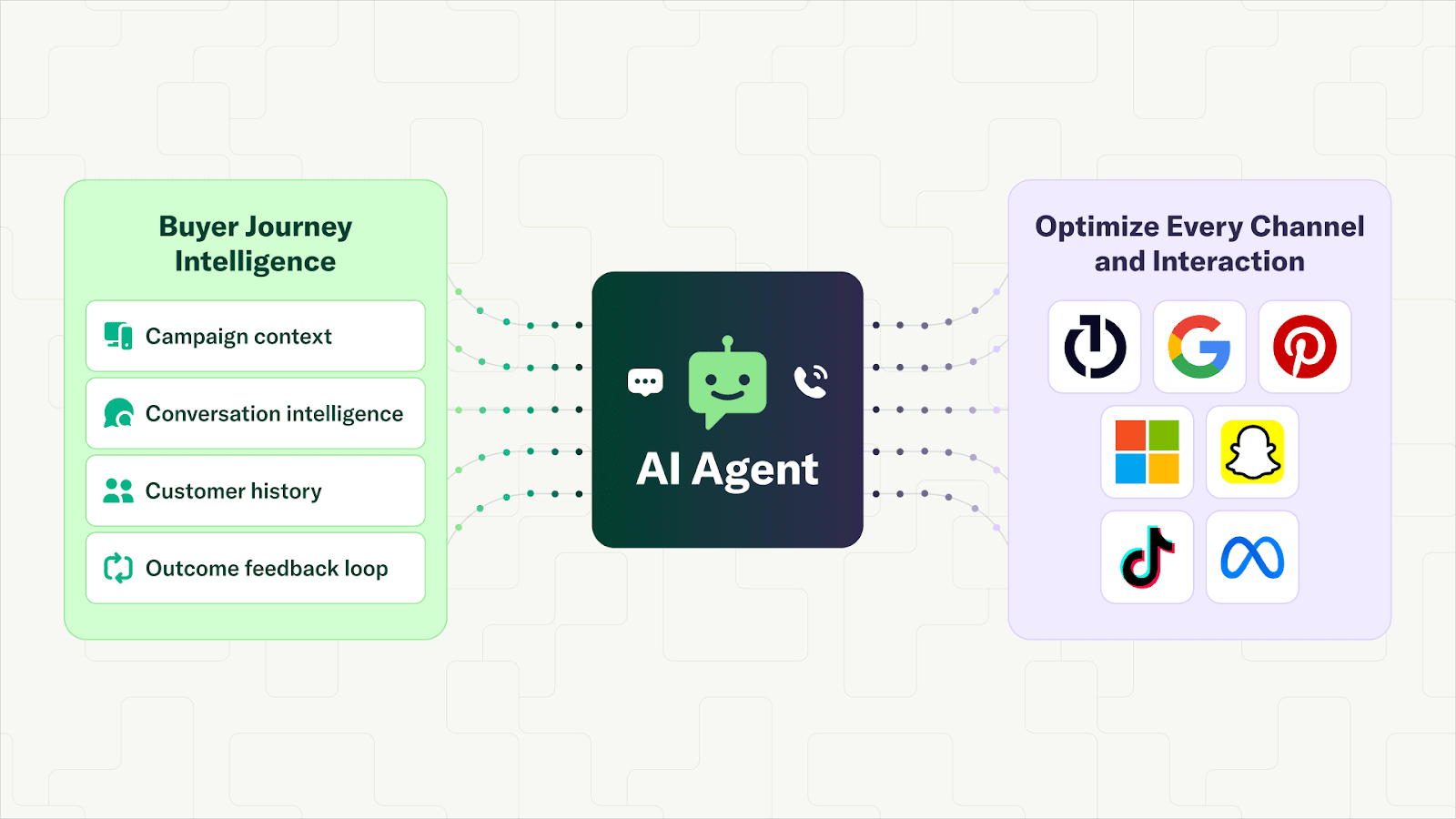
This is the connective tissue marketers have been missing. You’re no longer guessing which campaigns drive real revenue. You’re no longer blind to what happens between “click” and “new patient.” Instead, you can show exactly how SMS re-engagement protected ROAS, rescued stalled leads, and contributed to bottom-line growth.
In an environment where budgets are scrutinized, and AI initiatives are expected to show impact quickly, this level of visibility isn’t just helpful — it’s essential.
Prevent and Revive Stalled Leads to Drive Revenue Growth
Lead stalling isn’t a minor inconvenience. It’s one of the largest and most preventable sources of revenue leakage in modern healthcare marketing. As AI accelerates how consumers buy, the brands that engage first and keep buyers moving forward will win.
Invoca’s AI Messaging Agent revives stalled leads in real time, prevents new stalls before they happen, and automates the actions that drive revenue — all while giving you the attribution proof you need to defend your budget and optimize your strategy.
Want to see how to stop leaving all that revenue on the table? Watch this on-demand webinar.
.svg)
.svg)