

.svg)


The flurry of AI experimentation at B2C brands over the last two years has been an exciting but fairly forgiving time. Teams could run pilots, test tools, and proudly say, “We’re exploring AI,” without being asked many tough follow-up questions. The expected result was that either the experiments would fail or succeed. Well, those tough questions are being asked now, and they often sound a lot like “What does this AI do for revenue?” And if the answer does not include something about growth, you can expect to get swiftly shut down.
Across B2C marketing organizations, the AI “pilot era” is coming to a close. It’s not because leaders are suddenly less optimistic about AI, but because optimism alone doesn’t help them hit growth targets. The next 12 months will decide who turns AI into a competitive advantage and who gets stuck explaining why their experiments never left the lab. And the difference won’t come down to the shiniest models or tools. It will come down to data — and whether it can be connected to revenue growth.
The Optimism/Urgency Paradox in B2C Marketing
If you talk to marketing leaders today, you’ll hear two things at once. Confidence and stress. Excitement and pressure. Belief in AI’s potential, paired with a growing sense that time is running out.
On one hand, optimism is overwhelming. According to our recent B2C Marketing AI Impact Report, 92% of marketers say they’re optimistic about AI’s impact on marketing, and many view it as the biggest opportunity of their careers. Marketers believe that AI is making their work more strategic, opening up new possibilities, and reshaping how they engage with consumers across the entire buying journey.
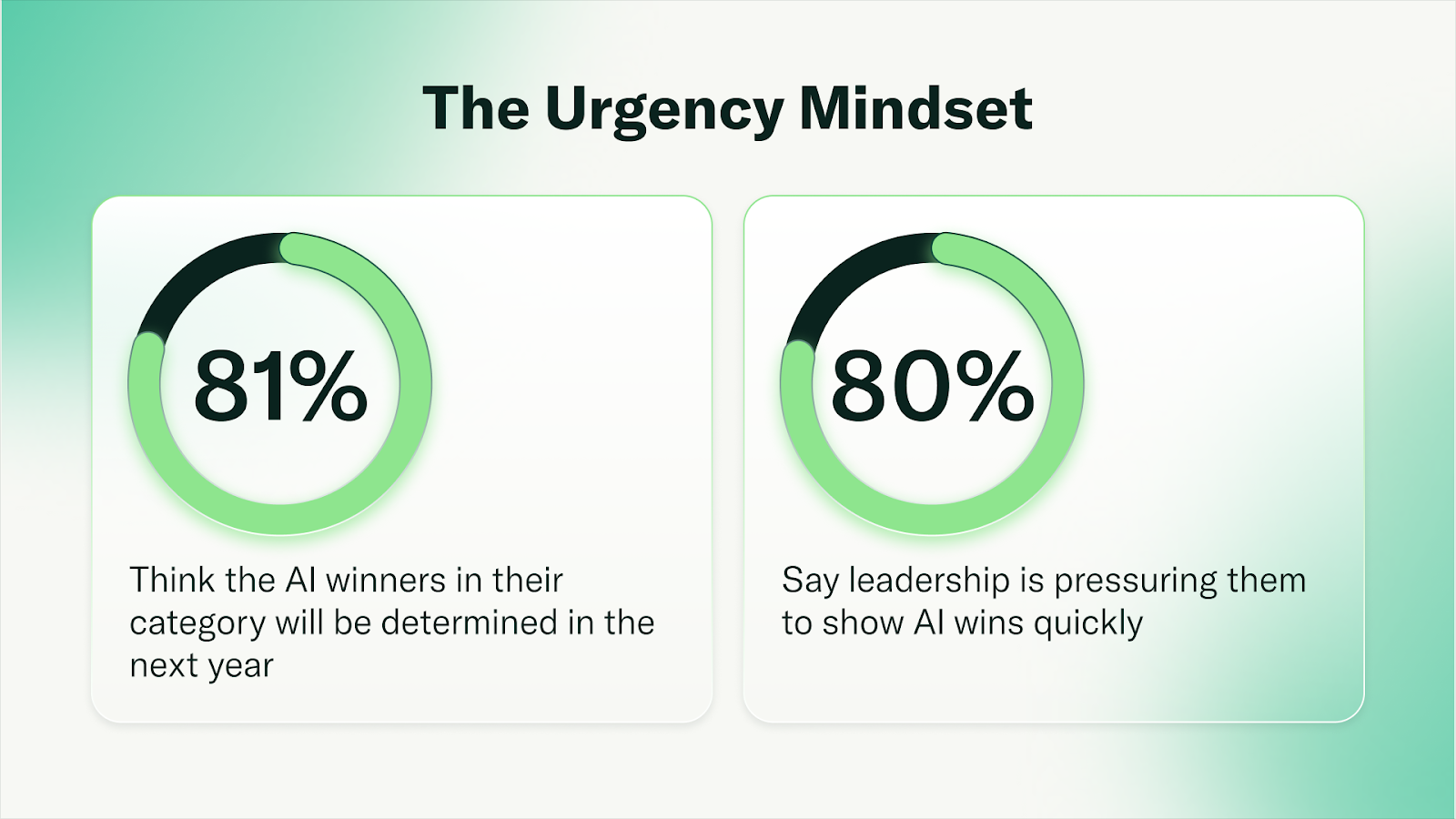
On the other hand, the pressure is very real, as over 80% say leadership is pushing them to demonstrate AI wins quickly, not someday, but now. Nearly three-quarters (74%) also report feeling stressed trying to keep up with the pace of AI innovation.
This is the paradox defining modern B2C marketing: leaders believe AI is inevitable and transformational, yet they’re anxious because belief without proof of ROI doesn’t cut it in a board meeting. Optimism may have greenlit experimentation, but the current state of urgency demands measurable outcomes.
Why AI Experiments Are No Longer Enough
Experiments are useful when the goal is learning. They’re far less useful when the goal is growth.
Many early AI initiatives were siloed by design — pilots in content, media, chat, or analytics, each optimizing for local metrics. Clicks here. Engagement there. Productivity gains somewhere else. What they often didn’t produce was a clean line to revenue.
This era of siloed experimentation is over. Leadership expectations are shifting from curiosity to accountability. The executive question is no longer “Where are we experimenting with AI?” It’s “Where is AI driving revenue, profitably?”
That shift matters because AI isn’t cheap. Investments are material. Stakes are high. And leadership teams are increasingly clear that “learning” isn’t a sufficient return. AI must move buyers forward, close gaps in the funnel, and deliver tangible financial results, or it risks being deprioritized just as quickly as it was adopted.
The Danger of Overconfidence in Your AI Maturity
Here’s where things get risky.
An astonishing 82% of marketers believe their organization is adopting AI at a faster rate than its competitors. Statistically speaking, that’s impossible. Someone has to be behind.
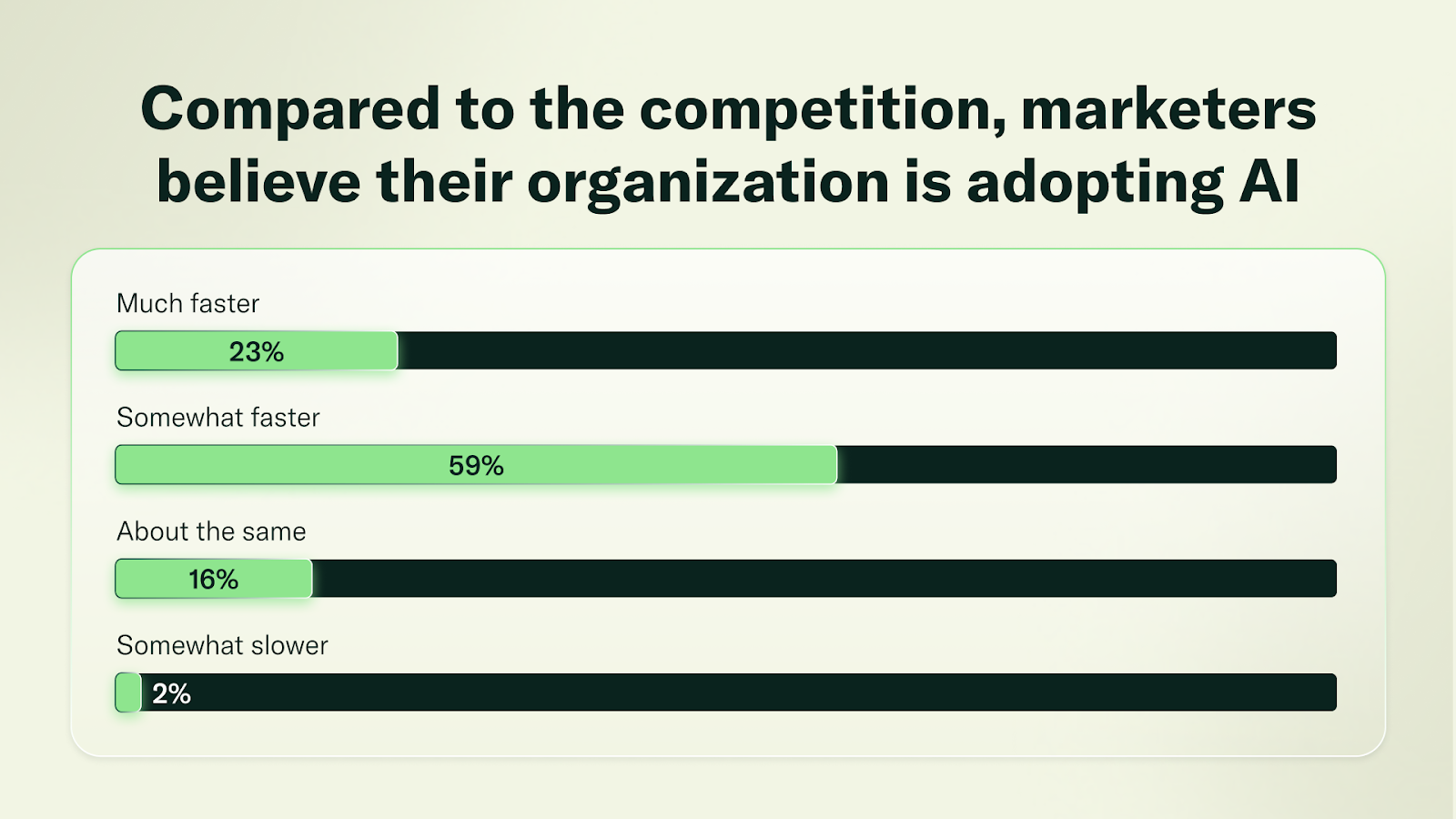
At the same time, only 23% describe their organization as having “leading” AI expertise. Most place themselves in the “advanced” or “intermediate” camps. In other words, confidence in pace far outstrips confidence in mastery.
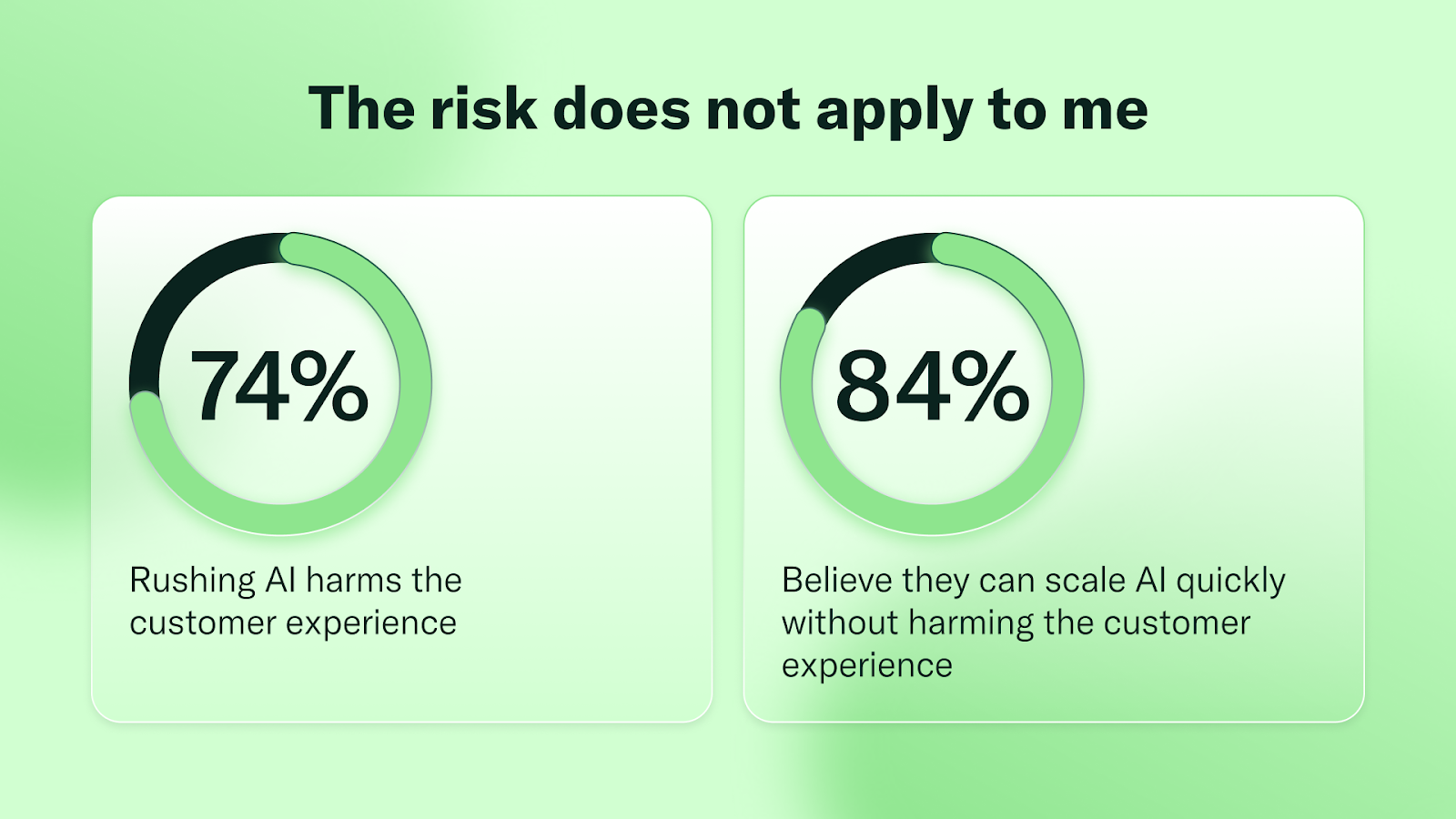
This gap creates a dangerous dynamic. Teams often feel pressure to move quickly, assume they’re already ahead, and deploy AI aggressively — sometimes without the necessary data foundations or guardrails to protect customer experience and brand trust. It explains why many leaders acknowledge that rushing AI can hurt CX, yet still believe it won’t happen to them.
Overconfidence doesn’t just increase risk. It hides blind spots, especially around data readiness and measurement.
The Data Foundations That Differentiate Winners
If AI success were just about prompts, everyone would win. But prompts without context are guesses.
The executive prompt is simple — grow revenue profitably. The context is hard. It requires a connected, end-to-end view of the buyer journey that spans digital interactions, conversations, and confirmed outcomes.
Winning organizations don’t treat these data sources separately. They combine digital journey data, conversation data, and transaction data so AI understands not just what a buyer clicked, but what they asked, what they hesitated over, and what ultimately drove them to convert.
This matters because speed without connection creates a new leak in the funnel: data latency. According to the AI Impact Report, only 2% of marketers can act on insights from unstructured data within one day, while 75% take between two and seven days to use that data to implement changes. By the time AI insights are activated, the opportunity has often passed.
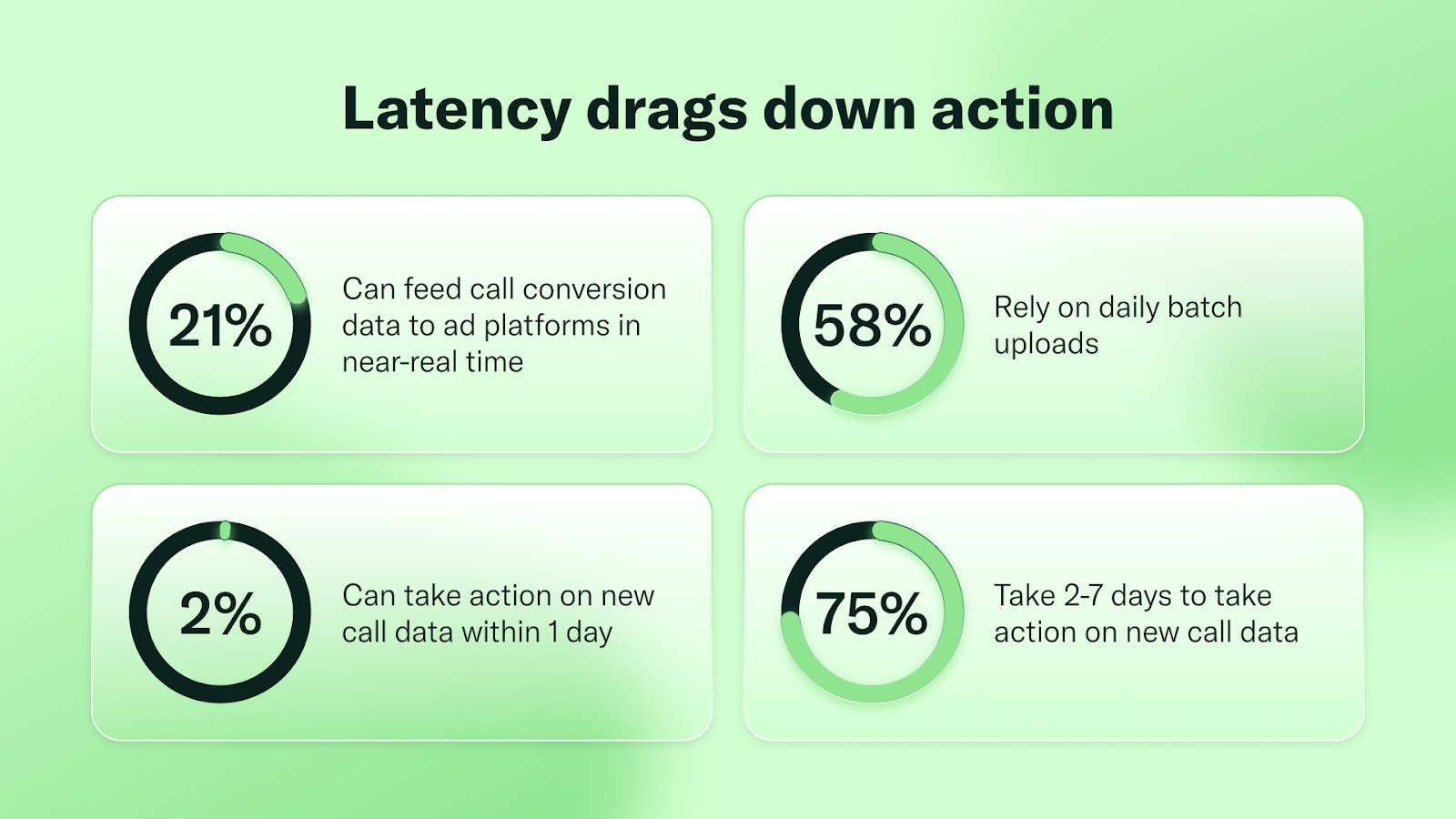
Better data doesn’t just make AI smarter. It makes it timely. In competitive markets, timing is the difference between successful optimization and lost revenue.
The New Mandate is Real Outcomes Over Novelty
Boards are no longer interested in how many AI tools you’ve tested. They care about growth, efficiency, and proof.
The next year will be a pivotal moment for B2C brands on the leaderboard. Over 80% of marketers believe AI winners in their category will be determined in the next 12 months. That’s not a long runway. And it leaves little room for disconnected experiments that can’t be tied back to outcomes.
The brands that pull ahead won’t be the ones chasing novelty. They’ll be the ones operationalizing the principle that better data means better AI — connecting signals across the full buyer journey and using AI not just to generate insight, but to drive action.
The pilot era was about possibility. The next era is about performance. And this time, AI won’t be judged by how impressive it looks, but by what it delivers.
Get The B2C Marketing AI Impact Report to learn more.
.svg)
.svg)