.svg)


Coaches have to watch for what they don’t want to see and listen for what they don’t want to hear.
-John Madden, Hall of Fame NFL coach, legendary broadcaster, and video game icon
Turning average performers into top performers isn’t just about showing them what “good” looks like—it’s about helping them avoid making the wrong moves. And whether you’re coaching teams on the playing field or in the contact center, you need effective tools to support clear goals, actionable feedback, and continuous learning.
In this post, we’ll cover nine call center coaching best practices to help your teams improve their performance confidently and consistently. We’ll also highlight how Invoca can play a pivotal role in this process. Invoca uses artificial intelligence (AI) to deliver data-driven micro-coaching through automated, unbiased call scoring, precise conversation analytics, and performance insights that guide call center agents toward delivering better customer experiences—one interaction at a time.
Main Takeaways
- Coaching strengthens agent performance, motivation, and retention.
- Effective coaching combines feedback, goal setting, training, and empowerment.
- Data-driven insights and call analytics make coaching measurable and scalable.
- Invoca’s AI-powered tools deliver actionable, timely performance insights to help optimize every coaching session.
The Importance of Call Center Coaching
Call center coaching best practices help create consistency—a critical factor if your goals are to improve service quality, reduce turnover and burnout, and increase agent confidence.
Regular, focused coaching keeps agents aligned with business objectives and better equipped to meet or exceed customer expectations. Meaningful, ongoing coaching also helps ease agents’ mental stress by providing a source of support and a clear path to improvement.
Did You Know?
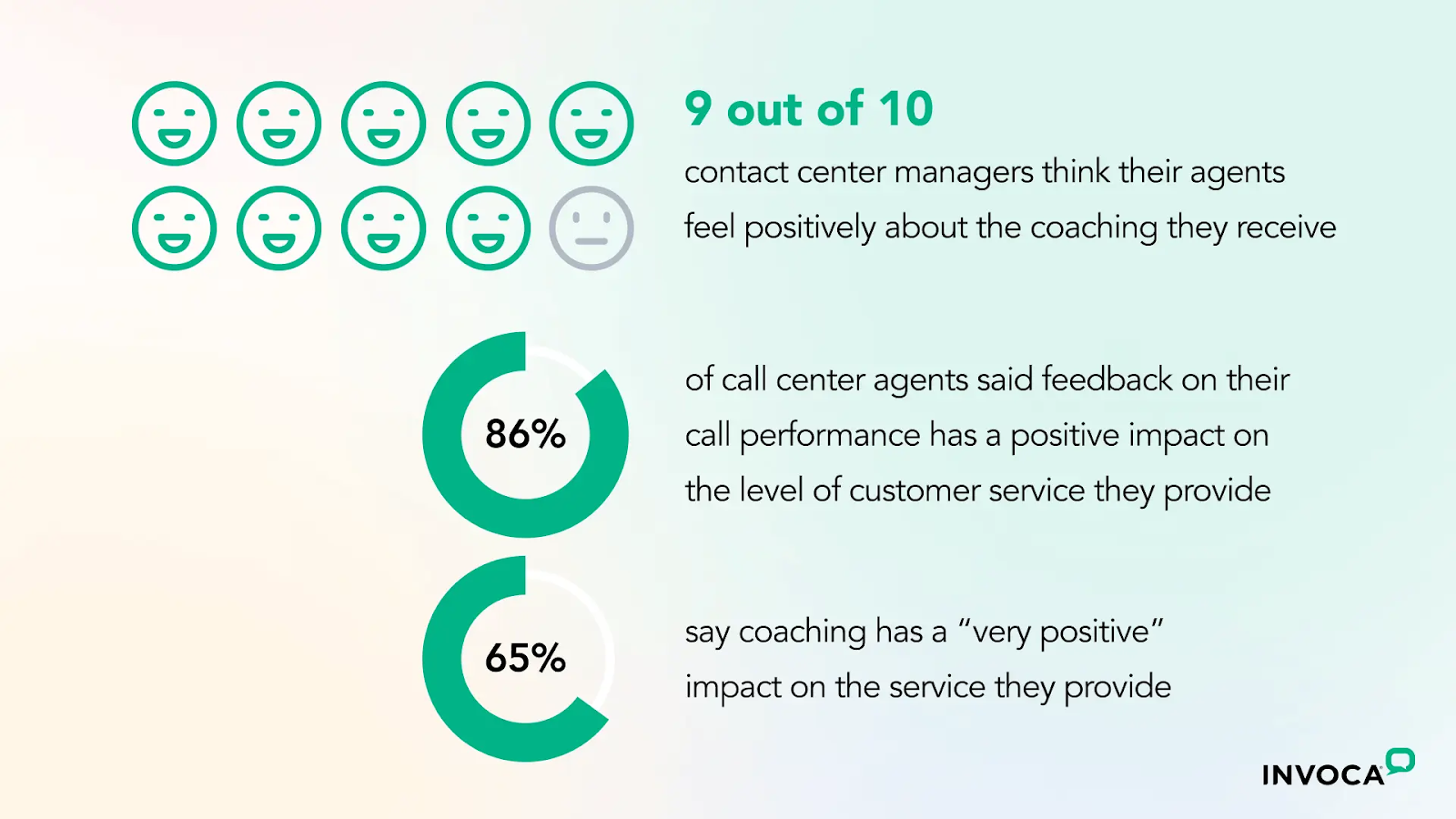
According to our State of the Contact Center report, a whopping 86% of the contact center agents we surveyed said feedback on their call performance has a positive impact on the level of service they provide. On top of that, 65% doubled down, saying coaching has a very positive impact on the service they provide. So, you can rest assured that all the hard work you put into coaching your team is paying off.
5 Effective Coaching Techniques for Call Centers
Here are five call center coaching techniques to consider if you want to elevate team performance in the contact center:
1. Real-Time Call Coaching
Also known as “coaching in the moment,” real-time coaching happens when supervisors provide live feedback during active calls—monitoring conversations as they happen and guiding agents with on-screen prompts or side-channel communication.
Used thoughtfully, this call center coaching technique can help agents navigate demanding customers, complex issues, or critical moments in conversations. When overused, however, it can feel intrusive or distracting. It can also create more stress for agents if not executed well.
2. Post-Call Coaching
Post-call coaching occurs after an agent-customer interaction has ended, when managers have time to review call outcomes, recordings, or transcripts in detail. This call center coaching technique allows supervisors to analyze tone, phrasing, problem-solving steps, and customer sentiment so they can deliver targeted, actionable feedback to agents.
The challenge? Reviewing recordings and transcripts manually is time-consuming and often falls to the bottom of a manager’s priority list, especially when they’re juggling staffing, performance issues, or escalations.
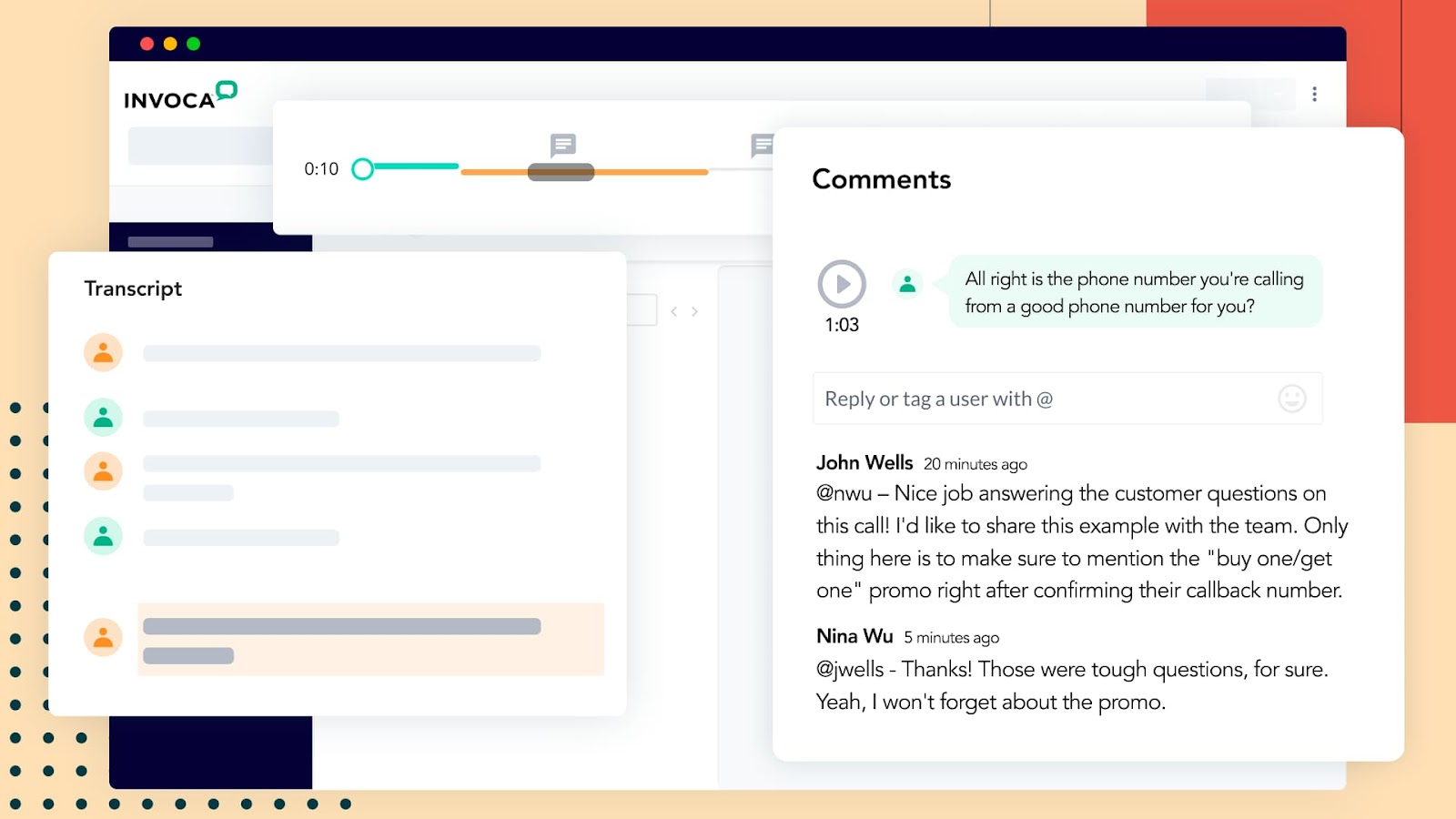
AI-powered call analysis solves this issue. Tools like Invoca can review recordings and transcripts at scale, delivering insights far faster and with greater accuracy than manual reviews. With features like AI-driven call scoring and automated conversation analytics, Invoca makes post-call coaching more objective, efficient, and easier to operationalize across teams.
3. One-on-One Coaching
With one-on-one coaching, supervisors sit down with agents to review specific performance trends, guided by actual call outcomes and scoring rather than guesswork. Although preparing for these sessions can be time-consuming, they pay off by building accountability, accelerating skill development, and supporting long-term career growth. As a result, this is one of the most effective call center coaching techniques for turning agents into consistent top performers.
AI can make this process far more efficient and accurate by providing a holistic view of performance instead of relying on a few random call samples. Invoca’s agent performance dashboards give managers a clear, data-driven picture of trends across calls, including behavior patterns, sentiment shifts, and moments that impact customer experience. This makes it easier for them to personalize one-on-one call coaching in a meaningful way.
4. Group Call Coaching
Sometimes, performance data reveals shared challenges—like a team struggling with the same objection or missing the same key question on calls. That’s when group call coaching becomes especially valuable. Group sessions let managers address common issues once, rather than agent by agent, making them an efficient approach for coaching at scale and building collaboration and knowledge sharing.
Invoca’s AI-driven conversation analytics can help strengthen group coaching by flagging patterns across multiple calls and surfacing themes for team sessions. For example, if agents aren’t responding appropriately to a recurring customer objection, Invoca can highlight the trend so managers can design a focused group coaching session to address the gap.
5. Peer-to-Peer Coaching
Peer-to-peer coaching involves collaborative learning between agents through role-playing or reviewing each other’s calls. It’s a valuable coaching technique for training new agents because it gives them the opportunity to learn from seasoned colleagues who aren’t their supervisor.
Managers can guide peer-to-peer coaching by providing structured modules based on trends detected through AI analysis of calls. Mentors can use these modules to coach newer agents on specific skills or scenarios. Agents can also review these modules independently at their own pace or during quieter moments on the job. This makes peer-to-peer coaching a powerful complement to more formal call center coaching best practices.
9 Best Practices for Effective Call Center Coaching
Choosing the right call center coaching approach is only the first step. You also need to ensure your efforts run smoothly and deliver real impact. You’ll increase your chances of success when you use the right tools and apply the following call center coaching best practices.
1. Provide Specific and Balanced Feedback
In a recent workplace survey, 37% of employees cited recognition as the best way to support them. So, when you provide feedback to employees, spend time recognizing their strengths and celebrate what they’re doing well. This will set a positive tone for meetings and help prevent agents from feeling defensive.
Once you’ve laid out your agents’ best qualities and strengths, you can move into constructive criticism. Be sure to back it up with concrete data and clear examples so it’s easier to digest and more actionable. When you offer your critique, make a point of highlighting how agents can overcome their weaknesses and provide specific next steps. That way, they’ll know exactly what’s expected of them and how to get there.
2. Use Immediate Feedback and Call Recordings
Immediate feedback delivered right after a call helps reinforce positive habits because the details are still fresh in the agent’s mind. If you’re manually monitoring a call, make sure to deliver that feedback as soon as the interaction ends so the agent can clearly connect your guidance to what just happened.
Of course, it’s impossible for managers to monitor every second of every call. Post-call analysis of recordings and transcripts generated by AI tools like Invoca makes it easier to deliver timely feedback across the call center, and not just on the one call you happened to hear live.
3. Set and Track SMART Goals
It’s good practice to define and track SMART goals (Specific, Measurable, Achievable, Relevant, Time-bound) and link them to crucial call center metrics like the first call resolution (FCR) rate or Customer Satisfaction Score (CSAT).
Be both definitive and collaborative when setting SMART goals. A team objective of increasing CSAT by 5 points in the coming month is more motivating—and more actionable—than simply asking everyone to “raise CSAT.” At the individual level, create tailored goals for each agent, get their input, and align targets to their specific strengths and development needs.
It’s equally important to track SMART goals accurately. Invoca’s AI-driven analytics make progress visible and easy to understand with automated goal tracking, giving managers clear, reliable data to guide ongoing call center coaching conversations.
4. Build a Continuous Learning Program
Agents are always learning on the job, so coaching should be continuous, too. Use insights from conversation analytics to develop a structured training program that blends live coaching, microlearning, and peer-to-peer sessions. Offering diverse training formats supports different learning styles, paces, and skill levels across your team.
You can foster an active and positive learning environment by encouraging peer collaboration, scheduling regular refresher sessions, and creating a culture of open communication, especially around the challenges agents encounter on calls. A continuous learning mindset strengthens every part of your call center coaching program and helps agents grow skills with confidence.
5. Foster Collaboration and Peer Learning
Your coaching culture should encourage collaboration and peer-to-peer learning to build a “we’re all in this together” mindset among agents. Peer-to-peer coaching builds trust and accelerates skill development. And newer agents can ramp up faster by learning from experienced teammates.
Coach your more seasoned agents to focus on common challenges—such as objection handling, tone, or empathy—when working with newer colleagues. Tools like Invoca can help by quickly identifying key trends across calls and surfacing real-world examples that coaches or mentors can use during training sessions. This reinforces peer learning and strengthens your overall call center coaching approach.
6. Create a Positive Coaching Culture
Opening the door for agents to share feedback—positive or negative—helps establish a supportive, collaborative coaching culture. When feedback is framed as guidance rather than criticism, it encourages transparency and fairness and promotes better performance.
You can reinforce this positive environment by using AI tools like Invoca to provide objective call scoring across 100% of calls. This removes the pressure on managers who may be perceived as “playing favorites” when evaluating only a small sample of interactions.
With consistent, unbiased scoring, agents trust the process, and managers can focus on coaching rather than defending subjective evaluations.
7. Use AI and Analytics
AI tools can be some of the best allies a manager has when developing a strong coaching routine. AI streamlines the entire process by uncovering patterns in agent behavior or talk tracks that manual reviews might miss—saving time while improving accuracy.
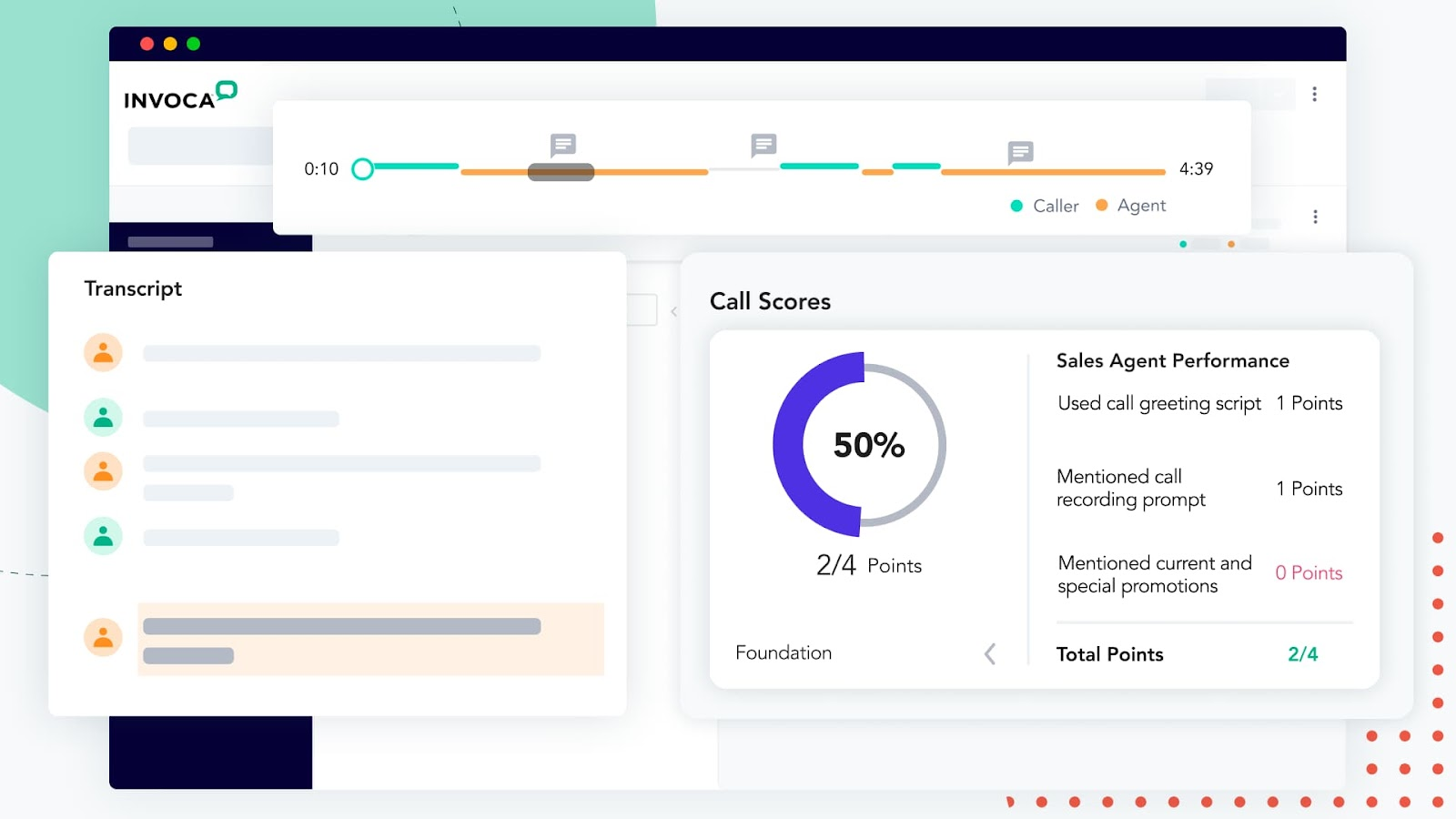
Deep insights such as sentiment analysis, keyword detection, call scoring, and quality management can be generated automatically, pinpointing clear “coaching moments” for managers. Conversation analytics platforms like Invoca handle much of this work behind the scenes, making it easier for leaders to coach more efficiently and at scale.
8. Create and Maintain a Knowledge Base
Don’t let your good coaching tools and scripts go to waste. Consider setting up a searchable knowledge database that contains best practices, tips, and top-performing scripts and call examples, and making it available to the entire workforce. Agents can use it as a self-coaching resource they can use at their own pace and refer to when they need it.
You can use tagging, keyword search, and call categorization tools in Invoca to help populate and update the knowledge base with new and relevant examples.
9. Request and Act on Manager Feedback
As a manager, you have enormous influence over your agents’ job satisfaction. According to a Gallup poll, 75% of the reasons people quit come down to their managers. So, if you’re not monitoring your own performance by seeking feedback from your agents, you might unknowingly be driving them away, increasing churn, causing call center stress syndrome, and leaving your contact center exposed.
Want to improve agents’ job satisfaction? Request feedback regularly. This will give your team members a voice in your management style and help ensure you cater to their needs. Here are some questions you might ask to begin the dialogue:
- What management style works best for you?
- What’s the best way to communicate with you?
- What’s the best process for you to learn a new skill?
- How do you like to receive feedback?
- Am I doing a good job supporting you?
- Are there roadblocks in your current projects? How can I help remove them?
- What are some things we could be doing better as a team/company?
- Do you have all the tools and technology you need to be effective at your job?
- What are your career goals? How can I help you achieve them?
Once you’ve asked your agents these questions, don’t stop there—take steps to act on their feedback. This will make your employees feel valued and increase their job satisfaction. As a result, they’ll be eager to go the extra mile to serve your customers.
How to Implement Call Center Coaching
Follow the nine call center coaching best practices outlined above, and you’ll be well on your way to building a strong coaching culture and supporting meaningful growth in your team’s abilities. To support your efforts further, here’s a high-level framework for creating a structured, consistent, data-backed coaching process that puts those best practices into action:
- Define your coaching goals: Align them with everyday call center metrics like CSAT, average handle time (AHT), and FCR. You can use Invoca’s AI-generated dashboards to monitor these metrics in real time and identify where to prioritize coaching.
- Establish a coaching framework: Create a consistent structure for coaching sessions using standardized scorecards, agreed-upon criteria, and clear expectations. Invoca’s AI-driven call scoring adds objectivity, helping you evaluate performance fairly across agents and teams.
- Use AI to identify coaching opportunities: AI tools like Invoca can scan quality management results, sentiment analysis, keyword patterns, and call outcomes to highlight where agents need support. This helps you design targeted coaching programs instead of relying on guesswork or limited sample reviews.
- Deliver data-driven feedback: Use Invoca’s transcripts, recordings, and analytics to ground your feedback in specific calls, moments, and behaviors. Data-backed examples help make coaching conversations more concrete, fair, and actionable.
- Empower agents to self-coach: Invoca’s in-platform recordings, scorecards, and performance dashboards allow agents to review their own calls, spot trends, and take ownership of their growth. This turns call coaching into an ongoing habit—not just something that happens in scheduled 1:1s.
- Monitor progress and optimize: AI-powered reporting tools like Invoca let you track progress over time, refine goals, and continuously improve your coaching program. By regularly reviewing trends and outcomes, you can adjust your approach and keep your call center coaching strategy effective as your team and operation evolve.
Mistakes to Avoid in Call Center Coaching
So far, we’ve focused on call center coaching best practices. It’s just as important to be aware of the pitfalls that can undermine your call center coaching techniques. Here are common mistakes to avoid as you build your coaching program:
- Balance constructive feedback with positive reinforcement to build trust and motivate your agents to do better.
- Don’t ignore the data! Instead of relying on opinions or gut instincts, use provable metrics like CSAT and AHT to spur objective discussions.
- Don’t deliver inconsistent coaching. Schedule regular sessions and follow-ups to maintain accountability and momentum.
- Understand there is no “one size fits all” approach. Adapt your coaching to each agent’s learning preferences and skill gaps, and use techniques such as peer-to-peer, one-on-one, and group coaching based on your assessment of need.
- Align coaching to business goals. Coaching outcomes should be tied to customer satisfaction, performance metrics, and revenue impact to maximize impact on your business.
- Don’t micromanage or overcoach. Our research shows that when agents are coached more than once a week, they feel micromanaged and are more likely to quit. According to our numbers, 26% of agents receive coaching more than once a week. If you’re in that cohort, consider moving to a weekly coaching model. You will improve agent retention.
Coach Smarter with Invoca
In line with the late, great NFL coach John Madden, Invoca believes that smart, active coaching leads to great performance. By reinforcing what your agents are doing well and staying alert to what they’re missing in conversations, you can build an all-star team for your call center.
Invoca can help you develop confident, high-performing agents by surfacing data-driven insights from what your agents say—and what they don’t say—during calls with customers. By analyzing the full context of phone interactions, Invoca reveals opportunities for growth, uncovers coaching moments, and highlights behaviors tied to customer satisfaction and revenue.
Invoca’s AI insights can make call center coaching more consistent, easier to deliver, and scalable across teams. From objective call scoring to conversation analytics and performance dashboards, Invoca provides the tools to help you elevate your call center coaching program while strengthening quality management.
Additional Reading
If you’d like to explore more ways AI-powered tools like Invoca can strengthen your call center coaching best practices, here are a few helpful resources:
- 10 Steps to Create a Better Call Center Environment
- 6 Proven Strategies to Streamline Call Center Operations
- How to Improve the Call Center Quality Management Process
When you’re ready, you can book a free demo with our team to see how Invoca can help improve your team’s performance and optimize your call center operations.

.svg)
.svg)