.svg)


There’s a moment in “The Wizard of Oz” when Dorothy steps onto the Yellow Brick Road, setting off on a winding journey toward the Emerald City. Think of call flow the same way: It’s the path a customer follows from the moment they dial your business to the moment the call ends.
Ideally, that path is as seamless and well-paved as possible. But when callers are detoured by confusing menus, bounced between agents, stuck on hold, or forced to repeat themselves, it feels less like a magical journey and more like being lost in the poppy fields. It’s no wonder that 76% of consumers will stop doing business with a brand after just one bad experience.
This guide shows you how to streamline your call flow — so every caller stays on track, reaches their destination quickly, and leaves feeling heard, helped, and happy.
Main Takeaways
- Frictionless call flow is essential to contact center success. When the path from dial-in to resolution is disjointed, it can frustrate customers, drain agent morale, and hurt operational efficiency.
- Data-driven solutions for the modern contact center, such as intelligent call routing and conversational interactive voice response (IVR), can transform the customer experience.
- By mapping the call flow and tracking key performance indicators (KPIs) such as the first call resolution (FCR) rate, contact centers can gain the insight needed to streamline interactions and reduce friction.
- Aligning marketing and sales teams is also crucial for streamlining call flow. When sales reps are equipped with the right scripts and context, the sales call flow improves dramatically, resulting in smoother conversations and stronger customer outcomes.
What Is Call Flow?
Call flow refers to the path a phone call takes within a call center or business phone system. It begins the moment the call is answered and the caller is greeted, and it continues through every touchpoint until the conversation ends — ideally with a satisfied customer.
Along the way, the caller may interact with an IVR system, get routed to a specific department, speak with an agent, or be placed on hold. In some cases, the call may be escalated to a supervisor. Each step is part of the call flow, and every one matters.
Whether it’s a sales inquiry or a customer service request, the goal is the same: to create a seamless, efficient experience that resolves the issue quickly and leaves a positive impression.
How a Call Flow Works, Step by Step
A typical call flow follows six stages from the moment a caller dials in to resolution.
- Greeting. The system picks up and plays a welcome message or brand identifier.
- IVR menu. An interactive voice response (IVR) system presents options so the caller can indicate their need.
- Caller input. The caller responds using keypad presses or voice.
- Call routing. The system evaluates routing rules (input selection, time of day, agent availability) and directs the call to the right destination.
- Queue or direct connection. The caller either waits in a queue for the next available agent or connects right away.
- Agent handling and resolution. The agent follows the conversation-side call flow (scripts, prompts, system lookups) to resolve the issue or escalate it.
Each step feeds the next, so a breakdown at any stage causes misrouting or abandonment.
One common point of confusion: IVR is a component inside the call flow, not a synonym for it. The IVR covers the menu and input-collection stage only. The full call flow spans everything from greeting through resolution, including routing logic, queue management, and agent-side handling.
Types of Call Flow
The right call flow type depends on your call volume, staffing model, and what your callers need. Here's how the seven most common types compare.
Seven Call Flow Types and When to Use Each
Most contact centers run more than one of these at once, layering skill-based routing on top of time-based and after-hours rules. The traditional versions all rely on keypad input. Modern conversational IVR lets callers state their need in natural language instead of pressing numbers.
Why Call Flow Is Critical to Contact Center Success
Poor call flow creates friction and frustrated customers. What caller wants to endure lengthy hold times, multiple transfers, and the need to explain their issue to every new agent? A disjointed call experience sends a message to customers that the business does not value their time. However, when the call flow is seamless, customers will appreciate the efficiency and thus be more likely to stay loyal, share positive feedback, and even increase their spending.
Smooth call flow also boosts the FCR rate, a critical KPI for contact centers and customer service operations. Agents can thrive, too. When calls run smoothly, there’s less stress, fewer escalations, and more time to spend on solving real issues. That means higher productivity and reduced risk of burnout — key ingredients for a high-performing contact center.
Key Components of a Successful Call Flow
So, how do you achieve a successful call flow in your call center or customer service department? Here are some of the key components to help you achieve that goal.
1. Intelligent Call Routing
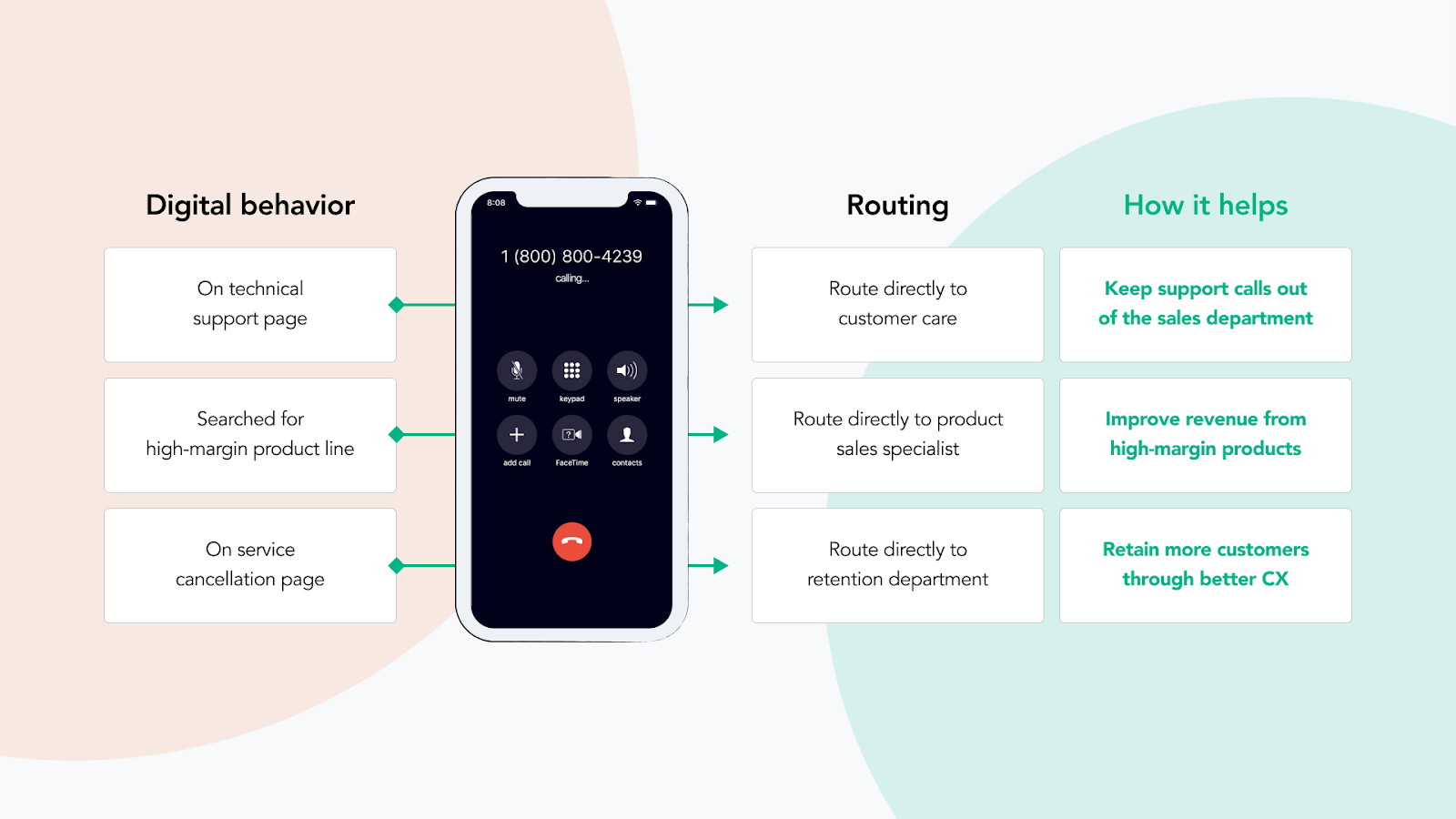
Why not start as you mean to go on? Intelligent call routing helps you do just that. By using historical data or insights from a caller’s pre-call digital activity, it directs each caller to the right resource the first time. For example, if a customer submits an online request for a detailed quote on a 2023 Hyundai Tucson LTD, then calls using the number listed on that page, intelligent routing ensures they’re connected directly to a sales agent, not the general helpline.
Intelligent call routing solutions like Invoca enable this kind of precision even across multiple contact centers or branches. The software doesn’t just route calls — it equips agents with key context, such as whether the caller clicked on a paid search ad or came in from the website. That means fewer unknowns, faster resolutions, and a better experience for both customers and agents.
2. Conversational IVR (Interactive Voice Response)
Not every caller needs or wants to speak with a live agent. Whether it’s after hours or a routine inquiry, IVR systems help callers get the answers they need quickly. Instead of waiting on hold or navigating a rigid call tree, callers can simply say what they’re looking for — such as “cancel my appointment” or “store hours” — and get routed or answered appropriately.
Invoca’s conversational IVR enhances this experience. It uses basic voice recognition capabilities, allowing callers to speak commands instead of pressing buttons. This feature makes self-service easier for more callers while freeing up agents to focus on high-value interactions that require a human touch.
From answering common questions to triaging urgent requests, solutions like Invoca’s conversational IVR can help contact centers enhance call flow and maintain high service levels, even during off-hours when live support is unavailable.
3. Agent Enablement and Context Sharing
AI tools that bridge the gap between a caller’s digital and offline journey also allow businesses to optimize call flow by empowering call center agents with more contextual customer insights.
Invoca’s PreSense, for instance, captures pre-call digital activity and delivers it to agents through intuitive screen pops at the moment a call comes in. Agents can instantly see which search terms a caller used, what pages they viewed, and even how they arrived at the site. This allows them to personalize the conversation and jump right into the heart of the issue, speeding up resolutions and boosting custoemr satisfaction.
See how PreSense works in this short video:
4. Call Queue Optimization
It’s not always possible to put a call through to a live agent immediately. The call center may be understaffed, or an unusually high volume of calls may cause long hold times. To maintain good call flow, you must prioritize calls or provide callers with options.
You can prioritize calls based on context such as customer value. Is the caller a loyal customer or frequent purchaser? If so, you can configure your intelligent call routing to have them jump the queue so they’re promptly serviced. You can also prioritize callers who have high revenue potential, such as those who called from a high-intent Google Ad about a limited-time promotion.
You can also optimize call queues by providing callers with self-service options, such as a conversational IVR that allows the caller to place a refill order for a pharmacy prescription. Callback options are another great tool for reducing call queue frustrations.
How to Manage and Improve Call Flow Effectively
Those are the key components of a good call flow. If you focus on the following five steps, you can manage call flow effectively and even improve it.
1. Map Your Existing Call Flow
Maps accomplish more than just guiding us from point A to point B. They are vital visualization tools that help us understand spatial relationships and identify trends that might not be easily revealed just by viewing data. Here’s an example of a simple call flow map:

There are multiple touchpoints in this simple call flow, from the incoming call to post-interaction activities. A map such as this can help you visualize the call flow process and track where incoming callers encounter friction, calls drop off, or are misrouted. You can create department-specific maps, too, such as a sales call flow chart.
2. Use Insights From the Digital Journey to Identify Call Drivers
A call flow map might show you where the bumps are, but if you want to improve the overall flow, you also need to understand why customers are calling in the first place. (Our research shows 44% of customers call looking for more information from a business, and 30% call because they feel more comfortable making a high-stakes purchase over the phone.)
When you know what a caller searched, clicked, or viewed before they called, a cold call becomes a warm one. AI-powered conversation intelligence tools like Invoca make this possible by capturing pre-call digital behavior and turning it into actionable insights for agents. With that kind of visibility, call flow becomes more intuitive, efficient, and customer-friendly.
3. Monitor First Call Resolution Metrics
Measurement is another key element in improving call flow. A KPI to use here is first call resolution, or FCR. A high first call resolution rate indicates effective call flow precisely because customers aren’t calling back. A low FCR should set off alarm bells. It likely means you have at least one of these issues:
- You aren’t routing calls intelligently.
- Your IVR system isn’t configured properly or is deficient.
- Your agents haven’t received appropriate training.
The good news: All these problems are correctable, once you’re aware of them.
4. Collect and Act on Customer Feedback
Always listen to your customers because their feedback is one of the most valuable tools for improving call flow. Post-call surveys are a direct way to gather input, while conversation analytics can reveal sentiment shifts and common friction points at scale. However you collect it, use that feedback to refine every part of the experience — from IVR menus and inbound call scripts to agent training.
For example, if an internet service provider’s call data shows that callers are dropping off calls due to frustration during attempts to fix router issues, the customer service manager should review and adapt the agents’ script to provide a more structured problem-solving flow.
5. Align Call Flow With Marketing and Sales Goals
Sales call flow is one of the most critical to get right because every missed call or misrouted lead could mean a missed opportunity. You don’t want to lose a potential customer because they were bounced around or couldn’t reach the right person.
To make the most of every sales interaction, route new business calls to your top-performing sales agents — the ones most likely to convert. Intelligent call routing tools help make this possible. Meanwhile, loyal returning customers can be directed to the next available rep for quick, seamless service.
Sales call flow also needs to be tightly aligned with marketing efforts. For example, if a car dealership is running a July 4th promotion, that offer should be prominently featured in conversational IVR prompts and agent scripts throughout the holiday period. When call flow and campaigns work hand in hand, your sales team will be better prepared to close.
Call Flow Best Practices for Modern Contact Centers
Like any area of your business, call flow benefits from a structured, best-practice approach, especially if delivering a standout customer experience is your goal. Below are proven strategies to help optimize call flow in your call center.
- Keep IVR menus short and to the point. Callers quickly become frustrated if they must listen to long and convoluted directions.
- Use pre-call digital data to intelligently route callers by intent, giving your agents the best shot at achieving first call resolution.
- Offer callers self-service options, especially during periods of high call volume or if they have simple questions that can be easily answered using conversational IVR.
- Always prioritize high-value or time-sensitive callers by routing them to the right agent to handle their call.
- Constantly test and iterate call flows by reviewing performance data, particularly FCR.
- Integrate sales call flow with your customer relationship management (CRM) system and ad platforms to support attribution and personalization.
Signs Your Call Flow Needs Immediate Attention
Some symptoms point to specific design flaws. Watch for these.
- IVR opt-out spikes (callers hammering 0 to bypass the menu) mean your options don't reflect actual call reasons. Audit top-level prompts against real call drivers.
- High repeat-transfer rates reveal that routing rules are landing callers in the wrong queue. Map transfer paths against the skill group of the agent who ultimately resolves the call.
- Agents reporting wrong-queue calls indicate that IVR categories no longer match your team structure. Realign branches to current skill groups.
- Queue abandonment during normal volume suggests hold-time expectations or staffing models are off. Break abandonment data out by time of day to find the pattern.
- SLA breaches clustered in specific time windows point to routing rules that ignore shift changes or overflow. Add time-based failover logic.
How to Measure Call Flow Performance
Four KPIs reveal whether your call flow is doing its job. Each one maps to a specific design flaw when it moves in the wrong direction. In 2026, the average inbound call costs $7.20 and average speed to answer sits at 74 seconds, according to ContactBabel. Every misrouted call compounds both cost and wait time.
- IVR abandonment rate. The share of callers who press 0 to reach a live agent rather than finish in self-service (the "zeroing-out" rate). Across US contact centers the mean is 29% and the median is 20%, and it climbs with size: about 14% at small operations versus 34% at large ones, per ContactBabel. A high rate usually means your menus have too many layers, unclear options, or prompts that don't match what callers need.
- First call resolution (FCR) rate. The percentage of calls resolved without a callback. The industry benchmark sits in the low-to-mid 70s. When FCR drops, routing is typically sending callers to agents who lack the authority or information to close the issue.
- Transfer rate. The percentage of calls transferred at least once after the initial connection. The benchmark is about 10%. Repeat transfers signal that your IVR categories don't align with your actual agent skill groups.
- Average handle time (AHT). Total call duration including hold and after-call work. When AHT rises but call types stay stable, the agent-side call flow (scripts, prompts, system access) isn't giving agents what they need to resolve calls quickly.
Nearly a quarter of contact centers do no pre-call personalization at all, routing every call without knowing who's calling or why, per ContactBabel. Platforms like Invoca surface these KPIs across 100% of calls using Signal AI, which lets you link performance gaps to specific flow paths, time windows, or caller segments instead of relying on sample-based reviews. AI is accelerating the shift away from keypress menus: it already fully automates roughly 20% of customer interactions, and leaders expect that share to reach 37% by 2028, according to Metrigy.
Improve Call Flow and Customer Outcomes With Invoca
Managing call flow isn’t just about improving efficiency — it’s about creating better outcomes for customers and business. An optimized call flow helps increase FCR, boost customer satisfaction, and drive deeper loyalty and more sales. In other words, a well-designed call flow can be transformative, just like Dorothy’s journey down the Yellow Brick Road.
That kind of transformation is much easier to achieve with AI-powered tools supporting your contact center. Invoca’s intelligent call routing, conversational IVR, and analytics bridge the gap between a caller’s digital and phone journey, enabling seamless, data-driven experiences that turn call friction into flow.
Additional Reading
To learn more about how Invoca’s AI-driven quality intelligence tools can help you streamline call flow so your call center runs smoothly, check out these resources:
- Understanding Call Center Productivity: The Ultimate Guide
- 5 Ways Call Centers Can Improve the Customer Experience
- Thriving in High Call Volume: Strategies for Efficient Customer Service
When you’re ready, book a free demo with our team to learn how Invoca can help you manage call flow better. We’re here to help!

FAQs
What Are Some Tools That Help With Call Center Call Flows?
Several technologies can streamline and enhance call flow in modern call centers:
- Intelligent call routing ensures callers are matched with the agent best equipped to help them, whether that’s based on skill, availability, or conversion potential. It helps make interactions faster and more effective.
- Interactive voice response (IVR) systems provide callers with self-service options through automated menus, helping them resolve simple issues without the need to speak to an agent.
- Conversational IVR takes this process a step further by using natural language processing to create more personalized interactions. It makes the self-service experience feel less robotic and more intuitive.
- Pre-call digital data and AI-powered insights enable contact center agents to see what a caller searched for or clicked on before making a call, promoting a more seamless call experience.
What Is the Ideal Call Flow Process for Contact Centers?
An ideal call flow is designed to be fast, friction-free, and customer-focused. From the moment a customer calls, they should be routed to the most appropriate agent or department without unnecessary transfers or confusion. Whenever possible, calls should be resolved without placing the caller on hold. If a brief hold is necessary, it should be kept to a minimum — ideally under a few minutes.
The ultimate goal is first call resolution (FCR), or addressing and resolving the caller’s issue in a single interaction. A strong benchmark for FCR is 70% or higher, meaning fewer than one in three callers should need to reach out again to resolve the same issue. An efficient call flow doesn’t just improve operational metrics, though. It also enhances customer satisfaction.
How Do You Set Up an Omnichannel Call Flow?
To set up an omnichannel call flow, first conduct a customer journey analysis to identify which channels your customers favor. Next, select a contact center management software that meets your agents’ needs and aligns with your most important channels. Look for a platform that integrates with other tools important to call flow, such as intelligent call routing, AI-powered call tracking, recording, analysis, and conversational IVR.
.svg)
.svg)