.svg)


Many companies treat their contact centers as a necessary evil, a cost to be cut. The prevailing wisdom in most boardrooms goes something like this: “Calls are expensive, agents are overhead, and if we could just get customers to stop calling us, we'd all be better off.” So they cut staffing, cap handle times, and treat every inbound call as a problem to be deflected rather than an opportunity to be seized.
Never mind that the contact center sits at the single most valuable moment in the entire buyer journey. The person on the other end of that call isn't some random visitor who stumbled onto your website—they're a high-intent prospect who has done their research, weighed their options, and decided to raise their hand by picking up the phone.
If you treat your contact center as a cost center, it can become a self-fulfilling prophecy. When the focus shifts from helping your customers to cutting corners, they can feel it. Prospects who called ready to buy end up leaving frustrated and empty-handed. In this post, we’ll cover the 5 biggest mistakes that cost contact centers revenue.
1. You’re Letting Calls Go Unanswered
There's no faster way to lose contact center revenue than simply not picking up the phone. Yet in the push to cut costs, understaffing has become one of the most common mistakes contact centers make. When headcount gets trimmed to hit a budget target, hold times balloon, queues back up, and frustrated callers hang up before ever reaching an agent.
The scale of the problem is bigger than most teams realize. According to our research, 26% of calls go unanswered at the average business. Customers have higher experience expectations than ever—when they take the time to call and are met with silence, they don’t leave a voicemail and patiently wait. They call a competitor.
How to Fix the Issue
There are several ways you can correct this issue:
- Monitor call answer rates: Identify locations or contact centers with high missed call rates. Pinpoint specific days/times and determine whether issues occur after hours or during business hours due to understaffing.
- Optimize staffing using missed call data: Compare missed calls to call volume to uncover peak periods and adjust staffing accordingly.
- Pause paid media after hours: If you can’t answer calls after hours, reduce or pause paid campaigns that drive high call volume during those times.
- Simplify your IVR experience: Eliminate overly complex menus and promotional messaging. Route high-intent callers directly to agents whenever possible.
- Use PreSense to route callers more intuitively: Track pre-call digital journey data and route callers based on their interaction history and buying intent.
- Use AI voice agent to qualify leads: AI can engage callers the moment they dial, qualify intent, answer questions, and route to the right destination 24/7 when human agents are understaffed or unavailable.
2. You’re Making Agents Start Every Conversation From Scratch
When a high-intent prospect finally reaches an agent, the last thing they want to do is explain everything from scratch. Yet at most contact centers, that's exactly what happens—the agent picks up the phone with zero context, no visibility into what the caller was just doing on your website, and no idea what drove them to pick up the phone in the first place. So the customer has to spell it all out.
This isn't just a frustrating experience—it's an expensive one. Without context on why callers picked up the phone, conversations drag on longer than they need to, agents struggle to get to the point, and customers who called in ready to convert lose confidence in the brand before the conversation even gets going. That friction compounds across thousands of calls a day, inflating handle times and killing conversion rates.
How to Fix the Issue
The fix is to give your agents the context they need before they say hello, with a solution like PreSense. PreSense surfaces a caller's digital journey to the agent in real time—what pages they visited, what products they looked at, what prompted them to call—so agents can skip the interrogation and get straight to helping. As a result, calls get shorter, experiences get better, and customers feel like the brand actually knows who they are.
See how it works in this short video:
3. Your SMS Agents Are Trained on Generic Data
SMS chatbots seem like an easy win on paper—they deflect unnecessary calls, reduce agent load, and cut costs. But when those bots are powered by scraped web data and generic large language models with no understanding of your brand, your customers, or your industry's compliance requirements, they tend to do more harm than good. Responses feel off-brand, answers are inaccurate, and customers who came in with a genuine question leave with less confidence than when they started.
These kinds of shortfalls can cause lasting damage to your brand equity. Our new research shows that consumers are 2.7x more likely to blame the brand over an AI vendor when they experience issues with an AI agent.
If your brand operates in a highly regulated industry like healthcare or finance, a chatbot saying the wrong thing isn't just a bad experience—it's a legal liability.
How to Fix the Issue
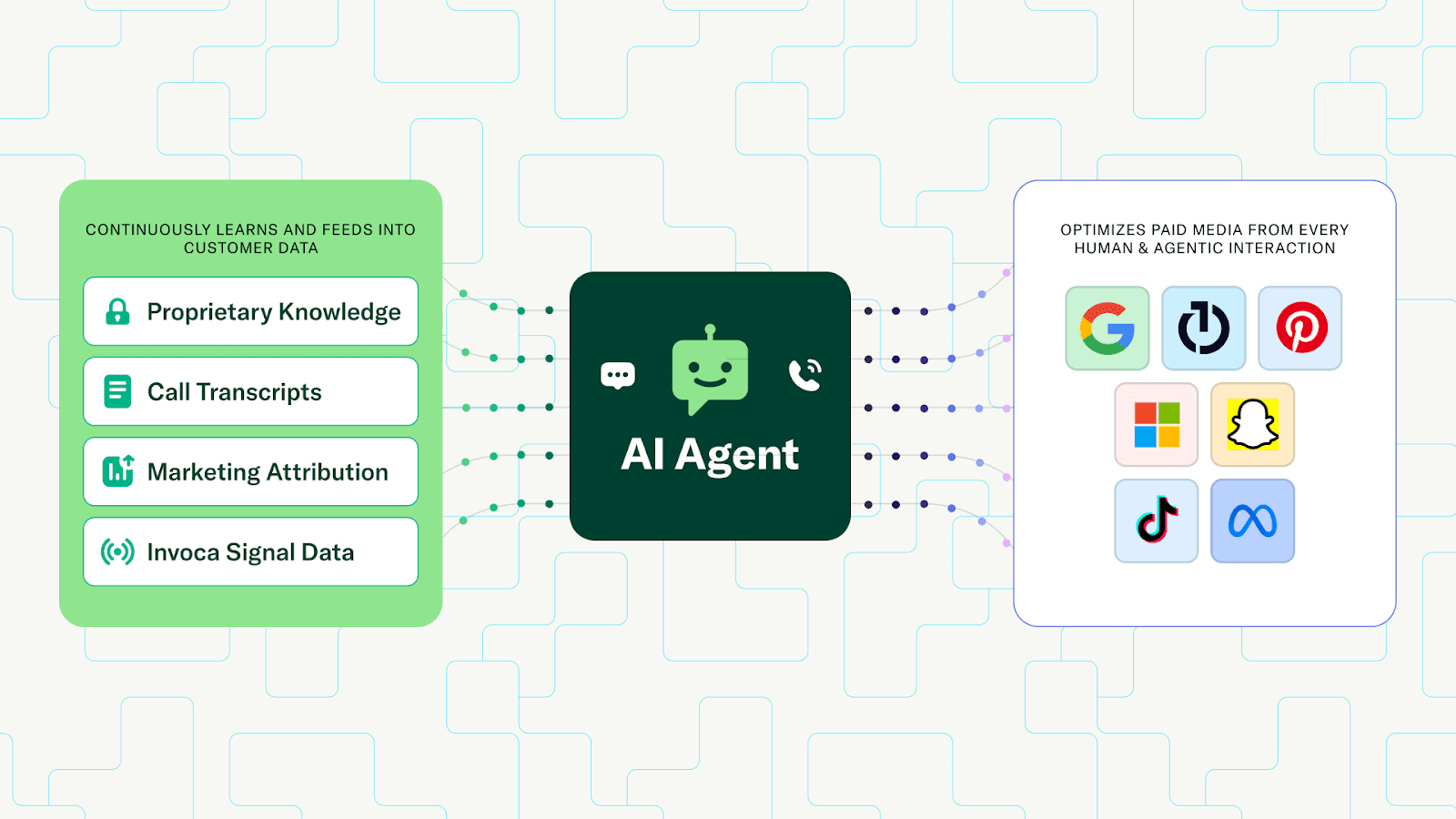
Invoca's AI messaging agent takes a fundamentally different approach. Rather than training on generic web data, it's built on your best customer conversations. That means it responds the way your best agents would, stays consistent with your brand voice, and operates within the guardrails your compliance team actually requires. The result is an AI messaging experience that moves leads forward in the buying journey and hands off to a live agent seamlessly when the moment calls for it.
4. You Run Quality Management without AI
Manual quality management breaks down at scale. When QA teams are limited to spot-checking a small sample of calls, they're essentially hoping they catch the right ones, and more often than not, they don't. Agents can go off-script for weeks without anyone noticing, while the calls that do get reviewed may not be representative of where the real problems actually live. The result is a coaching program built on bad data, compliance exposure that nobody sees coming, and performance issues that drag down conversion rates.
How to Fix the Issue
Invoca's automated quality management changes the equation entirely by analyzing 100% of calls with AI and automatically scoring every conversation against your unique criteria. Instead of fishing for problems in a small sample, managers get a complete and accurate picture of what's actually happening: if agents are greeting callers correctly, expressing empathy, using the right scripts, asking for the sale, adhering to compliance standards, and more.
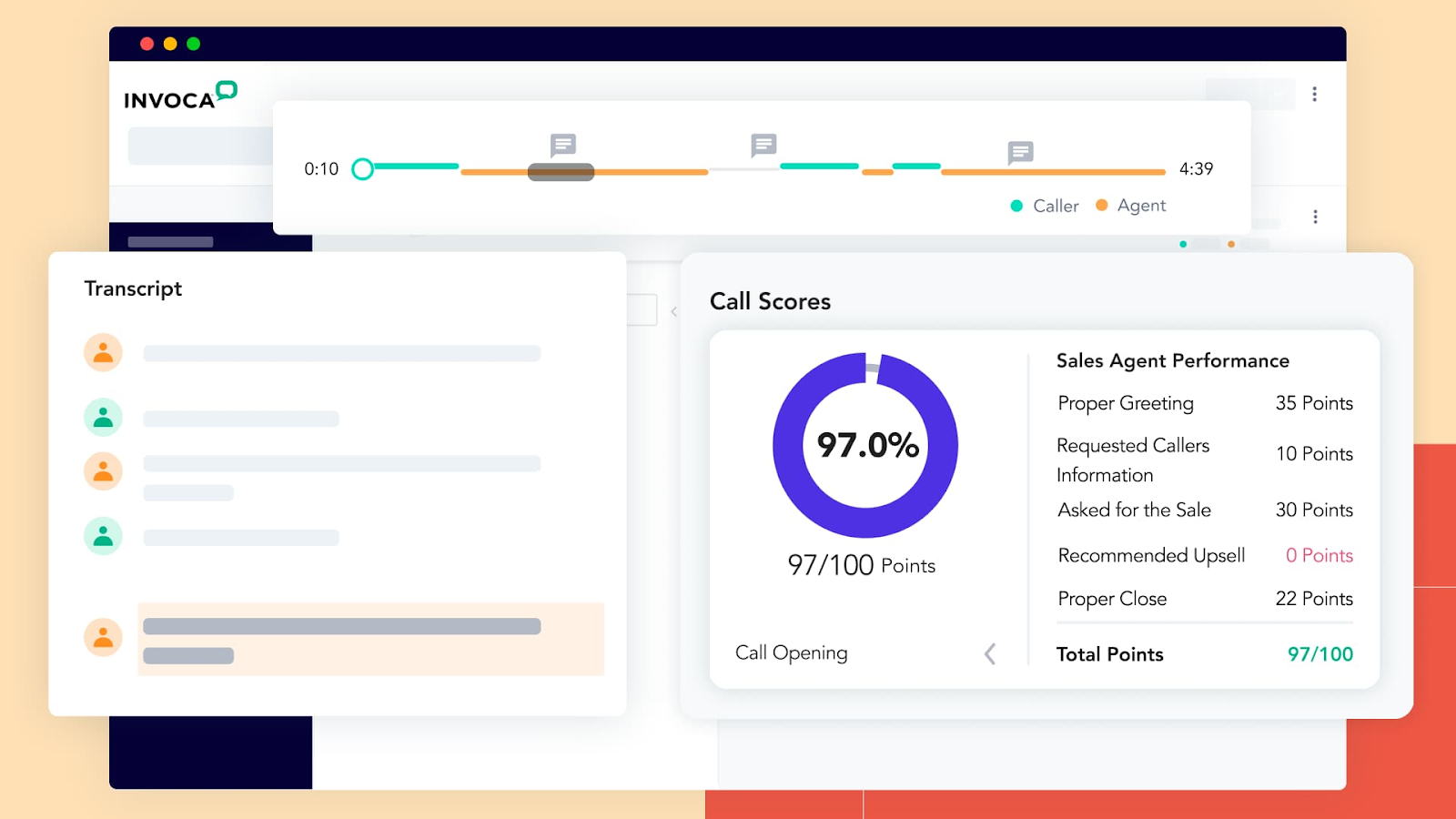
This visibility allows managers to identify coaching opportunities by agent, flag compliance risks in real time, and make sure every customer is getting the experience your brand promises.
5. Your Contact Center Is Disconnected From Marketing Performance
When marketing and the contact center operate in silos, both teams end up flying blind. Marketing has no visibility into whether the calls their campaigns are generating are actually converting to revenue, so they keep pouring budget into channels that may be driving high call volume but low-quality leads.
Meanwhile, the contact center has no idea what promotions are running, which offers customers are calling about, or how to staff and script accordingly. As a result, agents get caught flat-footed in conversations they should have been prepared for. It's a remarkably effective way to waste budget in both departments simultaneously.
How to Fix the Issue
Invoca bridges the gap by giving both teams a shared view of the entire revenue journey from the click to the call to closed revenue. Marketing can finally see which campaigns, keywords, and channels are driving calls that actually convert, so they can invest smarter and cut what isn't working.
The contact center gains complete visibility into the phone leads that marketing drives to them. As a result, they can optimize staffing levels and prep agents with the right talking points for each campaign. When both teams are working from the same data and toward the same revenue goals, they can collaborate more effectively.
Turn Your Contact Center into a Revenue-Generator with Invoca
As we’ve shown, treating your contact center as a cost center often triggers a dangerous snowball effect. When efficiency metrics like handle time take precedence over the customer experience, it sends a clear signal that you value the clock more than the caller. That friction is felt instantly on the other end of the line, and for a high-intent prospect, it’s the fastest way to turn a "ready to buy" moment into a "ready to leave" one. In the end, the money you save on staffing or shorter calls is quickly eclipsed by the revenue lost to frustrated customers who simply take their business elsewhere.
This is where Invoca can help—our platform ensures that your contact center isn't an island, but a fully integrated part of your growth strategy. We provide the tools you need to scale quality assurance, arm your agents with digital journey insights, and create SMS agents that move prospects through the funnel. Don't let your contact center become a black hole where high-intent leads go to disappear. Turn it into the place where you delight prospects with seamless experiences and convert them into loyal customers.
Additional Reading
Want to learn more about how Invoca can help your contact center drive more revenue? Check out these resources:
- Call Center Coaching: 9 Best Practices for Continuous Growth
- How to Analyze Call Center Data to Improve Efficiency
- Invoca’s Solution for Contact Centers

.svg)
.svg)