.svg)

Google just published an official guide declaring that Answer Engine Optimization (AEO) and Generative Engine Optimization (GEO) are "still SEO." They also said you don't need llms.txt files, AI-specific schema, or chunking strategies. Just keep doing what you've been doing. The internet responded with some raised eyebrows, and the reaction was warranted.
We've seen this movie before. Google has a well-documented pattern of issuing public guidance that doesn't quite square with what their systems actually reward. The antitrust proceedings over the last couple of years confirmed what many SEOs had long suspected: Chrome browsing data is a ranking signal, and link building is a key quality signal. Yet Google had publicly downplayed both of those things for years.
So when Google tells you to relax and just keep doing SEO, it's reasonable to treat that as one data point, and not gospel.
That said, we're not here to just poke holes in Google's guidance and leave you hanging. Let's talk about what this shift actually means for B2C marketers, and why the brands that win in this new environment are going to be the ones who think beyond the click.
Generative AI Is Transforming the Buyer Journey
Organic search used to follow a pretty predictable pattern: someone types a query, Google serves up ten blue links, the user clicks, you get a session, hopefully a conversion. Optimizing for that world meant targeting keywords, building authority, and getting people to your site.
That world is changing fast. Google's own data shows that AI Overviews now appear on a significant share of searches, and research from SparkToro found that nearly 60% of U.S. Google searches end without a click to any website. And that was before AI Mode hit 100 million monthly active users.
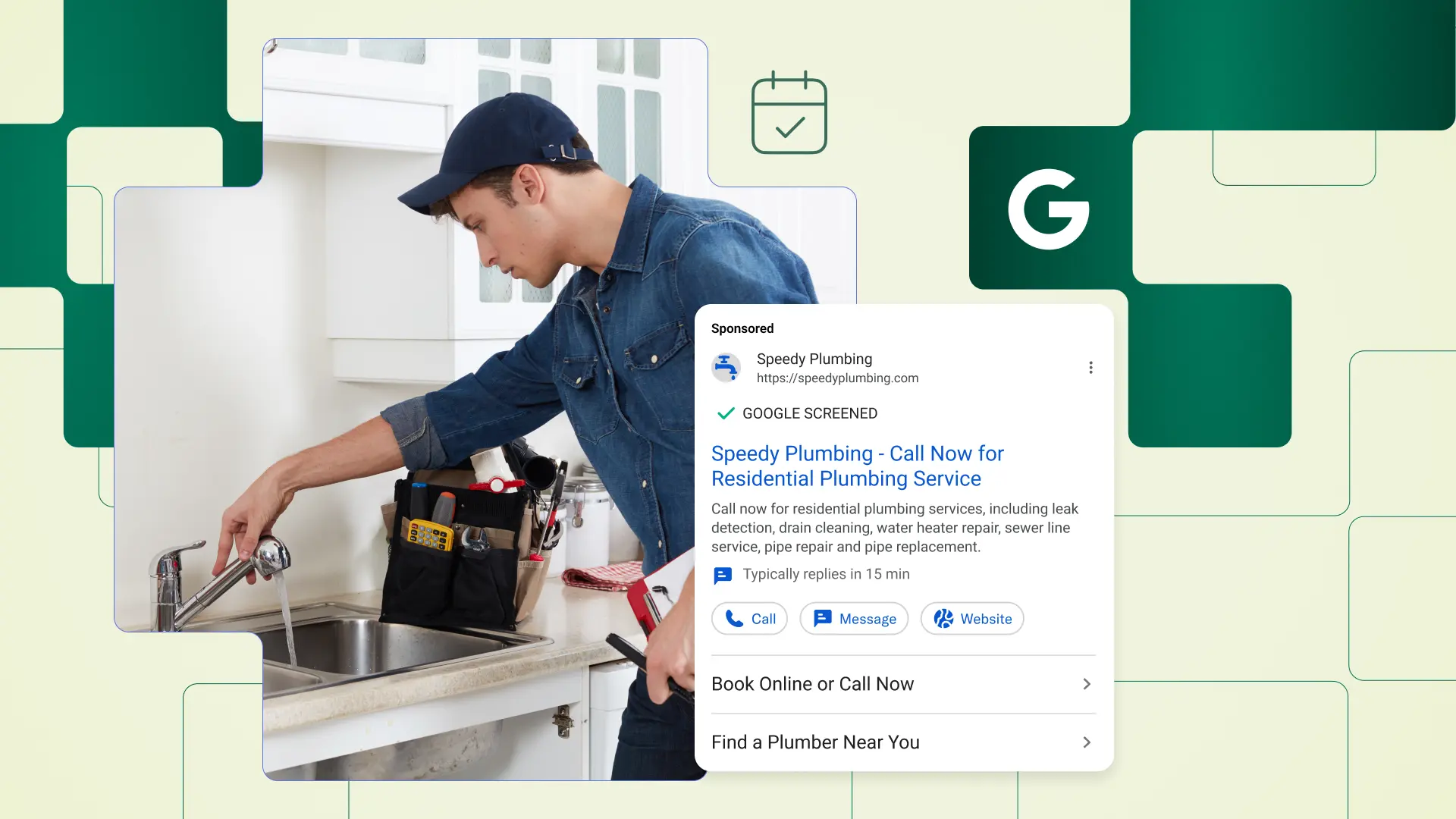
When Google says "AEO is still SEO," what they're really telling you is that great content still matters. That part is true! But what they're glossing over is that how that content gets discovered, consumed, and acted on has fundamentally changed. More queries are being answered directly in the SERP. More consumers are researching through AI tools like ChatGPT and Gemini before they ever visit your website. And in many cases, consumers are placing phone calls directly from LLM search results without ever visiting a business's website.
Don't Optimize for Impressions, but for Intent
Success in this new age of search requires a mindset shift. You should stop measuring success in sessions and impressions and start measuring it in buyer intent signals.
Ranking number one for a given keyword is still important, but showing up at the right moment in the buyer journey — whether that's an AI Overview, a ChatGPT recommendation, a local pack, or a search ad — and then actually converting that interest into revenue is the ultimate goal. That last part is where a lot of marketers still have a massive blind spot.
According to a 2024 Invoca survey, 67% of consumers making high-stakes purchases — think insurance, healthcare, home services, automotive — pick up the phone at some point in the buying process. These aren't impulse purchases. They're the kind of decisions people want to discuss with a human. And for those consumers, the moment they call your business is often the most important moment in the entire buyer journey.
If you can't connect that call back to the search campaign, the keyword, or the AI Overview that generated it? You're flying blind. You're optimizing the top of the funnel based on incomplete data, and you're likely cutting budget on campaigns that are actually driving real revenue.
The Problem with "Just Keep Doing SEO"
When Google says to keep doing SEO, what marketers often hear is, "the old metrics still work." But the old metrics — organic sessions, ranked positions, click-through rates — are becoming less reliable indicators of actual business performance, not more.
Here's a practical example. Imagine you're a multi-location healthcare brand. You've been running an SEO content strategy focused on condition-specific landing pages and local search optimization. Your session counts are flat or declining, but your appointment bookings are up. What's happening?
Likely, your content is getting cited in AI Overviews or in AI tools like ChatGPT. Consumers are getting their initial questions answered there, and then they're calling your locations directly, either because they found your number in a local pack or simply typed it after getting their AI-assisted answer. The session never gets attributed to your SEO efforts, and you end up cutting budget on a strategy that's actually working.
This is the gap that no amount of "just keep doing SEO" guidance from Google will close for you.
Why You Should Combine AEO + GEO + Conversation Analytics
We'd actually agree with the spirit of Google's message on one thing: great content marketing helps you win in traditional SEO and AEO. But you need the right strategy behind it, and you need the data to know whether it's actually driving revenue.
That strategy looks something like this:
Create content that earns citations, not just rankings
AI systems — whether Google's AI Overviews or ChatGPT — tend to favor content that directly and clearly answers specific questions and demonstrates real expertise. That means publishing content from expert voices, presenting original stats and research, and making sure your E-E-A-T signals are strong. These are good content practices that serve both traditional SEO and AEO simultaneously.
Show up where buyers go when AI directs them offline
As AI answers more top-of-funnel questions, the consideration and conversion stages increasingly happen somewhere else — your website, your contact center, your physical location. Optimize for those conversion moments just as aggressively as you optimize for the SERP. That means ensuring your phone calls are answered, that agents have the context they need to close, and that you're tracking every call back to the marketing that generated it.
Close the loop between search spend and actual outcomes
If you're investing in paid or organic search and can't connect those investments to what happens after the click — or after the call — you're optimizing for vanity metrics. Invoca connects paid search, organic campaigns, and other digital touchpoints to the actual phone conversations and conversions they generate. That means when Google changes something and your traffic dips, you can tell whether your revenue actually changed — or whether people just found you a different way.
What This Means for Your 2026 Search Strategy
We'll leave you with a few practical actions:
Audit your search-to-conversion path
Map out what happens after a consumer finds you via search. How many of your conversions happen on the phone? Are those calls being tracked back to the campaigns that generated them? If not, you're missing a significant portion of your true search ROI.
Don't treat Google's public guidance as the full picture
Use it as one input. Test AEO and GEO tactics — structured content, answer blocks, authoritative sources — and measure their impact on business outcomes, not just traffic.
Invest in understanding buyer intent at every stage
AI search is accelerating the trend toward longer, more complex queries. That means consumers are showing more intent earlier in the journey. The brands that capture and respond to that intent — across digital and conversational channels — will outperform those still optimizing for the old keyword-click-session model.
Google said to keep doing SEO. They're not wrong that the fundamentals of good content still matter. But the definition of "good" is changing, and the measurement model needs to change with it. The brands that adapt — connecting every touchpoint from an AI Overview to a phone call and a conversion — are the ones who'll turn this shift into a competitive advantage.
Track and Optimize Conversions from Generative AI
Want to learn more about how Invoca can help you track conversions driven by AI-generated search? Check out these resources:
- Invoca Integrates with ChatGPT Ads to Drive Revenue Growth from AI Search
- Why Fewer Clicks and Better Outcomes are Your New Organic Search Reality
- AI Customer Journey: Implement AI, Track KPIs, Prove ROI
Want to see how Invoca can help you connect GEO and AEO to revenue? Request your demo to see it in action.
.svg)
.svg)