

.svg)


Every major AI vendor will tell you their model is the most capable. The benchmarks and demos are so impressive that you can’t wait to sign on the dotted line. And then the model goes into production and starts making decisions about real customers, with results that rarely match the promise.
The instinct is to blame the model. You’ll retrain it, fine-tune it, or replace it with a newer one. But in most cases, the model isn't the problem — it’s the data.
AI pattern-matches against the data it was trained and grounded on. Give it rich, specific, outcome-validated signals, and it makes decisions that feel almost intuitive. Give it generalized, inferred, or third-party data, and it makes decisions that are statistically plausible but often practically wrong. The gap between those two outcomes is a matter of data quality and specificity, and most organizations are still underestimating the cost of that gap.
The Problem With Generic AI Models
Off-the-shelf AI is appealing because you can deploy quickly, get results fast, and skip the data work. But generic models are trained on generalized patterns, not your customers' actual behavior, objections, intent signals, or purchase triggers. It doesn’t know that a customer who called one of your practices last Tuesday was asking about out-of-network costs before booking a procedure. They don't know that the lead who abandoned your insurance quote form was comparing two specific plans. They're pattern-matching against a population, but what you need is intelligence grounded in your actual prospects.
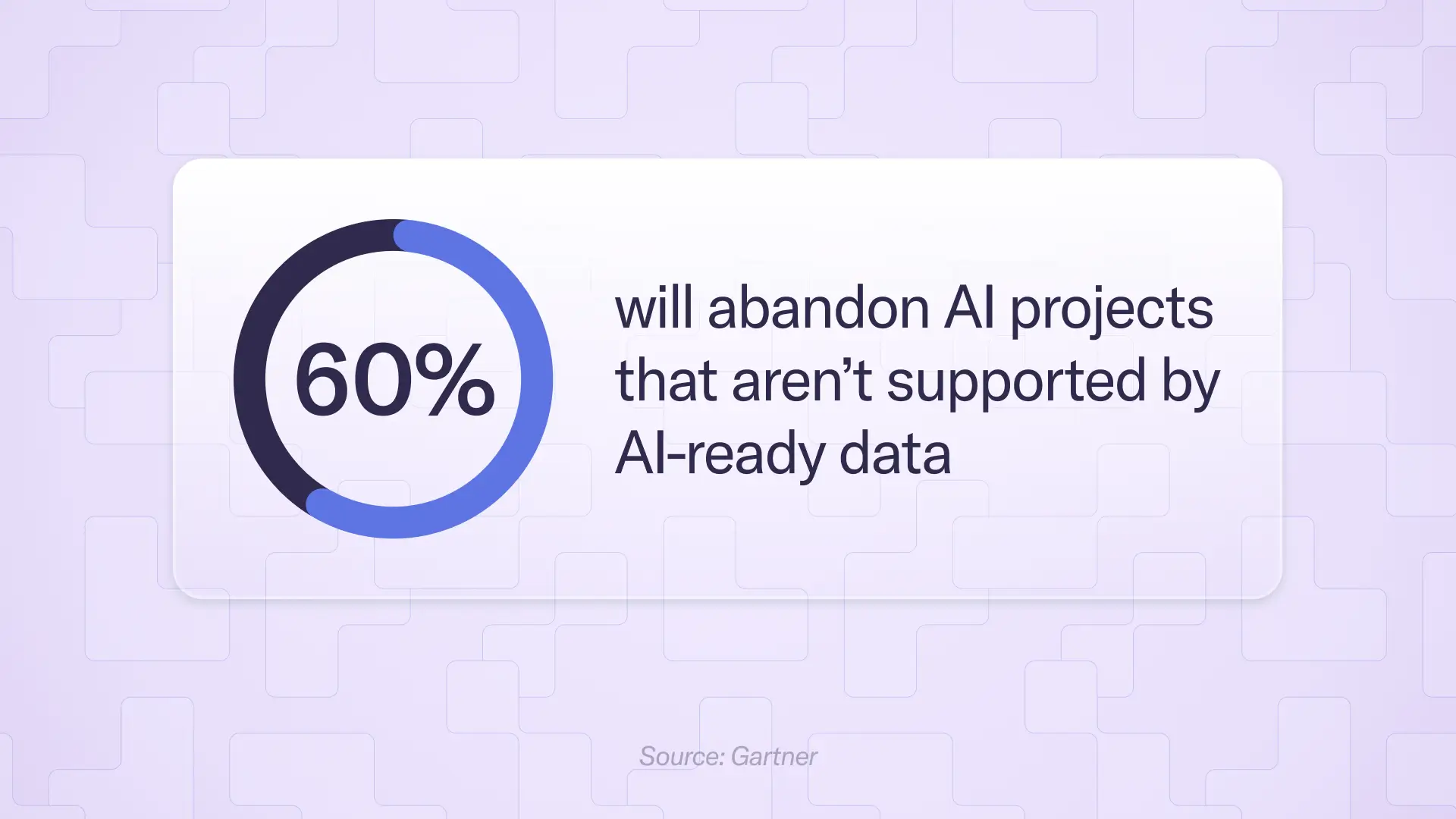
Gartner predicts that through 2026, organizations will abandon 60% of AI projects unsupported by AI-ready data — a sobering figure for teams that have rushed to deploy AI without first asking what data it's actually running on.
What makes first-party buyer data different is its specificity. It's data generated by your actual customers, in your actual buying journey, producing your actual outcomes. It captures the digital touchpoints that led someone to you, the conversations they had along the way, and whether those interactions resulted in a sale, an appointment, or a missed opportunity. That specificity is what allows AI to make genuinely relevant decisions rather than merely statistically plausible ones.
What "Buyer-Truth" Data Actually Looks Like
There are three kinds of data that matter most in the buyer journey, and they tend to come from very different places.
Digital engagement data is what most teams already have. It includes paid search clicks, display impressions, CTV views, web page visits, and form interactions. This data is strong at the top of the funnel because it tells you how a buyer found you and what content moved them toward consideration. What it can't tell you is what happened when they picked up the phone, started a text conversation, or if they ultimately converted offline.
Conversation data is where most AI investments break down. For industries like healthcare, financial services, automotive, and home services, the conversation is where the deal actually happens. Voice calls and SMS exchanges between a buyer and your brand contain the unfiltered reality of the purchase decision: the questions they're asking, the objections they're raising, the confidence or hesitation in their voice. This is data that clicks and form fills simply can't approximate.
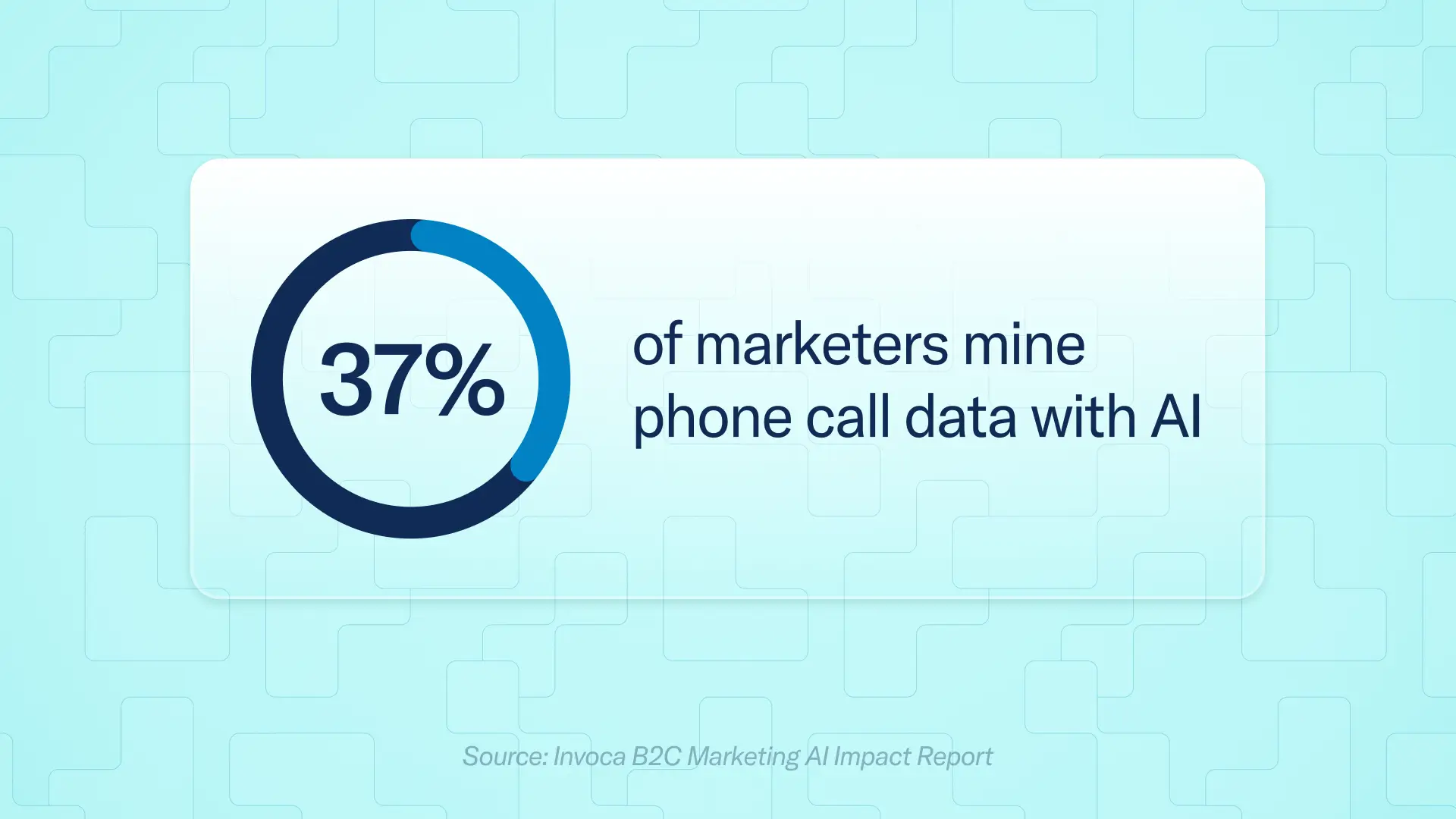
Our own research starkly reveals the gap. Only 37% of marketers are actively mining call recordings and transcripts with AI, compared to 58% who analyze social reviews — even though conversations carry far richer purchase intent signals than any passive engagement metric.
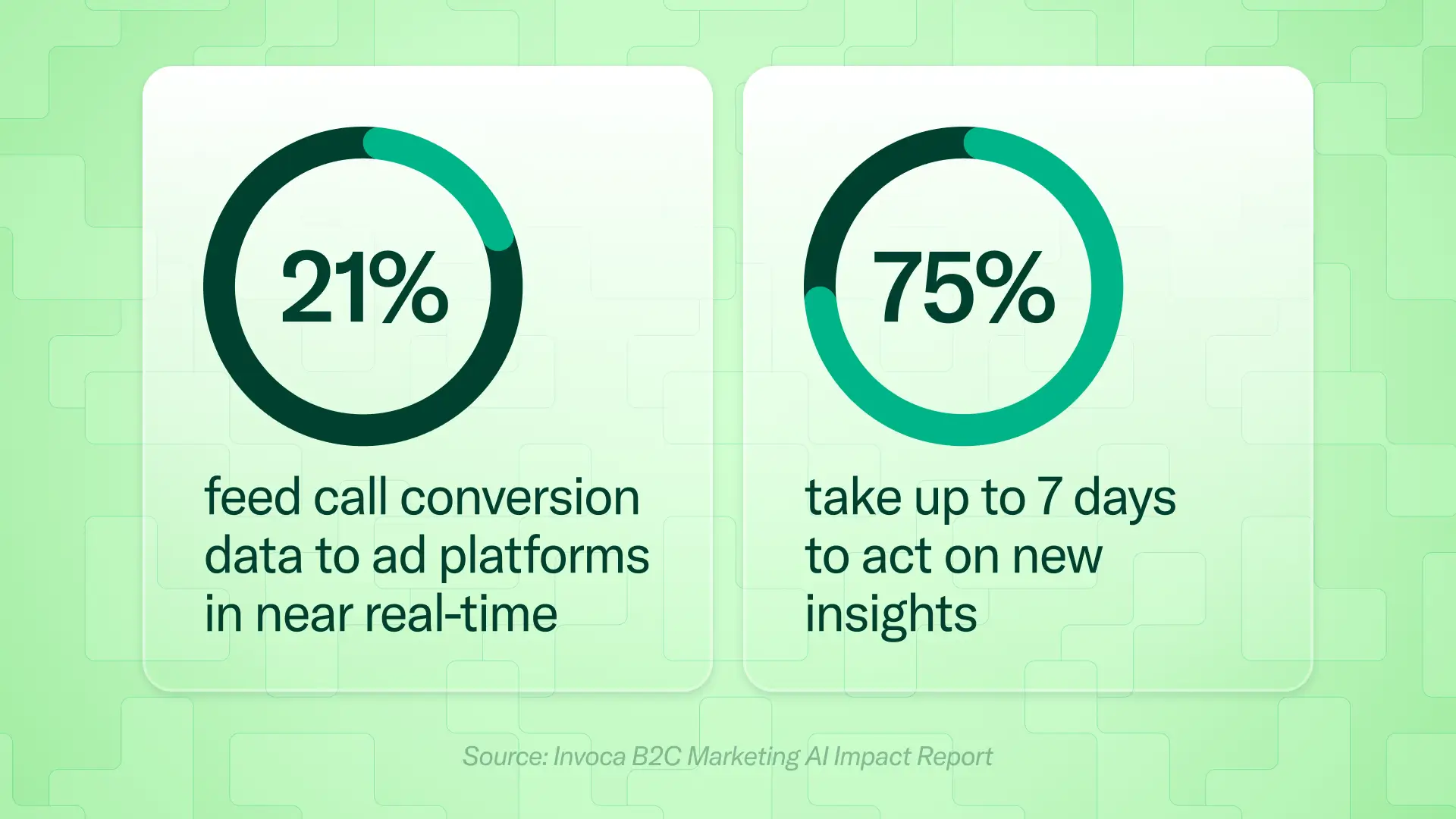
Meanwhile, only 21% of organizations can feed call conversion data to ad platforms in near real-time, and 75% take between 2 and 7 days to act on new insights from sources such as phone conversations. When optimization signals are delayed by a week, you're spending today's budget on yesterday's picture of demand.
Transaction data closes the loop. Did the call result in a booked appointment? Was the sale completed? What was the revenue value? Without connecting conversations to confirmed outcomes, AI can optimize for the wrong thing, such as maximizing call volume instead of call quality, or improving response time without improving conversion rate. The outcome is the signal, and everything else is a proxy.
What Better Data Actually Enables
When AI is grounded in this depth of first-party data across digital, conversation, and transaction touchpoints, the decisions it makes are categorically different.
Routing improves because the system knows what the buyer has already done and said, not just where the click came from. A call from someone who's been researching home equity loans for three weeks gets handled differently than a call from someone who just saw a display ad for the first time. The context informs the action.
Media optimization becomes more precise because you're feeding ad platforms signals tied to real revenue outcomes, not just leads or conversions. Google's Smart Bidding and similar tools are powerful, but they're only as effective as the signals you send them. First-party conversation data linked to confirmed transactions gives those algorithms accurate outcomes to optimize toward.
And perhaps most importantly, AI becomes something teams can actually trust. According to Gartner, organizations that invest in AI at scale need to evolve their data management practices to ensure trust, avoid risk, reduce bias, and reduce hallucinations. When your AI is grounded in verified customer interactions and confirmed revenue outcomes specific to your business, you know what data it's working from, and you can tie its actions to results.
Trust Doesn't Come From Better Models. It Comes From Better Data.
There's a temptation to treat AI trust as a governance or transparency problem. Those things matter. But the deeper trust issue is epistemic: do you trust the information your AI is acting on?
Generic AI models trained on third-party data are making inferences about buyers they've never actually encountered. First-party AI, grounded in the real interactions your customers have had with your brand, is drawing on something closer to direct knowledge. It knows what your buyers actually ask. It knows what moves them toward a decision. It knows what revenue looks like in your specific context.
That's the foundation on which Invoca is built. The platform connects digital engagement data, voice and SMS conversation data, and transaction outcomes into a unified intelligence layer that powers AI decisions across the full buyer journey. The result isn't just better AI performance. It's AI you can actually trust, because it's grounded in the deepest understanding of your real customers, not a statistical approximation of them.
.svg)
.svg)