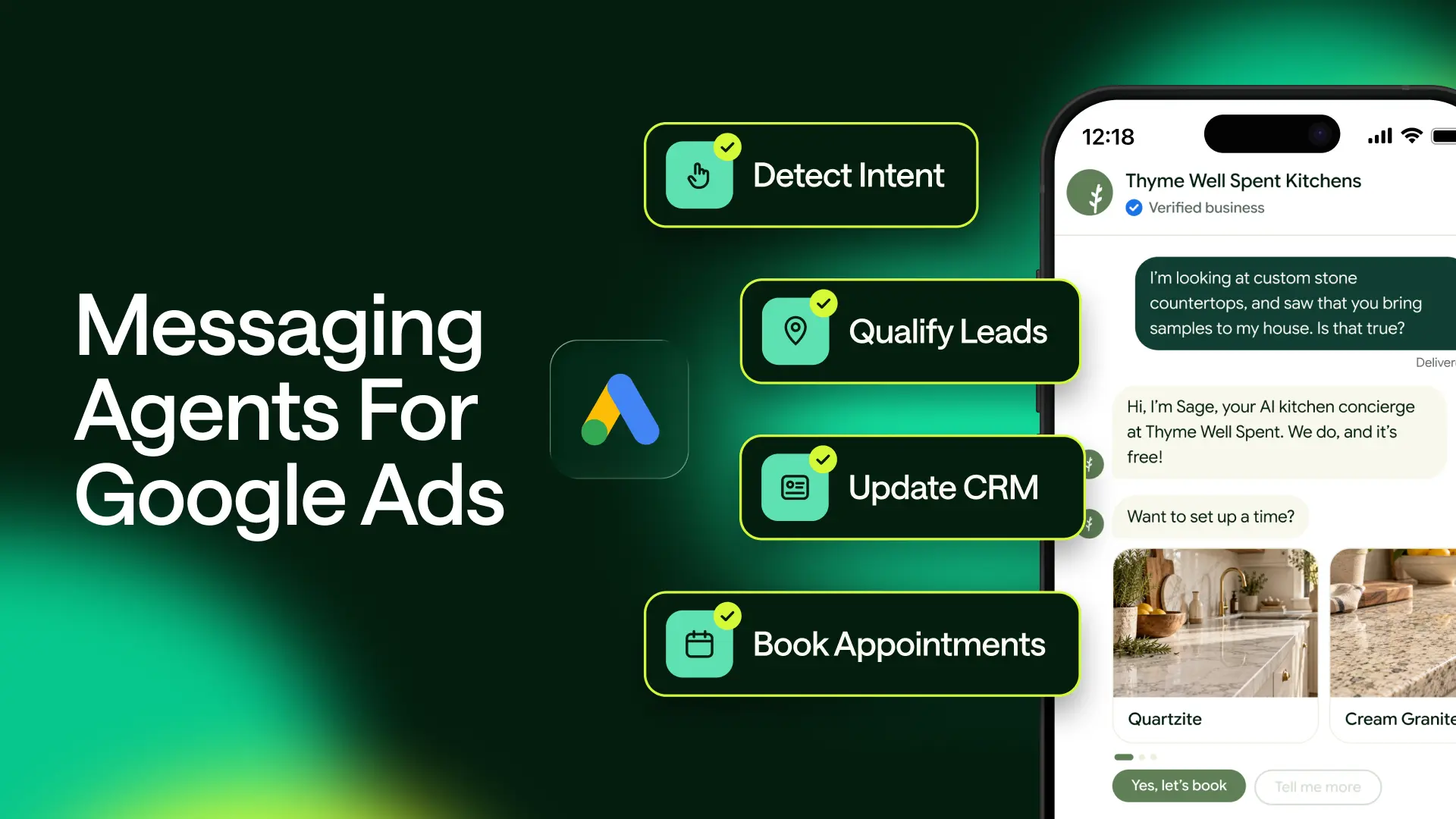

For two years, the message to B2C marketers has been impossible to miss: deploy AI agents or fall behind. Every conference keynote, vendor pitch, and board meeting carried the same urgency, and brands listened. Forty-four percent now have a conversational agent live with customers, and another 27% are piloting one.
But in the rush to deploy AI agents, many brands overlooked a critical piece of the puzzle: measurement. Only 27% of teams judge AI performance on revenue-based metrics. Most brands have an agent, but few can say what it's actually doing for their bottom line.
That's the central finding of The Broken Funnel Report, new research from Invoca based on a survey of 450 US B2C marketing leaders in automotive, healthcare and dental, home services, financial services and insurance, and telecom industries.
This post walks through what the data says about how marketers measure AI agents today, why the current metrics fall short, and a revenue-based framework you can use to measure yours instead.
Key Findings at a Glance
- 60% report website traffic growth. AI search has moved the front door, but it hasn't closed it. Most B2C brands saw modest traffic increases over the past 12 months.
- 44% have conversational AI agents live. Add the 27% in pilot, and seven in ten brands already have an agent talking to customers by phone, text, or web chat.
- 73% judge AI agent performance on factors other than revenue. Satisfaction scores, lead counts, and conversation volume are the most common primary KPIs.
- 19% can reliably send AI agent conversion data to ad platforms. For everyone else, Google and Meta are bidding without knowing which clicks turned into appointments or sales.
Most Marketers Measure AI Agent Activity, Not Revenue Performance
Ask a marketer running an AI agent what their main KPI is, and the answer is usually a number that says the agent is busy, not that it's productive. Among the 323 respondents with an agent live or in pilot, customer satisfaction score is the most common primary KPI at 20%. Revenue attributed to agent conversations sits near the bottom at 7%, and appointments booked at 9%.
See the full breakdown below:
Activity Metrics vs. Revenue Metrics
CSAT, conversation volume, and containment are activity metrics. They tell you the agent is running, that people are using it, and that it's handling a share of conversations without a human stepping in. Those are useful operational signals, and they're the right KPIs for an agent whose only job is to deflect routine questions.
However, they don't tell you whether the agent made money. A high containment rate can mean the agent resolved a billing question in 30 seconds, or that a high-intent buyer gave up and never reached a person. The metric reads the same either way.
Revenue metrics ask a different question: Did this conversation move a buyer toward a booked appointment, a qualified opportunity, or a sale, and can you prove it? An agent judged on satisfaction and volume will get optimized for satisfaction and volume. If you want it to produce revenue, that has to be the number you track.
The Missing Link: AI Agents Are Disconnected from the Buyer Journey
Marketers are unable to track AI agent revenue because they can’t connect data across the buyer journey. Most AI agents operate in isolation from the systems that tell marketers who they're talking to, what prompted the interaction, and whether it generated revenue. The survey data makes that disconnect clear. Only about a quarter of marketers say their agents are fully connected to the buyer journey, and fewer than one in five send conversion outcomes back to ad platforms.
These gaps compound. Without digital journey context, an agent has less information to personalize conversations and qualify leads. Without campaign attribution, marketers can't reliably connect those conversations to the spend that generated them. Without end-to-end conversion tracking and feedback to ad platforms, they can't measure revenue impact or help ad algorithms learn which leads actually become customers.
The result is a broken feedback loop. Marketing invests in generating demand, an AI agent engages the lead, and the systems needed to connect that interaction to a sale never come together.
Disconnect 1: Marketers can spot AI-driven buyers, but can’t connect them to revenue
Most marketers can identify leads that started their research in AI answer engines: 86% say they can do so for at least some of their leads. But that visibility fades as buyers move through the sales process.
That disconnect makes it difficult to link AI-driven discovery to actual revenue or to understand which channels are driving customer acquisition. Marketers may know AI search brought a lead in, but without visibility into what happens next—including calls, appointments, and offline sales—they can’t reliably measure the return on their marketing spend.
Disconnect 2: 74% can't track AI agent-handled leads from click to conversion
Only 26% of marketers with an agent say they can track leads end-to-end, from the first digital interaction through the conversation to the outcome. The same share, 26%, can tie an agent conversation back to the specific campaign, keyword, or ad that drove it.
These gaps often emerge at the same handoff points where attribution breaks down across the broader buyer journey: when a lead calls a local branch, franchise, or dealer; shifts into a text or chat conversation; or transitions to a phone call. If those interactions aren't connected to the original marketing source and tracked through conversion, it becomes difficult to tell which campaigns are driving revenue.
Disconnect 3: Only 19% can send AI agent outcomes back to ad platforms
This disconnect creates a blind spot in campaign measurement and optimization. Ad platforms rely on the conversion signals advertisers send them to determine which audiences, keywords, and campaigns are driving results. But a form submission or initial AI agent interaction doesn't necessarily mean a lead is qualified, an appointment is booked, or a sale is made. Without visibility into what happens next, platforms may optimize toward actions that look like conversions but never translate into revenue.
Offline conversion tracking helps close this gap by connecting downstream outcomes, such as qualified leads, booked appointments, and closed sales, back to the original ad interaction. Yet only 19% of brands can send AI agent outcomes back to ad platforms. That means the vast majority are missing an opportunity to give their bidding algorithms the richer, more accurate conversion data they need to optimize for actual business results.
Disconnect 4: Agents don’t have the context to personalize conversations
Just 27% of agents can see the buyer's digital journey (the ad they clicked, what they searched, the pages they visited, what's in their cart) and use it in the conversation. For the rest, every conversation begins with a blank slate.
That's a measurement problem, because an agent that doesn't know the source can't report on it. It's also an experience problem. Buyers who've made a past purchase or filled out a form get asked questions they've already answered.
A healthcare marketing manager at a company with 1,000 to 4,999 employees described the bar their agent would have to clear:
"The AI would need to be perfectly integrated with our real-time CRM and inventory data. More importantly, it must have a flawless handoff system that instantly routes a high-intent buyer to a live human representative the moment the conversation gets complex."
5 Revenue-Based KPIs You Should Measure to Track AI Agent Performance
If your goal is to drive revenue with your AI agents, these five metrics can guide you. None of them require abandoning CSAT or containment. They sit above those metrics and depend on your AI agents being connected to your CRM, ad platforms, and other systems.
1. Revenue attributed to agent conversations
What it measures: Closed revenue that traces back to a conversation the AI agent handled or started, whether the sale closed inside the conversation, after a handoff to a person, or at a location.
Why it matters: It's the number a CFO will ask for, and only 27% of marketers in the report can produce it today. It's also the only metric that settles the question of whether the agent is a cost center or a revenue channel.
2. Appointments and consultations booked
What it measures: The number and rate of agent conversations that end in a scheduled appointment, consultation, estimate, or service visit.
Why it matters: In industries like home services and healthcare, the appointment is where revenue becomes probable. It's the closest proxy for revenue that you can measure on the day of the conversation, without waiting weeks for a sale to close. Nine percent of marketers use it as their primary agent KPI; it should be a standard one for any agent with scheduling in scope.
3. Conversion rate on agent conversations
What it measures: The share of agent conversations that reach a defined outcome (a booking, a qualified lead passed to sales, a completed purchase) divided by total agent conversations.
Why it matters: Volume tells you the agent is busy. Conversion rate tells you whether the conversations are going anywhere. It's also the metric that lets you compare the agent against the humans doing the same job. If agent-handled conversations convert at half the rate of human-handled ones, that's the number that should drive your roadmap.
4. Conversion signals returned to ad platforms
What it measures: The share of agent-driven conversions (appointments, qualified leads, sales) that are successfully sent back to Google Ads, Meta, and other platforms as conversion events, matched to the originating click.
Why it matters: This is the metric behind paid media ROAS. Platforms bid on the conversions they can see. Closing this loop is often the fastest way to improve paid efficiency without changing a single ad.
5. Lead leakage at handoff
What it measures: The share of leads that go dark after the agent transfers them, whether to a human rep, a contact center, a dealer, a franchise, or a local branch. "Go dark" means no recorded outcome within a defined window.
Why it matters: Our report found that 56% of marketers can't say what happens to a lead once it reaches a business location. An agent can qualify and book perfectly, yet produce nothing if the handoff drops the lead. If you don't measure leakage, you'll attribute the loss to the agent, the campaign, or the market, when the real problem is the transfer.
What Marketers Want from Their Next AI Agent
The report asked all 451 marketers which capabilities would make their AI agents more useful. The top five all describe an agent that knows who it's talking to and can move them toward a sale:
- Tailoring the conversation to the consumer's digital journey (the ad they clicked, what they searched, the pages they visited) — 43%
- Recognizing a returning consumer and having their history — 41%
- Qualifying leads or determining serviceability — 39%
- Automating appointment scheduling — 39%
- Warm-transferring a sales lead to a person with full context — 39%
The gap between want and have is the clearest finding in the report. The most-wanted capability, at 43%, is the agent using the buyer's digital journey in the conversation. Only 27% of brands with live AI agents have that working fully.
A C-level marketing executive at a healthcare company summed up the difference:
"A great agent recognizes where someone is in the buying journey, provides immediate answers, and hands off the full history to a rep when needed. Bad agents operate like dead-end IVRs that annoy high-intent buyers."
Download the Full Report to See More Findings
Want to see more of the findings from our research? Download the full Broken Funnel Report here.
Want to see how Invoca’s AI agents connect conversations to downstream revenue? Request your personalized demo.