.svg)

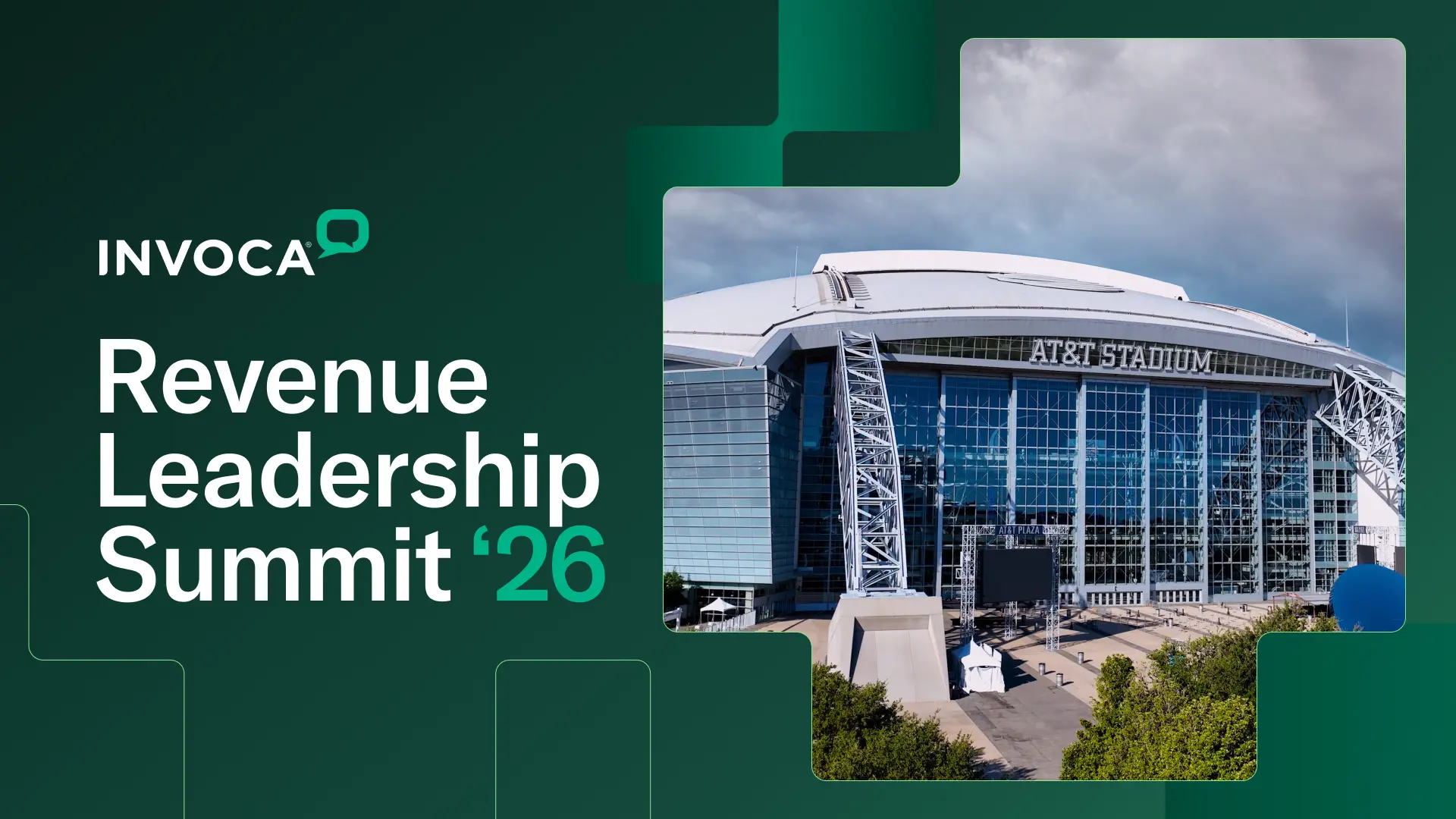
Invoca's Revenue Leadership Summit returned to AT&T Stadium in Dallas this year, and our guests came ready to play! Marketing, commerce, and contact center leaders spent the afternoon huddled over keynotes, customer stories, and product news. Then they headed down to the field, where a few brave attendees lined up to kick field goals. Some split the uprights, some went wide right, and everyone agreed it's harder than it looks on TV. The day wrapped with a stadium tour and dinner in the Cowboys' locker room.
The speaker lineup was filled with heavy-hitters from across industries, including Alex Diesbach, VP of digital marketing at Saatva; Jessica Banich, director of digital strategy at Moffitt Cancer Center; and Kelly Jo Sands, SVP of Digital and Marketing at DIRECTV. Invoca CEO Gregg Johnson and VP of AI products Surbhi Rathore shared insights as well.
The sessions centered around how AI is transforming the buying journey and how revenue teams can adapt. Below are five of the biggest takeaways, plus practical tips to help your team move the chains on revenue growth and customer acquisition.
1. Ad Platforms Can Only Optimize Toward the Outcomes They Can See
Digital marketing used to mean constant hands-on work like adjusting keyword bids, setting device and location modifiers, and restructuring campaigns. Google, Meta, and other platforms now automate most of those decisions, adjusting bids in real time based on the conversion data they receive. As a result, the most important job is now ensuring that data is complete and accurate so that AI can optimize accordingly.
This is where many brands have a blind spot. If a platform only sees online purchases, it will optimize toward online buyers and ignore people who call, visit a store, or convert later through another channel. For businesses with a large share of phone or in-store sales, the platform may be learning from only a small part of the real customer base.
Marketers need to rethink their role from campaign operator to data orchestrator. That means connecting every meaningful conversion signal across the customer journey, from the initial click to the phone call, store visit, and eventual purchase, so AI is optimizing for revenue rather than simply what’s easiest to measure.
2. Fewer Visitors Are Reaching Your Site, but They're More Ready to Buy
More research than ever now happens inside AI platforms. A car shopper who once spent evenings scrolling through three manufacturers' websites can ask an LLM to compare the models and view a summary in seconds. For considered purchases, such as expensive, complicated, or emotional ones, that means fewer site visits overall. The visitors who do arrive have usually narrowed their choice and are ready to act.
As a result of these changes, the buying window is shrinking. In its session, DIRECTV noted that its customer decision journey has dropped from about two months to two weeks to roughly two days. When research is compressed that much, a brand has less time to make an impression and very little room for a slow response.
How can marketing teams adapt to these changes? Judge your site by visitor quality, conversion, and revenue per visit rather than total traffic. You’ll also want to give ready-to-buy visitors the next step up front, making pricing, booking, and contact options easy to access. And, when customers reach out to you, consider using AI agents to engage leads instantly and recover missed calls.
3. Conversation Is Becoming the Way Customers Interact with Brands
Websites have long relied on forms, filters, and search boxes. However, customers increasingly expect to have a conversation instead. They've gotten used to it in AI assistants, and leading brands are bringing the same experience to their own sites. Redfin, for example, rebuilt home search around the kind of open-ended conversation a couple might have about where they'd like to live, instead of a checklist of bedrooms and zip codes.
This shift also changes how leads are handled. The traditional flow asks a customer who reached out digitally to switch to a phone call, often hours later. This long gap between outreach and response often creates a leak in the funnel. A conversational approach, by contrast, meets people in the channel they chose. It qualifies them there and moves them to a human when they're ready. This creates a more connected experience and fewer lost leads.
Advertising is moving in this direction, too. Invoca's AI agents now work inside Google Messaging Ads, so a customer can ask questions, get qualified, book an appointment, or place an order without leaving Google. The same click-to-text experience can extend to organic search results and sitelinks, with full attribution back to the source.
4. AI Agents Should Supplement the Human Touch, Not Replace It
Instead of replacing humans, the best AI agent experiences fill gaps in coverage. For example, they respond after hours, absorb call spikes, recover abandoned carts, and follow up on forms right away instead of the next business day.
Moffitt Cancer Center showed how to do this carefully in one of the most sensitive settings there is. Moffitt treats cancer, and every patient needs a detailed intake: insurance, diagnosis, medical records, and matching with the right specialist. Those calls are long, many callers drop off before reaching anyone, and hiring more staff can't solve the problem alone. So the team placed an AI agent where it could help without replacing the human touch. Right after a patient submits an online appointment request, the agent sends a text, says it's an AI, answers basic questions, and schedules a callback with a human intake specialist.
“Invoca’s AI agent allows us to answer patient inquiries at all hours of the day and night,” said Jessica Banich, director of digital strategy at Moffitt Cancer Center. “The time to value was very fast. Within a month, we already saw declines in lost and unrecovered leads.”
5. Marketing's Job Now Covers the Whole Customer Relationship
Marketing used to focus mainly on bringing in new customers. Now it's expected to shape the entire relationship: acquisition, service, cross-sell, retention, and win-back. The team at DIRECTV experienced this transformation firsthand. At first, the team used Invoca to get attribution for phone call conversions. Before long, they passed context about each caller to their sales, customer service, and loyalty teams so they could personalize greetings.
Context now follows customers across channels. When a shopper builds a cart online and then calls, both the human agent and DIRECTV’s AI assistant can see what they looked at. When a channel dispute prompts frustrated customers to call to cancel, the loyalty team can see their recent website activity. Some customers receive a targeted offer without needing to wait for an agent at all.
“We don’t want to make callers go through multiple transfers and repeat themselves,” said Mark Loovis, senior director of marketing technology at DIRECTV. “Our goal is to route customers to the right agent instantly, based on digital journey data. We’ve been able to accomplish that thanks to Invoca. It’s the connective tissue between our website experience and our call center.”
How can your team adapt? Map the full customer lifecycle, from onboarding through cancellation and return, and pass context like browsing and cart activity to every agent and AI assistant so customers never have to start over. For customers who come and go, make returning easy and use their digital behavior to shape retention offers. None of this works alone, so treat IT as a partner, and start by implementing mutually beneficial projects.
See Invoca’s AI Agents in Action
Want to learn more about how Invoca’s AI agents help leading brands drive more revenue? Request your demo to see them in action!
.svg)
.svg)