

.svg)


A year ago, marketing and CX leaders were questioning whether potentially alienating customers with AI assistants was worth the efficiency gains. AI agents have improved dramatically since then, and according to the data we’re seeing in this year’s Invoca B2C Buyer Experience Report, so has consumer perception of them.
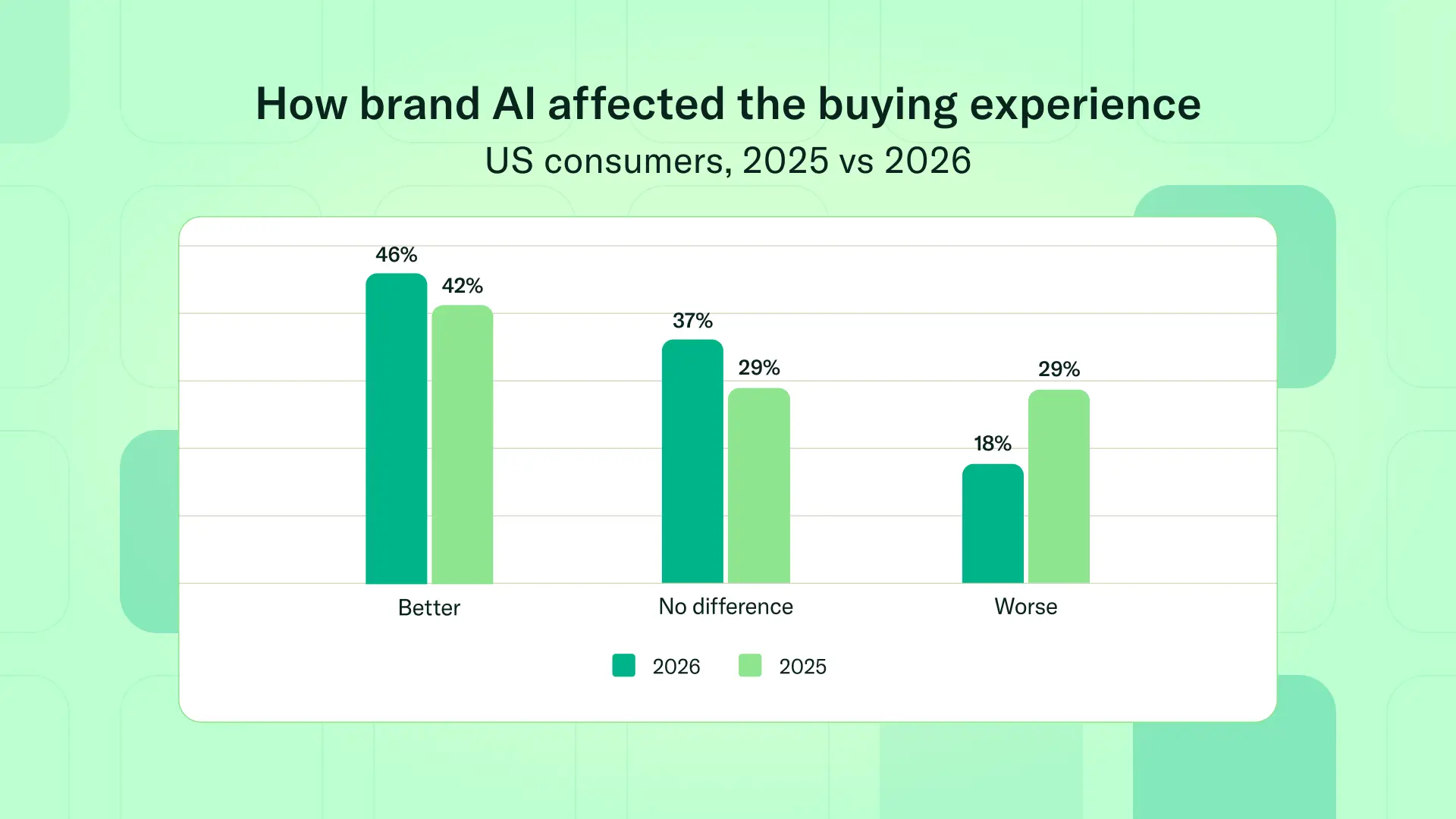
The share of consumers who say AI made their buying experience worse fell sharply from 29% in 2025 to just 18% this year. Much of that shifted to buyers who said that AI “made no difference” in their purchase process (29% vs 37%), while about the same percentage (46%) said that AI made the buying experience better.
At the same time, consumers have become less patient, hanging up more often when hold times are long and bugging out to competitors without hesitation when brands fail to respond to their inquiries fast enough.
These new questions could be even more expensive to get wrong, though. Are your AI agents good enough that buyers hardly notice them? Does it actually serve them faster? And is it smart enough to seamlessly escalate to human help when the stakes are high?
Read on to see how consumers really feel about AI in their buying experiences and how that could change your AI strategy.
AI Agents Have Crossed a Quality Threshold
The softening of negative sentiment toward brands using AI shows up across nearly every measure in this year’s report.
AI is having less of an impact on how valued consumers feel when they encounter it. Fewer feel forced to use AI when making a purchase. And the biggie — an 11-point drop in consumers who say that AI made their buying experience worse — shows that AI is meeting consumer expectations more often than not.
This year, only 18% said that AI made things worse, but when taken alongside a modest 4% increase in those who said it makes the buying experience better, that changes the calculus a bit. Most of the shift went from "worse" to "no difference", which indicates consumers have reclassified AI from a problem into a non-event.
Consumers now expect some level of AI assistance when making a big purchase, and it’s gotten so good that they no longer see it as a roadblock to getting what they want.
When AI Fails, The Brand Eats The Blame By Nearly 3 To 1
Of course, there is a big caveat to the improved consumer sentiment toward brands that use AI to assist them. When your AI does them wrong, they will blame your brand without hesitation.
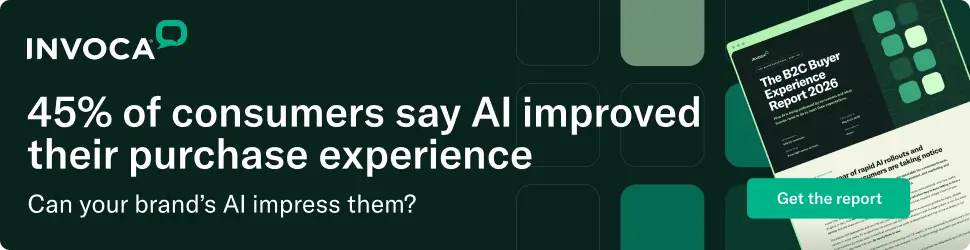
When asked who they blame when a brand's AI fails, 38% blame the brand alone and just 14% blame the AI technology — a 2.7-to-1 margin. Add the 30% who blame both equally, and roughly two-thirds of consumers tie a bad AI experience back to the company that chose to deploy it. The vendor takes none of the heat.
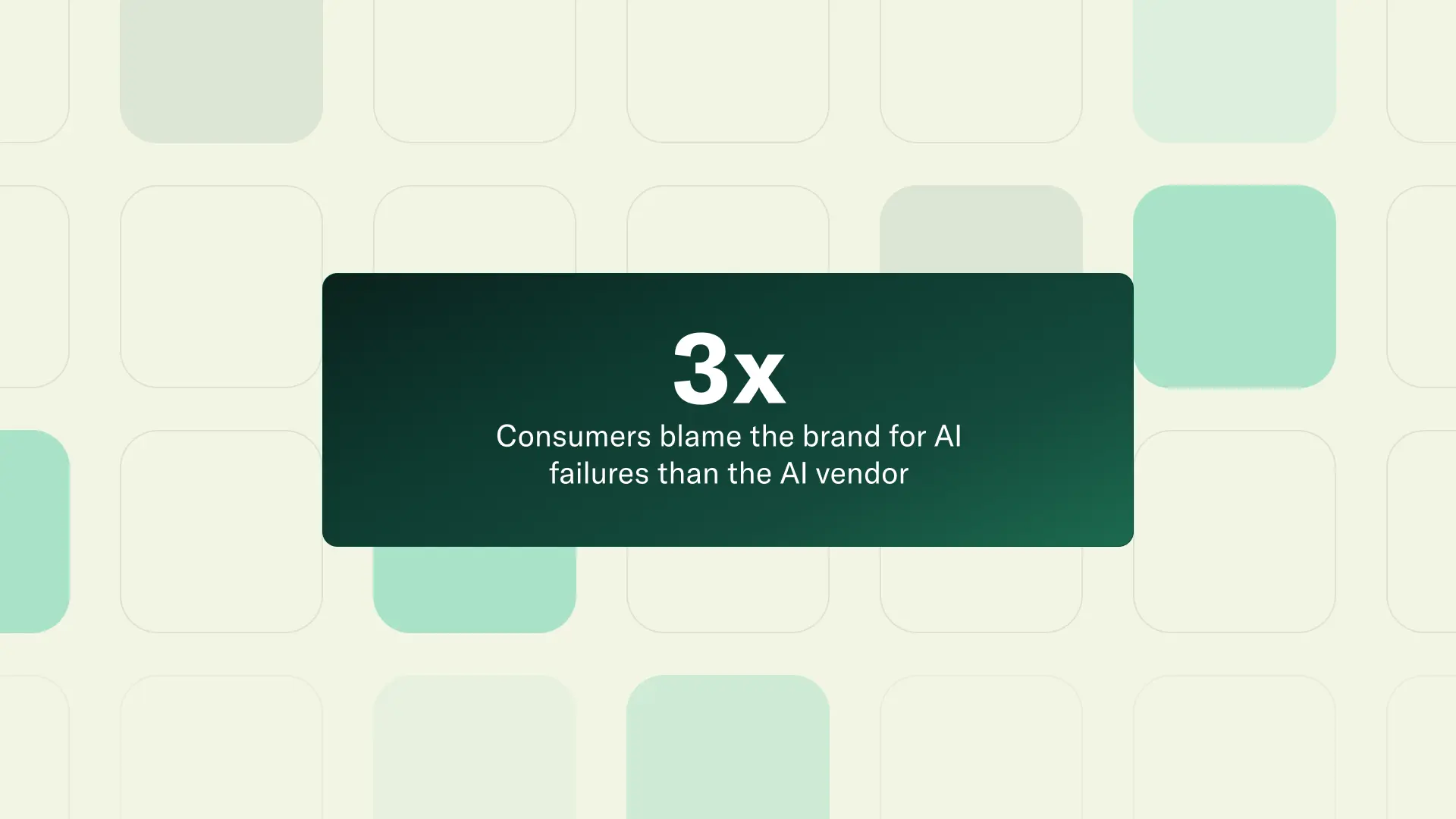
The customer's relationship is with your brand, so your brand owns the disappointment when the AI lets them down. "The vendor's model hallucinated" is not a defense a consumer will ever hear or accept.
Consumers know that AI is no longer a novelty or a nascent technology. They use it every day for everything from getting advice on DIY projects to diagnosing medical conditions. They know how well it can work, so they expect that you get it right.
Generative AI is Now A Default Research Step, Even For Older Consumers
Outside your brand's channels, consumers are arming themselves with AI before they ever reach out. Nearly 60% of US consumers used a generative AI tool like ChatGPT, Gemini, or Claude to research a high-stakes purchase this year, up from 41% in 2025 — a 17-point jump in a single year.
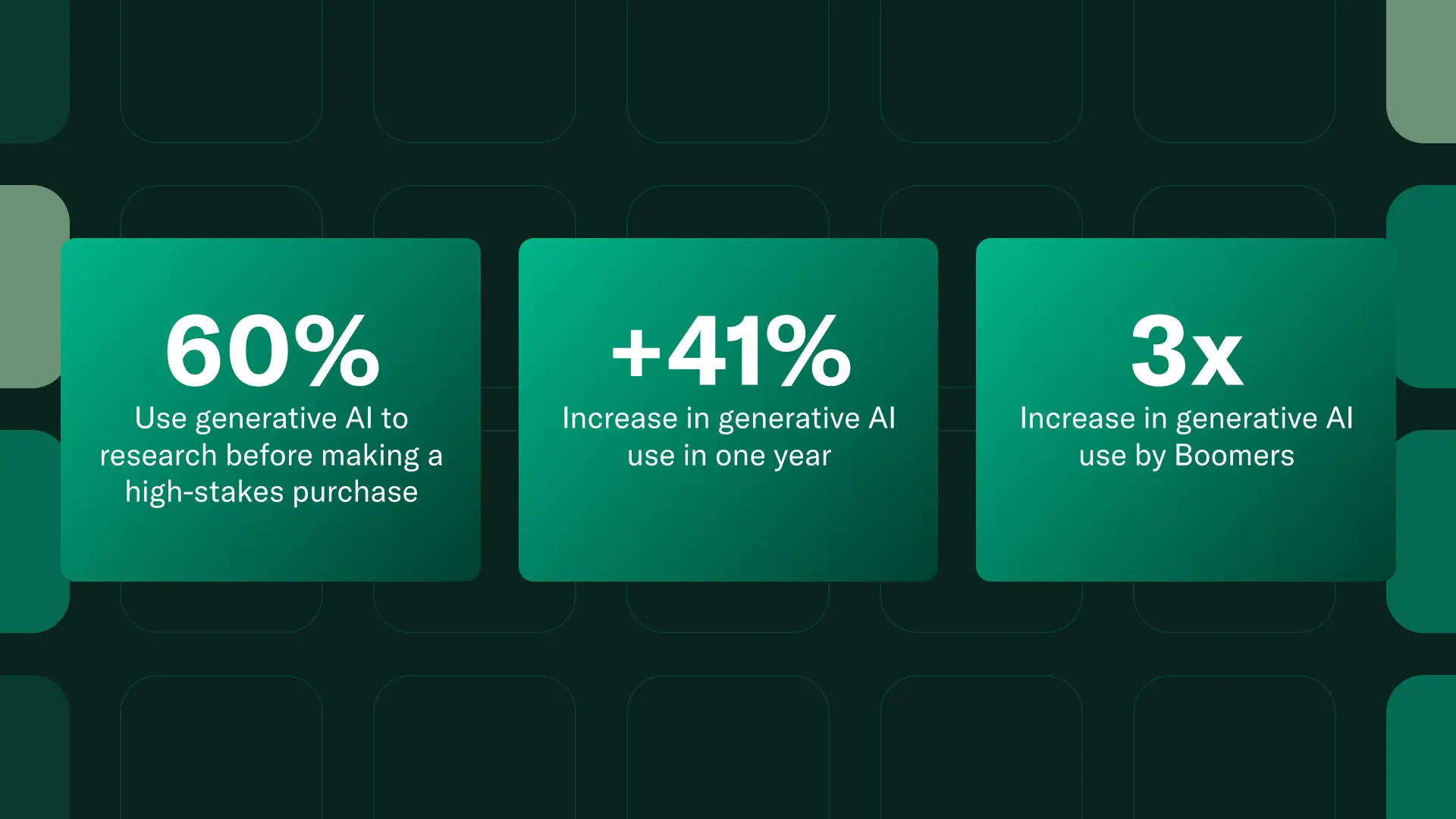
The bulk of the increase in generative AI use for purchase research came from Boomers, which roughly tripled from 11% to 34%. Digital natives’ AI use didn’t shift much, as about 70% of Millennial and Gen Z consumers reported using generative AI for their pre-purchase research — about the same as last year.
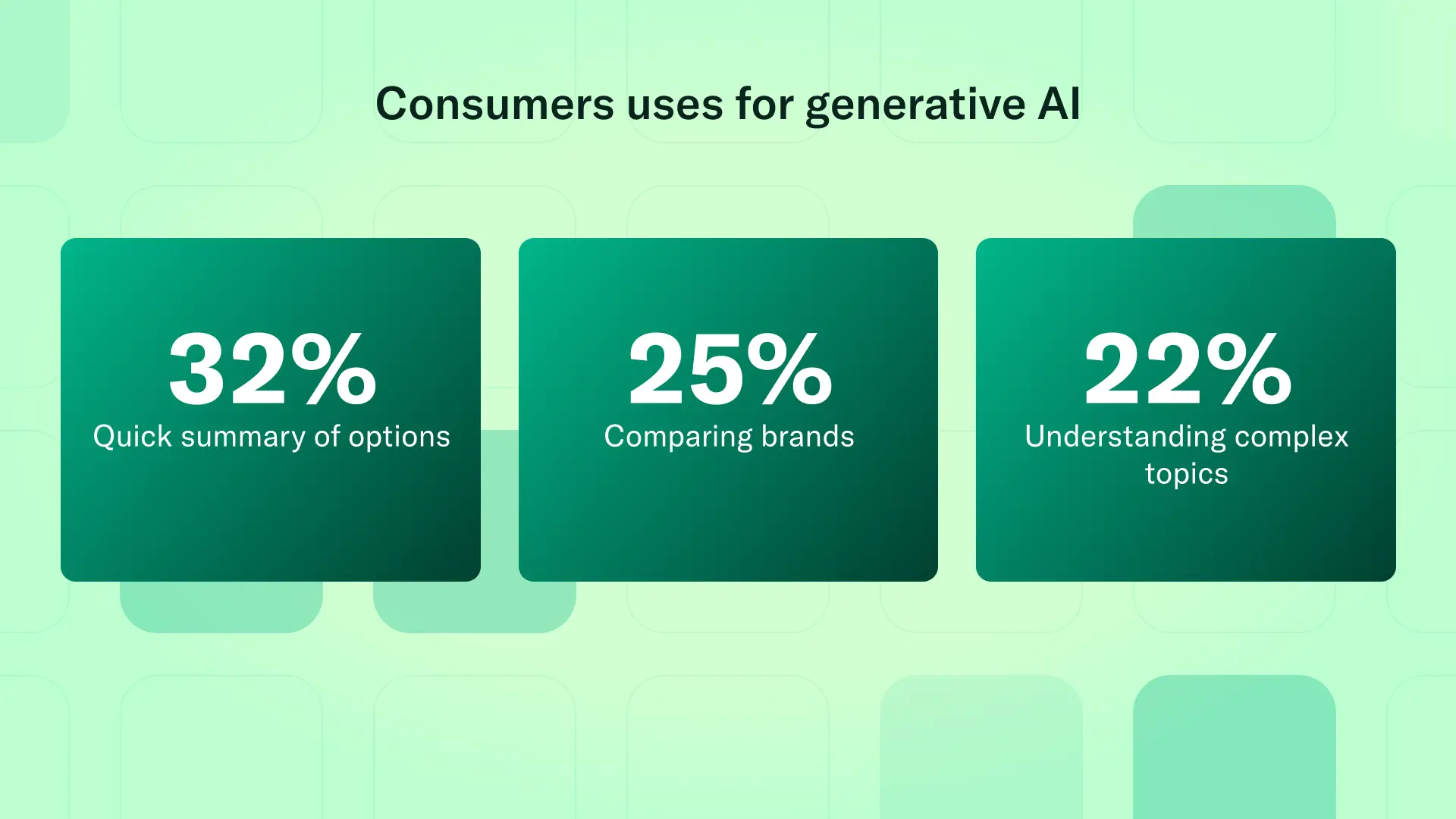
The top use cases tell you what they're doing with it: getting a quick summary of options (32%), comparing companies and brands (25%), and making sense of complex topics like insurance and financing (22%). So buyers now arrive better-informed, with comparisons already drawn and questions already framed. This means that by the time these consumers contact you, they're closer to a decision and less tolerant of a rep who can't keep up.
Slow Lead Form Responses Create a Conversion Black Hole
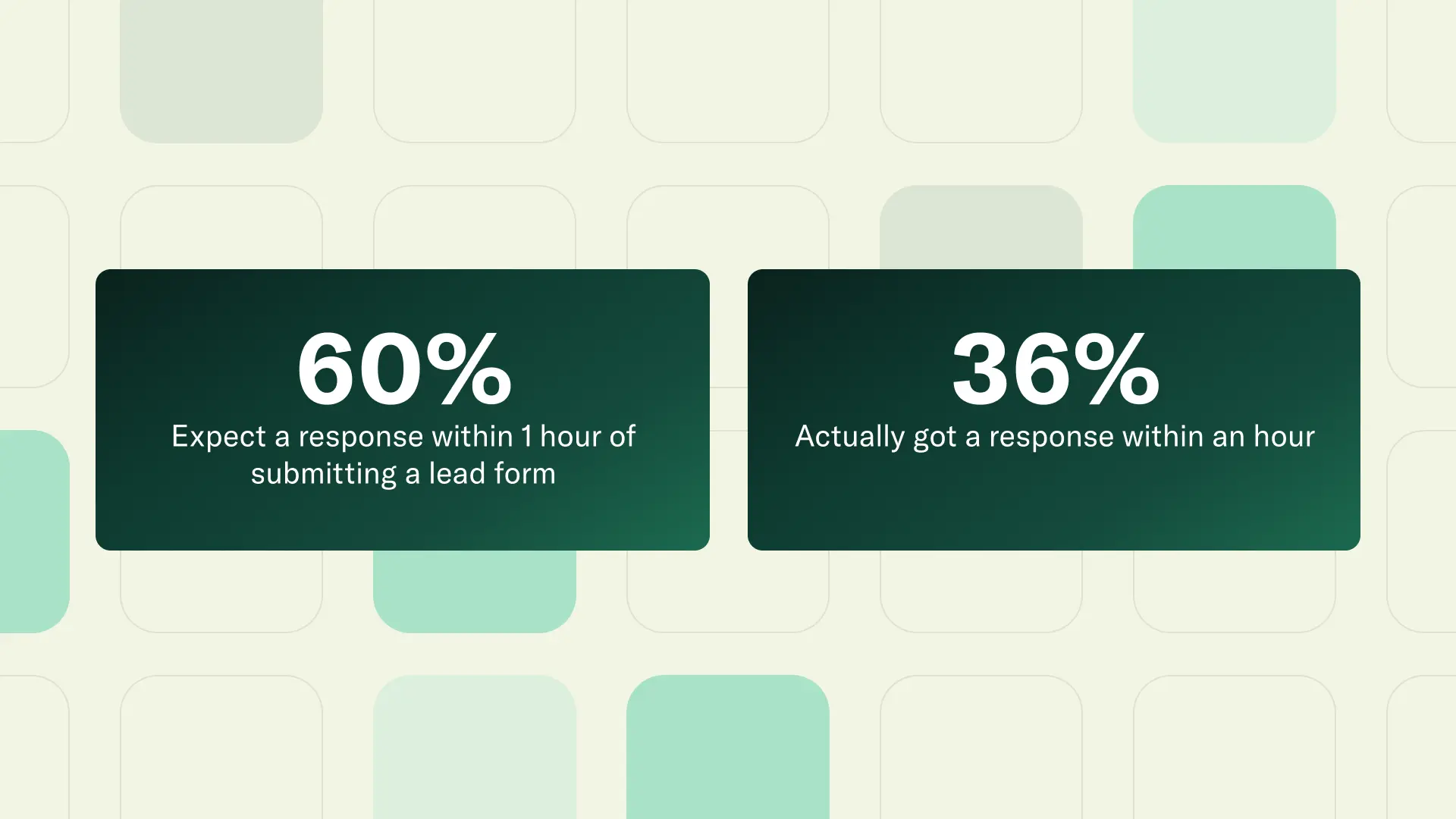
Nearly 60% of consumers expect a response within an hour of filling out a form on your website, but only 36% report brands meeting that expectation. That’s a massive 20% gap between expectation and reality, and a lot of revenue is leaking out of it.
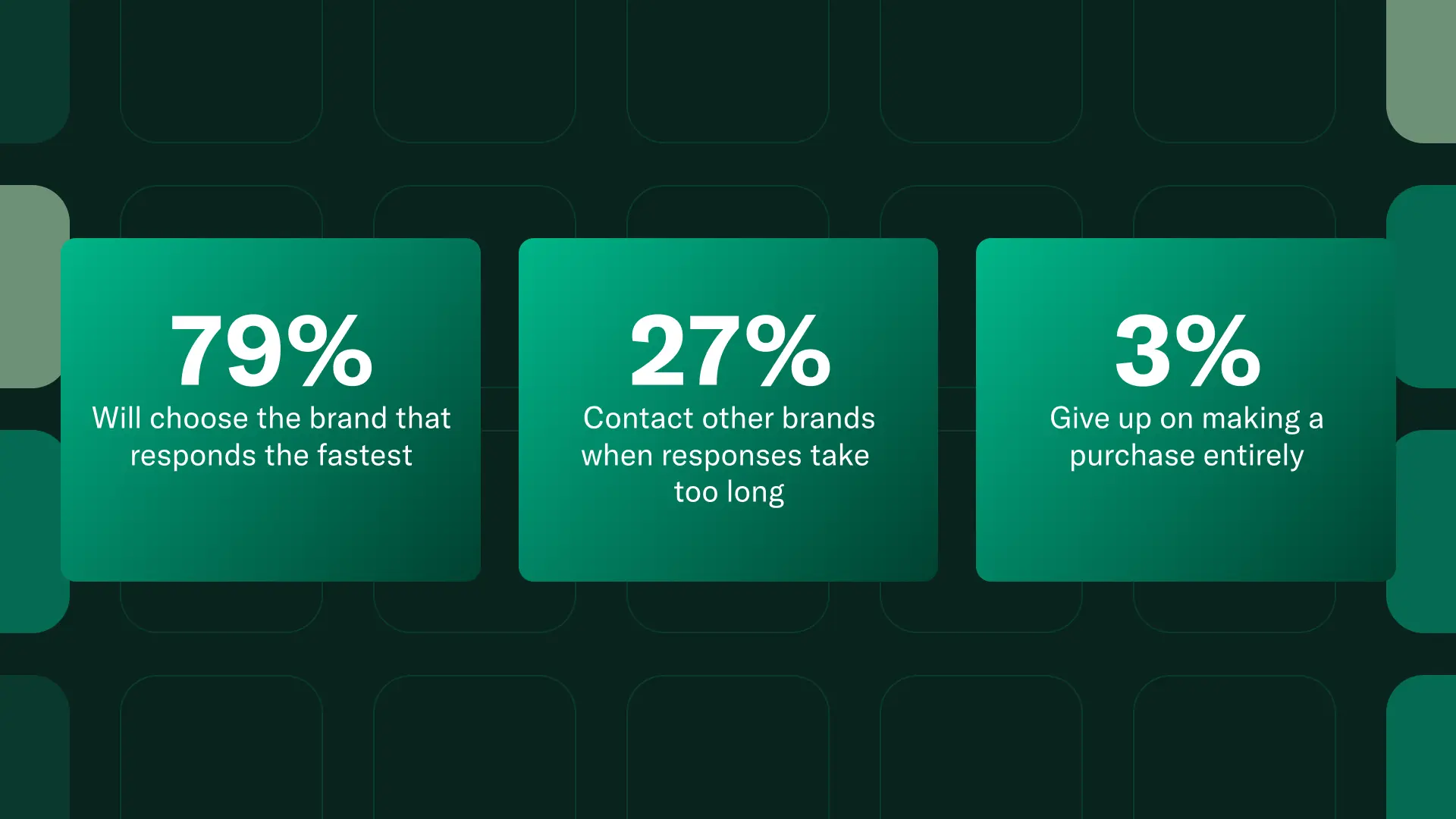
What happens when you miss the 1-hour window? Nearly 80% of US consumers say they'll switch to a competitor that responds faster. And when a business takes longer than expected, 27% contact other brands and 3% give up on the purchase entirely — roughly a third of buyers gone before a rep ever picks up the phone to follow up.
For brands spending heavily to generate demand, the math is brutal: a slow reply hands the lead — and the revenue behind it — to whoever answers first.
Consumers are More Forgiving, but Less Patient
These findings create a head-scratching contradiction, but read together they tell one story.
Consumers have become dramatically more forgiving of a single bad experience since last year’s report. The share who say they'd stop doing business with a company after one misstep dropped 26 points, from 66% to 40%. At the same time, the share who've hung up because they were on hold too long jumped from 50% to 75%.
.webp)
Read together, the message is clear. Consumers will abandon the call, but not necessarily the brand. They simply won't sit and wait to be heard. The brand that picks up quickly — or offers competent AI assistance the moment a customer reaches out — is less likely to lose a customer because of a single misstep. The brand that leaves someone on hold for an hour never gets the chance to be forgiven, because the customer is already gone.
Human Connection Still Wins When Things Get Complicated
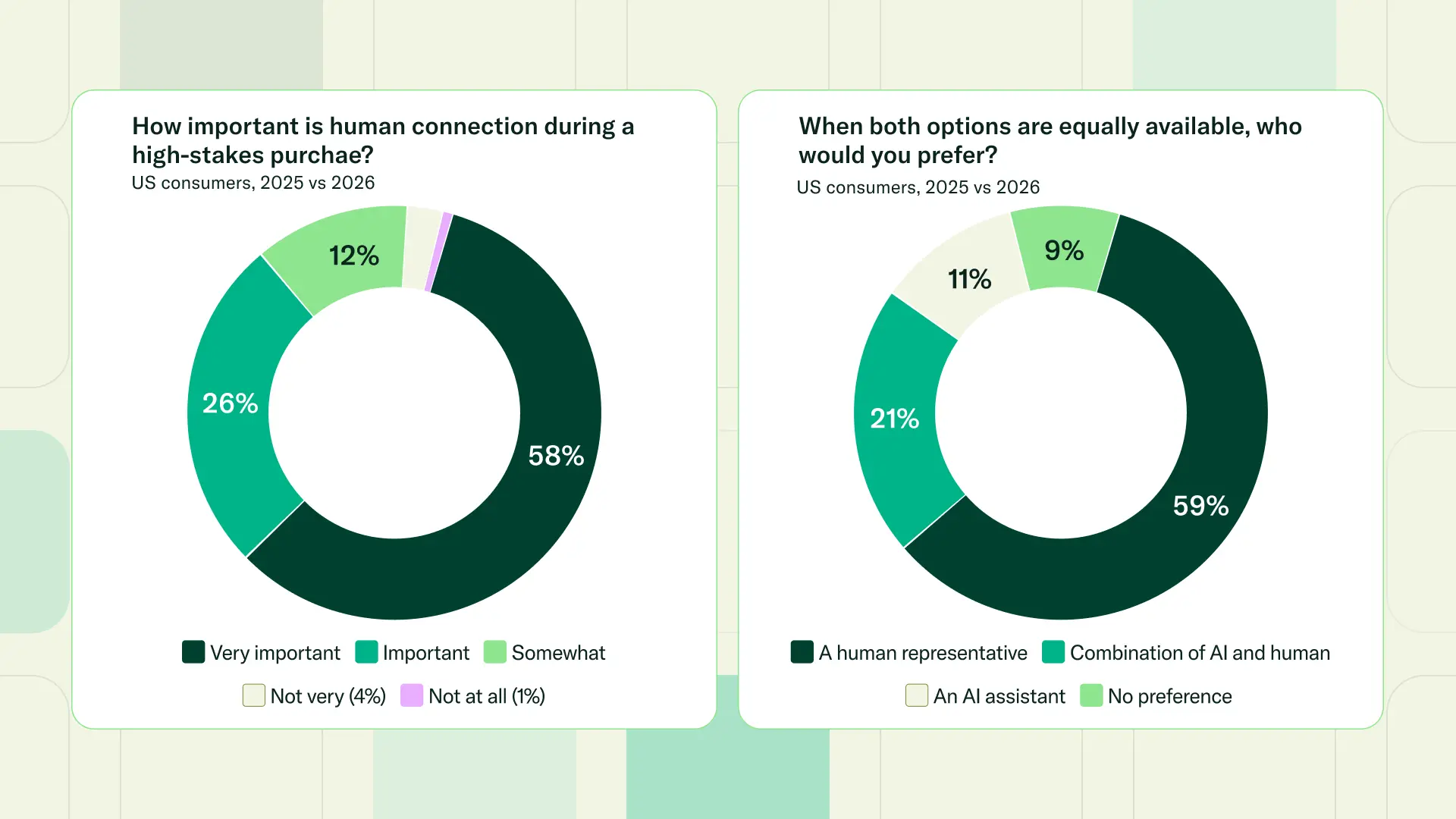
For all the AI progress, consumers have not changed their minds about what they want at the decisive moment. Nearly all consumers (98%) say a human connection is important during a high-stakes purchase. When AI and human help are equally available, 59% still choose the human. Keep in mind that means 31% also choose AI, so you still need to meet everyone where they are.
The phone remains the number-one help channel across every generation — 41% prefer calling when they have a problem and need help, rising to 52% among Boomers. And the generational split on AI tells the whole strategy in one line: 34% of Boomers now use generative AI to research, but 85% still want a human representative when it's time to decide on a purchase.
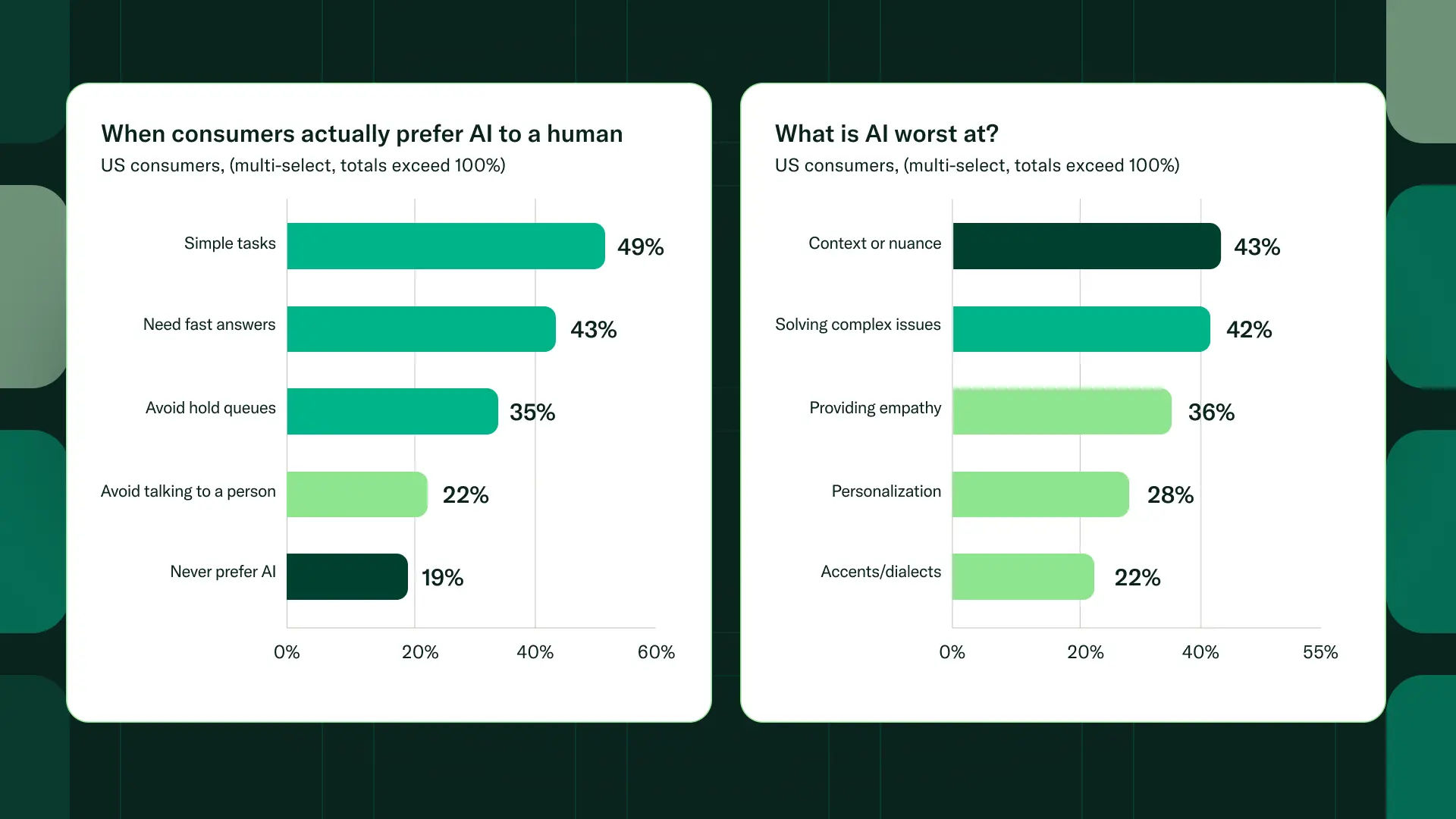
AI serves consumers best early in the buying journey when questions are simpler, but as things get more complex, it’s time for a human to step in. Consumers prefer AI for the easy turns — simple tasks (49%), fast answers (43%), and skipping the hold queue (35%) — and they're candid about what it's worst at: context and nuance (43%), complex problems (42%), and empathy (36%). Those are exactly the things a high-stakes purchase decision turns on.
What This Means For Where You Invest Next
The 2026 data describes an inflection point. It’s time to treat AI as a brand-equity decision, deploy it well enough that customers don't notice in the good moments, disclose it so they trust it in the bad ones, and connect every AI touchpoint to a human the instant the buyer wants it or is ready to commit.
Pulling that off requires the AI, the speed, and the handoffs to operate as one system rather than three disconnected tools. Generic models can't do it because they can't see where a buyer has been, why they reached out, or which campaign paid to create the moment. AI grounded in first-party buyer journey, conversation, and outcome data can engage a lead by SMS or voice the second they raise their hand, answering with real context, and passing them to a person before demand stalls.
That's the foundation behind Invoca's approach to the buyer journey: connect digital, conversational, and transaction data into one platform, run it as a system, and you can move fast without losing the trust the data shows consumers are watching for.
Discovery happens online, AI moves leads, decisions are made on the phone, and optimization requires a complete view of all that data that results from this multi-channel journey. Connect it all, get the balance of AI that respects consumers and humans at the ready when it counts, and you convert the demand you already paid to create instead of leaking it to a faster competitor.
Get the full report here to learn more.
.svg)
.svg)