

.svg)

Picture this: A local skier who just got diagnosed with a torn ACL calls a highly rated orthopedist they found through a Google search. They call the office, but no one answers, so they fill out a form on the office's website. They hit “submit,” put their phone down… and wait. And wait. Three minutes later, they’re back on Google, clicking on the next orthopedist in the business listings.
That brief gap between the patient’s intent and the provider’s response is where new patients are often won or lost. Today’s patients don’t just value speed — they demand it. And increasingly, the providers with the best reputations and strongest growth are those that can respond instantly in the channels patients actually want to use. If you snooze, you lose, even if it’s just a quick power nap.

Consumers Aren’t Willing to Wait for Businesses to Respond
When it comes to high-stakes healthcare decisions, patience is in short supply. When patients reach out, they need answers now, not tomorrow morning when the office opens.
The data backs this up. According to the Invoca Healthcare Consumer Experience Report, more than half of your potential patients will hang up if they’re placed on hold too long. Over 70% say they’ll stop doing business with a provider entirely after just one bad experience. In other words, a slow response actively damages your appointment conversion rate.
What’s changed is that AI has reset expectations. Consumers are using AI to get instant answers everywhere else: search, maps, shopping, and even healthcare advice. When a healthcare provider can’t respond quickly like AI does, it doesn’t feel like a staffing issue or an operational delay. It feels like indifference.
Why SMS Is Becoming a Default Channel for Healthcare
When people want fast answers without friction, they often don’t want to make a call. They want to text.
SMS has quietly shifted from a marketing engagement tool into a true buying channel. It’s asynchronous, convenient, and persistent. A patient can ask a question, step away, and come back without losing context. That’s fundamentally different from sitting on hold or restarting an online form.
Younger audiences, in particular, are leading this shift. Many are not only comfortable interacting with AI via text — they prefer it for quick questions, scheduling, and follow-ups. But this isn’t just a Gen Z trend. Anyone who has tried to book an appointment while juggling work, kids, or errands understands the appeal of a simple text conversation.
The result: SMS is no longer just for appointment reminders. It’s where real care decisions are happening.
Instant Answers Equal Appointments. Delays Result in Lost Revenue.
To understand why instant engagement matters so much, it helps to look at what actually happens when response times lag.
A missed call goes to voicemail. The patient leaves a message, or more often, they don’t. A web form gets submitted after hours. An online response flow stalls because one question isn’t answered clearly. In all of these cases, the patient’s need is immediate, but momentum disappears fast.
Delayed follow-up forces them to re-engage on your timeline, rather than theirs. And most won’t. They move on, even if they had preferred your provider.
This is how revenue quietly leaks out of the funnel. Not because demand wasn’t there, but because the experience failed to meet the moment.
Where AI Agents Outperform Human Follow-Up
Human teams are great at complex conversations—but they’re limited by office hours, staffing, and volume. AI agents shine precisely where those constraints hurt the most.
An AI messaging agent can respond instantly, 24/7, with no backlog. It doesn’t get overwhelmed during call spikes. It doesn’t go home for the night. And when implemented correctly, it doesn’t sound generic or robotic.
In practice, AI can step in at the exact moments humans can’t:
- After hours
- During long hold times
- When calls are not answered
- When a form or booking flow is abandoned
For example, if a patient calls an office that’s closed, an AI agent can immediately follow up via SMS, find out what they need, and keep the conversation moving. No voicemail limbo. No next-day delay.
What’s especially important is that modern, agentic AI goes beyond simple Q&A. It can handle real tasks like booking appointments and scheduling callbacks. That’s a major shift from older SMS tools that could only send scripted responses.
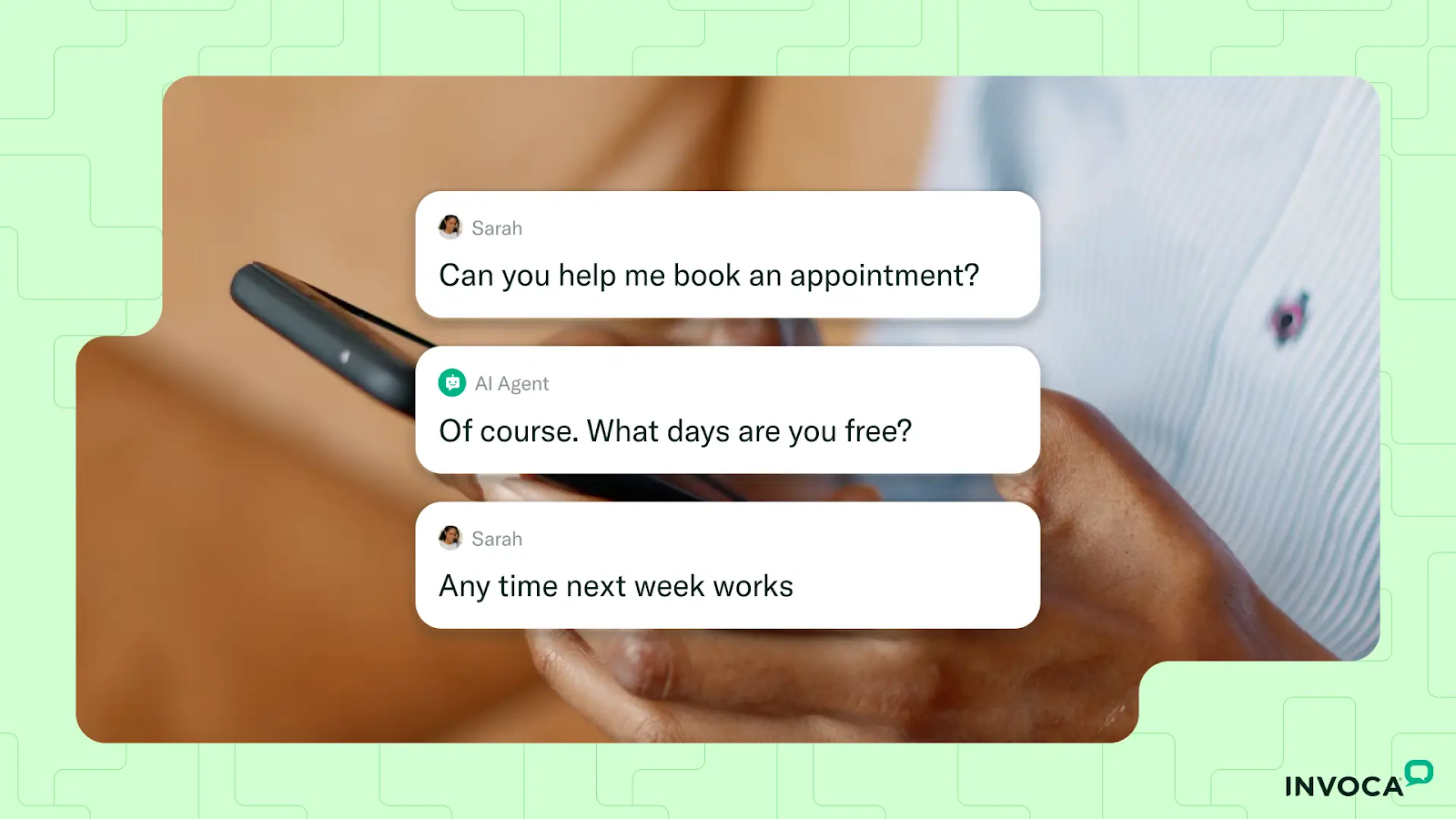
Invoca’s AI Messaging Agent takes this a step further by grounding every conversation in real context. Because it’s trained on your call transcripts, provider information, and patient journey data, it responds the way your best agents would. Instead of canned answers, it provides relevant, empathetic guidance tied to where the patient came from in their journey and what they’re trying to accomplish.
Real-Time Speed is a ROAS Multiplier
Instant engagement doesn’t just improve patient experiences — it directly improves marketing performance. When you respond faster, you convert more of the leads you already paid to acquire. That alone boosts ROAS. But the bigger impact comes from visibility.
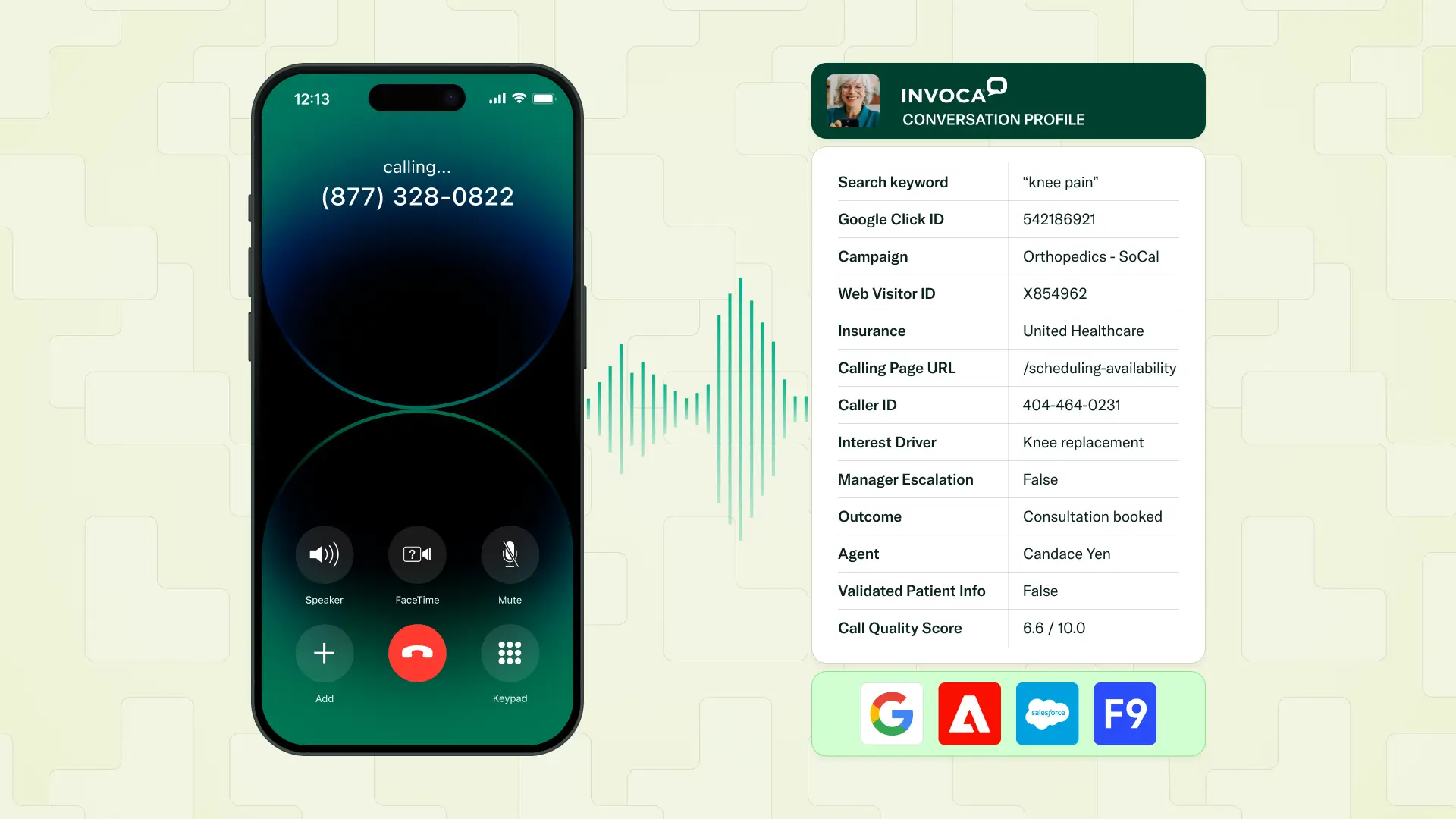
When SMS conversations are tied back to the original campaign, keyword, or ad, speed becomes measurable and actionable. You can see which channels drive high-intent conversations, which ones stall without instant follow-up, and where AI engagement recovers revenue that would have been lost.
This closed-loop attribution changes how teams think about optimization. Instead of optimizing for clicks or form fills, you optimize for actual outcomes like appointments booked, callbacks completed, and new patients acquired.
In that model, speed isn’t just a patient experience metric. It’s a growth lever.
Turning Instant Engagement into a Scalable Advantage
Instant engagement used to be hard to scale without adding headcount or outsourcing to costly BPOs. AI changes that equation.
With an AI Messaging Agent in place, providers can:
- Engage every buyer the moment they reach out
- Meet consumers in a channel they prefer
- Progress conversations all the way to conversion
- Prove the revenue impact of every interaction
And because it’s trained on first-party conversation data, the experience improves over time rather than degrading, while maintaining accuracy and compliance.
The providers winning right now aren’t just experimenting with AI. They’re using it to eliminate delay, reduce friction, and make speed a competitive advantage. Because in today’s market, the fastest response doesn’t just feel better—it wins the business.
Learn more about Invoca’s AI Messaging Agent in this on-demand webinar.
.svg)
.svg)