.svg)

It’s the middle of a triple-digit heatwave, and a homeowner’s 20-year-old AC condenser motor just went up in smoke. They turned on the sprinklers for the kids, but they’re sweating trying to find an HVAC company to come out and fix their air conditioning ASAP. And you’re sweating because hundreds of potential customers are calling for the same thing. Most of those leads will go with the company that will pick up their call first, but you can’t answer every one that comes your way.
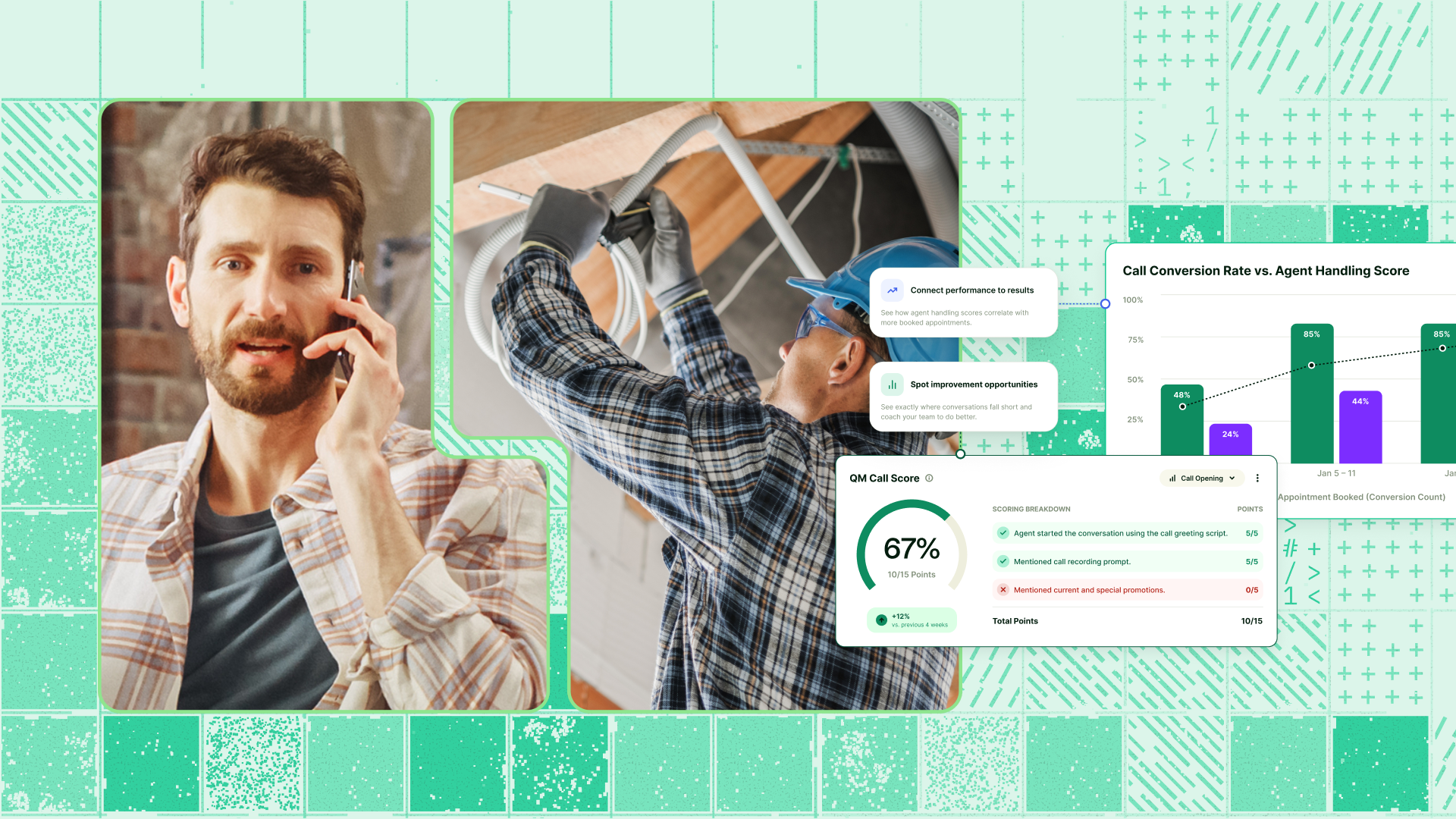
Across home services, 52% of inbound calls are answered by a person, according to the Invoca Home Services Lead Conversion Benchmarks Report 2026. Which means roughly half of potential leads don’t reach anyone.
Losing leads during peak season, unexpected weather, and after disasters is just the price of doing business. But it doesn’t have to be. Read on to see how you can answer all of your emergency calls in a matter of seconds and turn more leads into revenue.
The Cost of Missed Emergency Calls
Most home services marketing leaders know speed matters, but you may not be up to speed on what consumers actually expect.
The Home Services Buyer Experience Report 2026 found a 16-point gap between how quickly home services consumers expect a response after submitting a lead form and how quickly they actually get one. That gap is costly, as 79% of home services consumers say they'll switch to a competitor that responds faster.
When consumers call, there’s even less wiggle room. A form submission gives you an hour until a lead assumes you’re not going to call them. When they call, you’ve got a minute or two to answer before they hang up and go searching for another business that can help them.
According to the Buyer Experience Report, two-thirds of home services consumers will hang up after being put on hold too long, and roughly a third say they'd choose an AI assistant to avoid a hold queue. Read that last one carefully—they are volunteering to talk to AI because the alternative is rotting on hold.
That preference is a gift to any brand willing to accept it, and it totally changes what "24/7 availability" actually means. An after-hours answering service is just a glorified answering machine and it’s not fast. By the time your dispatcher calls back at 8 a.m. the next day, the homeowner has a technician scheduled with a company that answered that night.
Your marketing already did the hard part of generating the lead. Losing leads to missed calls is incredibly wasteful, because you already paid for them and you aren’t likely to get them back.
What a 30-Second Emergency Response Looks Like in the AI Age
Most of what gets called an "AI voice agent" in home services is a spit-polished talking IVR menu. Press 1 for service. Press 2 for billing, you know the drill. A homeowner standing in three inches of water wants to have a conversation and see how soon you can get someone out to fix the mess they’re in, not to mess around with your IVR for 20 minutes.
That's the problem Invoca's AI Voice Agent is built to solve. Because it's trained on your first-party data and highest-performing conversations, it knows how your best people handle every type of call.
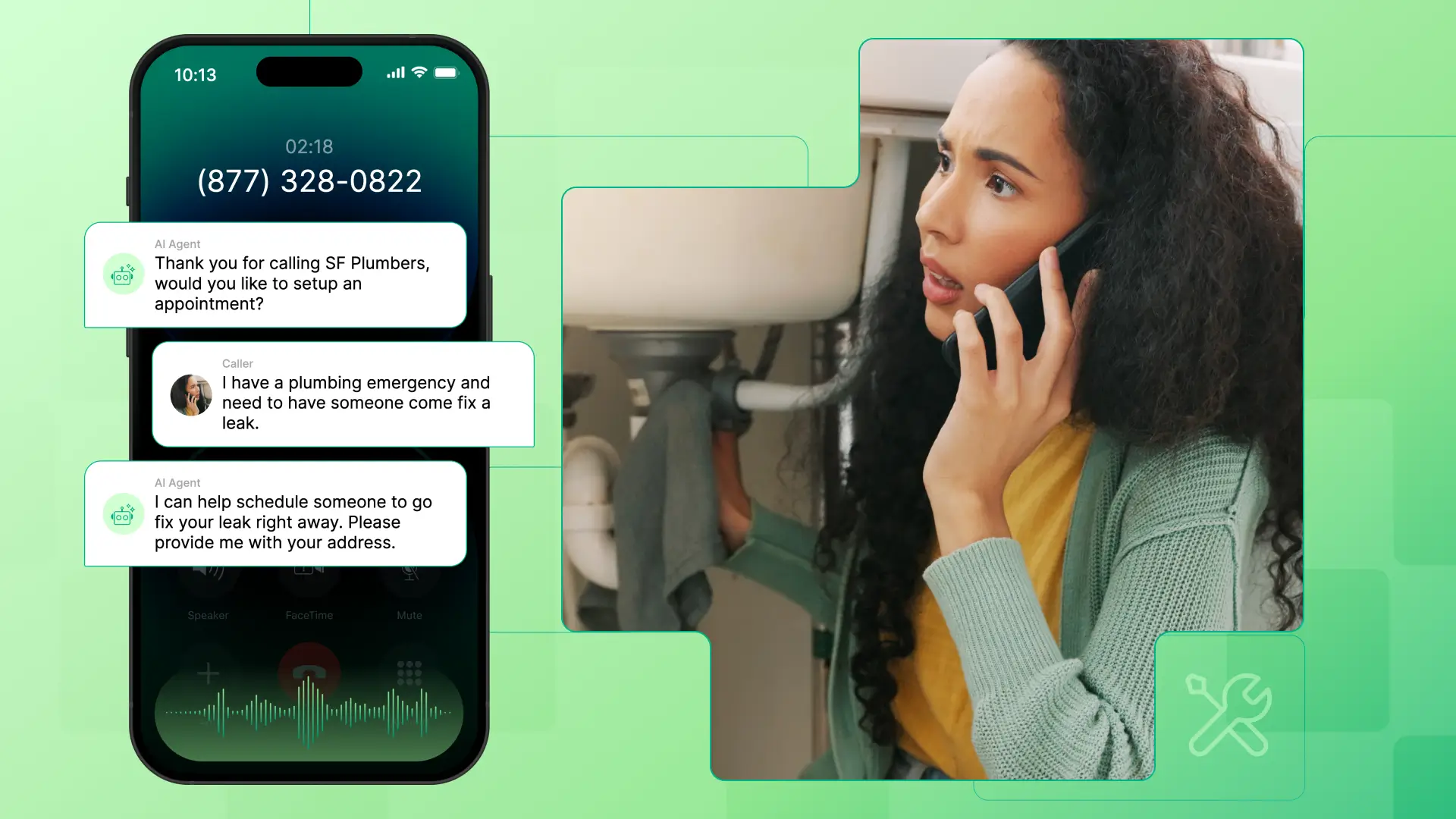
Let’s walk through the July no-cool call. The phone rings, and Invoca’s AI Voice Agent answers immediately, so the caller never enters a hold queue. Before the greeting finishes, the agent already has context from the caller’s digital journey: the emergency AC repair search, the ad clicked, and the service area page viewed.
The agent identifies the intent and the urgency, then qualifies what the dispatch contact center agent actually needs to know. If a slot is open tonight, the agent books it and confirms the appointment. If the situation calls for talking to a person, it hands off to the contact center with the full conversation context attached, so the homeowner doesn’t have to repeat themselves. A gussied-up IVR just can't do that.
Three principles separate AI agents from a voice IVR:
- It can hold an actual conversation. The first thing a distressed caller hears should be confirmation that they've reached someone (or something) who can help.
- It can take action. Unlike an IVR, an AI agent can qualify leads, schedule appointments, callbacks, and answer questions.
- It has the context to drive conversions: The best AI agents can use digital journey data like the ads clicked, pages viewed, or cart contents, to guide buyers toward conversion faster.
What it comes down to is that AI agents can take action that drive coversions, whereas voice IVRs basically just route calls.
How to Measure Your AI Voice Agent’s Effectiveness
The temptation with any AI voice agent deployment is to measure how it improves coverage, like how many calls are answered. But that’s mostly a vanity metric, and it doesn’t tell you anything about how it’s improving your ROAS or revenue performance.
The metrics that matter are the ones that ladder up to revenue, such as what share of answered calls are real job opportunities, what share of those convert, the value of the conversions, and how all three compare to your baseline.
Then you can connect them backward. Which campaigns, keywords, and channels are producing the emergency calls that become booked jobs, and which are producing inquiry volume that never gets converted? You then send that conversion data to Google Ads, so Smart Bidding and Performance Max can optimize for revenue and improve your ROAS.
Speed is the Bar Consumers Demand that You Meet
Having an answering service that can take messages after hours is so 2020. Consumers have gotten used to getting instant answers from ChatGPT, and now they expect the same thing from you. The homeowner with a dead AC and a hot, cranky kids is not going to wait for you to get back to them and they probably expect that you won’t.
You want to answer more calls and convert more leads, but you don’t have budget to burn on adding agent capacity. In most cases, it’s not even your budget anyway, so you don’t have any control over it. With AI voice agents, the power to improve conversion rates is in your hands.
To get started, choose one problem to solve. Pick the call type that costs you the most when it goes unanswered, put an AI voice agent on it, and measure the lead rate to see what kind of improvement you get. The numbers will surprise you, and your customers will be pleasantly surprised as well.
See what an AI voice agent would do with your emergency calls. Schedule a demo to see how Invoca’s AI agents engage, qualify, and book more jobs today.
Want the consumer data behind this post? Get The Home Services Buyer Experience Report 2026 for the full picture of how homeowners judge response speed, brand AI, and the moments they decide to call someone else.
.svg)
.svg)