.svg)

Healthcare marketing and patient experience leaders are operating in one of the most challenging environments we've seen in a decade. You're being pushed to innovate with artificial intelligence and drive hyper-personalized patient acquisition campaigns, all while dealing with a shrinking budget.
It feels like trying to run a marathon while navigating a minefield. But here is the good news: the leaders who figure out how to balance innovation with absolute operational transparency aren't just surviving—they’re winning the market share war.
This week, I’ve been diving deep into the latest industry shifts across healthcare technology, consumer behavior, and financial policy. Three major themes emerged that I think every healthcare executive needs to pay attention to right now.
The Omnichannel Disconnect Is Leaking Your Revenue
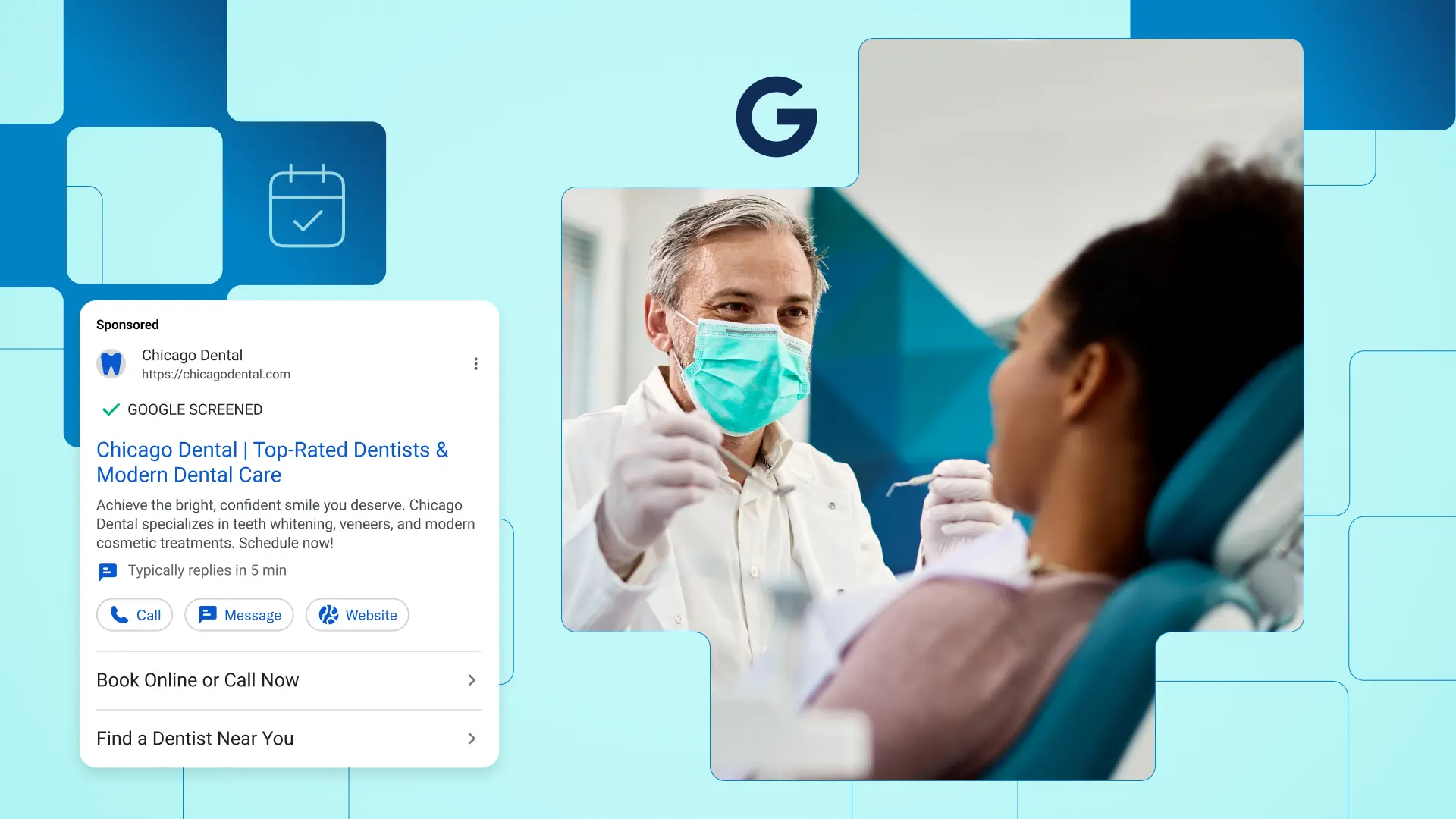
The modern patient journey is rarely linear. A patient might start with a Google search, read a few reviews, visit your website, and then, more often than not, pick up the phone to book an appointment.
Unfortunately, many healthcare organizations still treat the digital journey and phone call as two entirely separate entities. When a patient clicks a highly targeted ad for a specific orthopedic service, but the contact center agent they speak with has zero context about that intent, the experience falls flat. This disconnect leads to wasted ad spend, frustrated callers and agents, and missed conversions.
Invoca’s new 2026 Healthcare Consumer Experience Report found that 39% of patients would switch healthcare providers after a single bad experience. If your marketing tech stack doesn't pass digital intent to your human agents, you're funding an expensive acquisition machine only to drop the ball at the finish line. Closing this loop is the single fastest way to optimize your acquisition spend.
AI Is Infrastructure Now (and the Bills Are Coming Due)
Every week, there’s a new headline about how AI is revolutionizing healthcare. But behind closed doors, a major shift occurred over the last several months. We’ve moved past the "wild west" era of minor, isolated AI pilots. Today, health systems are signing major enterprise-wide deals, integrating AI directly into clinical documentation, revenue cycle management, and patient communication.
However, as digital leaders push past the proof-of-concept stage, they're hitting an unexpected wall: the skyrocketing costs of consumption-based AI pricing models. In the world of Large Language Models (LLMs), vendors charge based on "tokens" which are the structural units of data that AI reads and writes. If your staff or your automated systems query these models continuously without strict oversight, those tokens get consumed rapidly. This consumption-based model has the potential to quietly cripple an organization's budget and entirely wipe out the expected return on investment.
Because of this, major health systems like Care New England and Houston Methodist are aggressively reining in their deployments. They're actively implementing extensive employee training and designing targeted accounts based on actual user needs rather than opening the floodgates to everyone. More importantly, digital executives are drawing a hard line in the sand: if an internal AI agent or tool doesn't demonstrate a clear operational or financial return within a strict timeframe, they're shutting it off. They demonstrate that CX and marketing innovators that champion any administrative AI tool must solve real-world operational math. If it doesn't make your operation leaner and your patient experience smoother, it's just expensive experimentation.
Technology Is the Only Defense Left Against Thin Margins
The financial pressure on health systems right now is relentless. The American Hospital Association recently highlighted a brutal reality: hospital expenses climbed a massive 7.5% year-over-year, leaving standard reimbursements completely in the dust. When inflation outpaces your incoming revenue, you can't just cut your way to growth; you have to find structural efficiencies.
The industry's heaviest hitters are looking at data-driven technology to close the gap. Think predictive analytics to anticipate patient volume, integrated care models like hospital-at-home, and automated patient engagement platforms that prevent care gaps.
For marketers, this means the pressure is on to prove that every single dollar spent on patient acquisition results in a booked, kept appointment. Marketers must lean into deep data integration, connecting online behaviors to offline outcomes, to ensure that administrative waste is completely rooted out of the conversion funnels.
The Bottom Line
The theme tying all of these trends together is operational connectivity. Whether you're auditing your marketing attribution data, managing the cost of a new conversational AI rollout, or attempting to fix a clunky scheduling process, ask yourself: Does this make the patient's transition from digital to human seamless, and does it reduce waste? If the answer is yes, you're building the foundation to out-compete the market.
.svg)
.svg)