.svg)


On June 15, 2026, Google is changing the rules for how phone calls get attributed to your paid search campaigns. If your tracking setup isn't ready for it, you'll lose the ability to see which keywords, ads, and campaigns are actually driving phone leads. Your reporting will get murkier, your Smart Bidding algorithms will work with less information, and some of your most valuable conversions will look like they came from nowhere.
The good news is that there are clear steps you can take to protect your attribution before the update lands. The better news is that businesses already capturing their own first-party call data will barely feel the change.
Here's what's actually happening, who it affects most, and how to make sure your phone call attribution holds up.
What's Changing in Google Ads on June 15
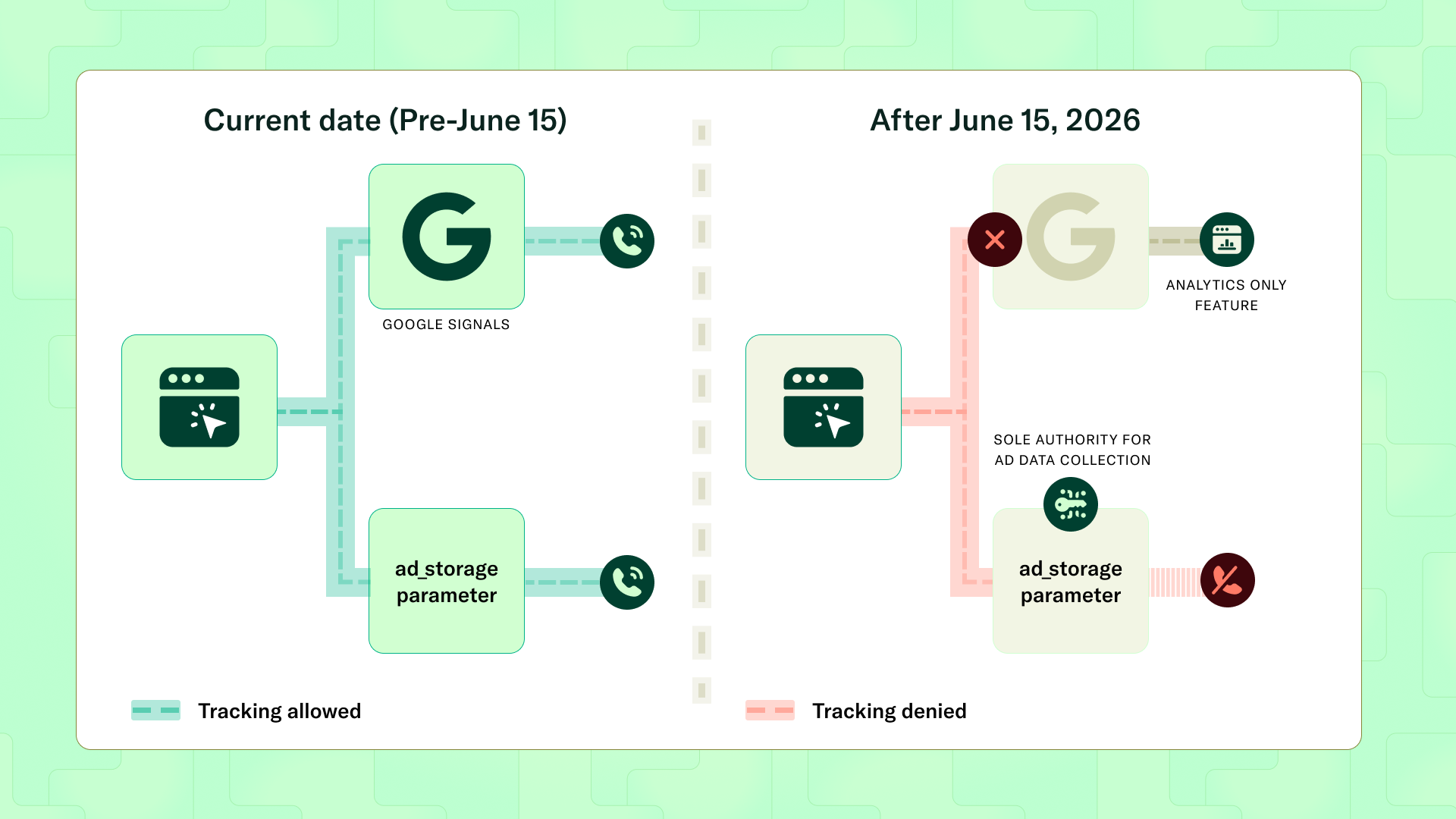
Right now, two different controls decide whether Google Ads can connect a phone call back to the ad click that drove it. The first is a setting inside Google Analytics called Google Signals. The second is a parameter inside Google Consent Mode called ad_storage. Both need to permit tracking for the full signal to flow through.
Starting June 15, that dual-control model goes away. ad_storage becomes the sole authority over advertising data collection for any Google Ads account linked to your site. Google Signals narrows back to an analytics-only feature, used for behavioral reporting inside GA4 but no longer involved in ad data collection. In simple terms: if a visitor denies ad_storage consent in your cookie banner and they call your business after viewing the ad, Google Ads can no longer link their phone call back to the ad they clicked. The conversion may happen, you just won’t see it because the trail of breadcrumbs disappears.
A few related changes are landing around the same time. Granular Google Ads reporting will only be available going back 37 months, starting June 1, 2026, shrinking your historical view at the same moment consent controls are tightening. Call-only ads are also being phased out. New call-only ads can no longer be created as of February 2026, and existing call-only ads will stop serving entirely in February 2027.
Later in 2026, IP addresses collected by the Google tag will be encrypted before flowing to linked Google Ads accounts, where they'll be governed by Ads-side settings rather than Analytics-side settings. Google hasn't confirmed the exact date for this change.
Multi-Location, Franchise Marketers, and Regulated Industries Will Be Most Impacted
Anyone running call-driven paid search campaigns is in the highest-risk group. Call extensions, click-to-call campaigns, and call-only ads all depend on cookie-based attribution that breaks the moment ad_storage consent is denied. However, brands with a properly configured CMP routing through Consent Mode v2 won't be significantly impacted.
Multi-location and franchise marketers will see the impact compounded. Attributing calls to the right campaigns, keywords, or store locations across hundreds of sites only works if consent infrastructure is set up consistently everywhere. Inconsistencies become attribution gaps, and those gaps add up fast across a large footprint.
Regulated industries face the trickiest situation of all. Healthcare, financial services, and insurance marketers are navigating these privacy changes alongside HIPAA, PCI-DSS, and other compliance obligations that often limit what data can be passed back to Google in the first place. The room for error is small.
And anyone still using the original version of Consent Mode will experience attribution loss the day the update goes live. Consent Mode v1 doesn't include the ad_user_data and ad_personalization parameters that the new framework requires, so there will be immediate gaps.
Your Smart Bidding Will be Less Smart
The reporting problem is obvious, but it's not the most expensive one. When call conversion signals stop flowing to Google Ads, Smart Bidding algorithms lose the inputs they rely on to optimize bids. The system starts reallocating spend based on incomplete information.
Campaigns that drive your highest-value phone leads can begin to look like underperformers because the attribution signal connecting calls back to clicks has been severed. Revenue will still be coming in, but Google won’t be able to see it. So your bids drift toward whatever conversions remain visible, which usually means form fills, online purchases, or other digital events that survived the consent denial.
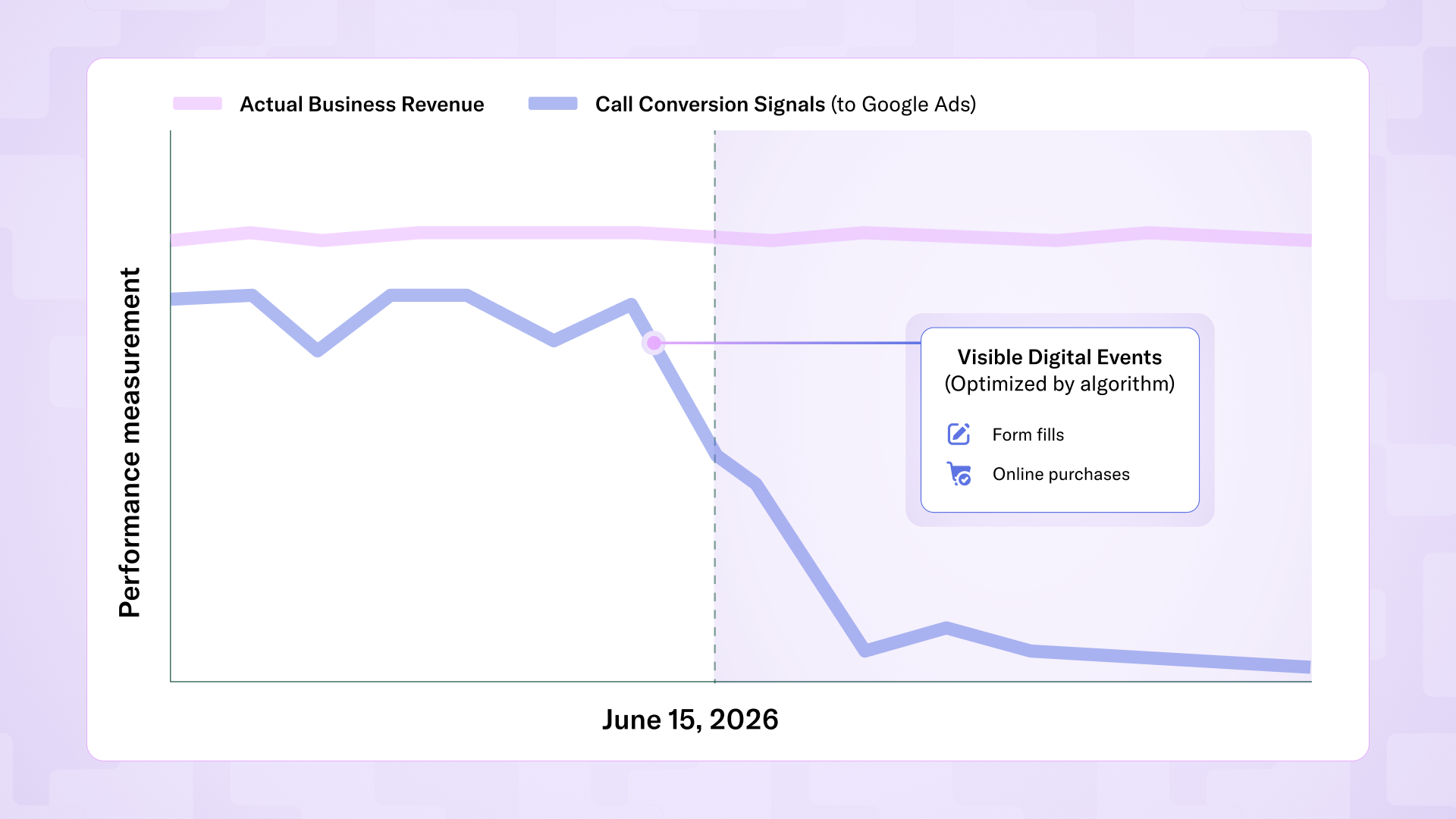
For brands where calls drive a meaningful share of revenue, that's a costly blind spot that compounds over time. Every week the algorithm runs without call signal is a week it's optimizing toward the wrong outcome.
How to Modify Your Google Ads Settings Before June 15
The audit and implementation work needs to happen in a specific order, and the deadline is tight.
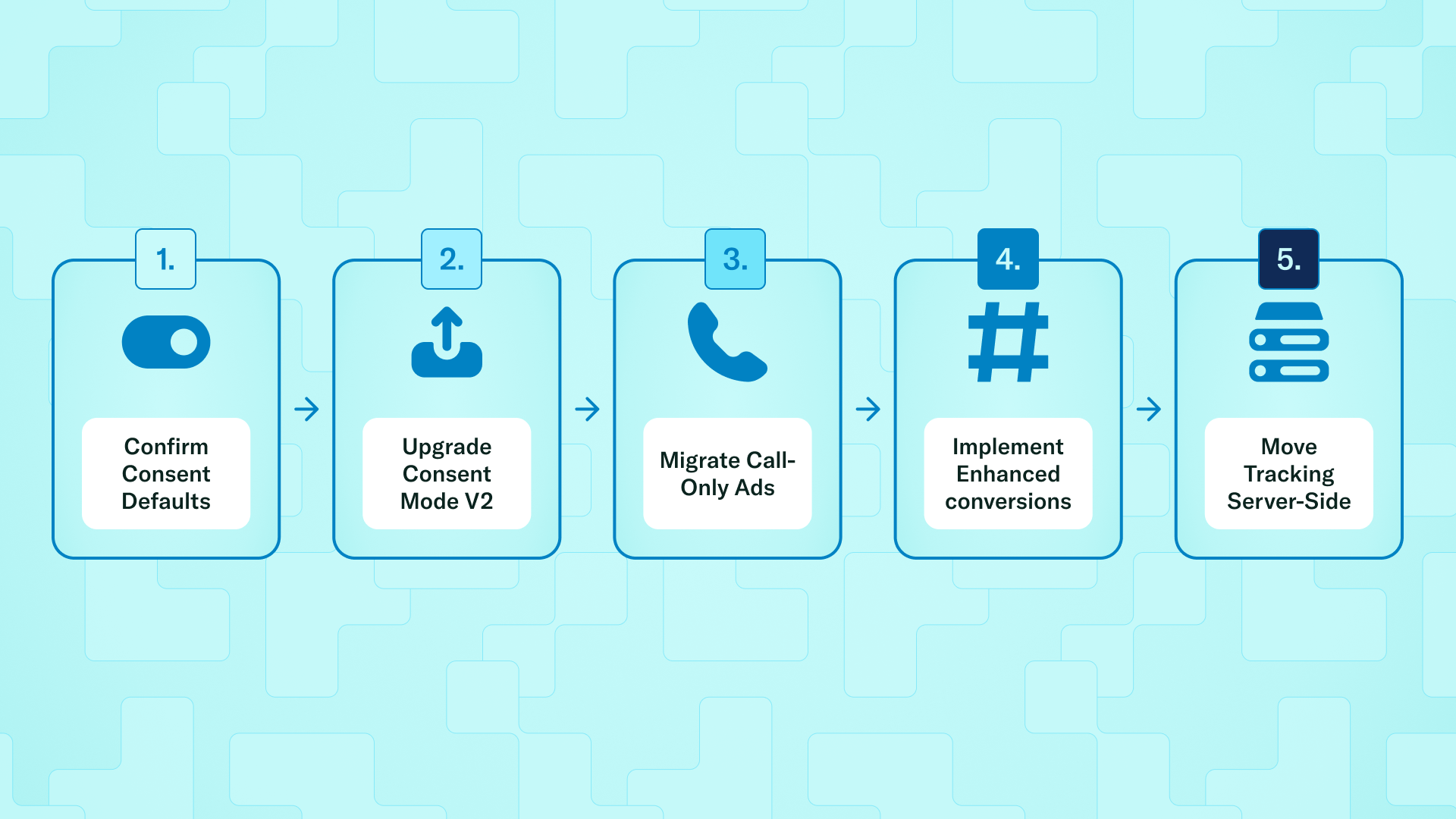
Start with your consent setup
Open an incognito window, visit your site, and confirm that consent defaults to "denied" before your banner appears. Then verify that all four consent parameters (ad_storage, ad_user_data, ad_personalization, and analytics_storage) are firing correctly. Many setups are missing one or more, and those gaps used to get absorbed by the dual-control structure with Google Signals. After June 15, every gap shows up directly in your measurement.
Upgrade to Consent Mode v2 with advanced implementation
Advanced mode sends cookieless pings to Google even when users deny consent, giving Google enough data to model conversions you'd otherwise lose. Basic mode collects nothing when consent is denied, leaving you with complete attribution loss for that portion of your traffic. For call-heavy businesses, advanced is the only configuration that maintains a usable picture of campaign performance.
Migrate your call-only ads to responsive search ads with call assets
This needs to happen before early 2027 anyway, and starting now gives you time to test new ad copy that drives call intent, since users will land on a page before dialing rather than calling directly from the SERP.
Implement enhanced conversions for calls
Sending hashed caller phone numbers back to Google Ads helps recover attribution matching when cookies are blocked. Combined with offline conversion imports that pass GCLIDs back from your CRM or call platform, this gives you the broadest possible attribution coverage across different consent scenarios.
Move your call event tracking server-side
Server-side tagging reduces your reliance on browser cookies. Call events processed server-side are less affected by consent restrictions, ad blockers, and browser-level privacy controls, which means more consistent data flowing into your reporting and bidding.
Then improve the quality of signals you're sending
Once your attribution infrastructure is protected, focus on what it's actually telling Google. Instead of signaling that a call happened, send signals about whether the call converted, the intent the caller showed, or the revenue it generated. Smart Bidding optimizes better with quality signals than volume signals, which matters even more when consent restrictions reduce the total signal pool available to the algorithm.
Better Call Data Means Better Ad Optimization
The technical fixes above protect your existing attribution setup, but they don't solve the underlying problem. Every cookie-based attribution model shares the same vulnerability: it works until a browser, regulation, or platform changes the rules. The June 15 update is the latest example, but it won't be the last.
A dedicated solution for attributing call conversions takes a different approach. Attribution doesn't depend on third-party cookies or ad_storage consent at all. It's built from first-party data captured directly from the digital journey and the call itself: the marketing source that drove the call, what the caller said, the intent they expressed, and whether they converted into revenue.
This is where Invoca’s marketing solution fits in. Invoca attributes every call back to the campaign, ad, keyword, and landing page that drove it using first-party data, not third-party cookies. When ad_storage consent is denied, Invoca's attribution still works, because it was never dependent on ad_storage in the first place. Invoca's durable attribution for Google Ads was built specifically for this scenario, maintaining the link between ad clicks and phone conversions even when browsers strip out the identifiers that traditional tracking relies on.
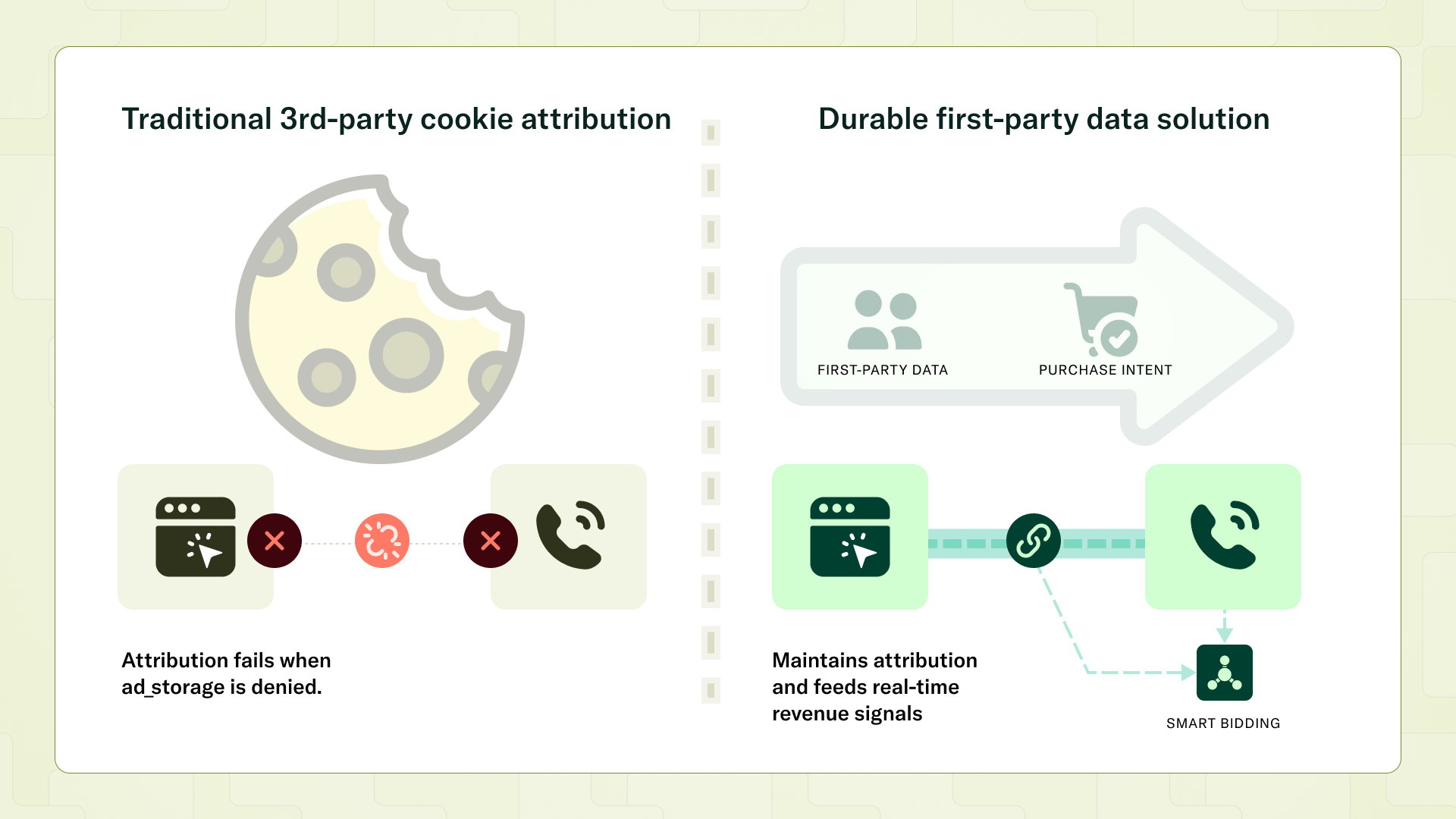
Invoca also makes Smart Bidding work harder for you. Because every call is analyzed in real time, Invoca can tell Google Ads which calls actually converted, which callers showed high purchase intent, and how much revenue each conversation generated. Those richer, outcome-based signals help Smart Bidding optimize toward revenue rather than raw call volume. And signal quality matters more than ever when consent restrictions are reducing the total signal volume available to the algorithm.
The strategic pattern here has been forming for years. Privacy regulations, browser changes, and consent frameworks all keep pushing in the same direction: away from third-party identifiers and toward first-party data businesses own. Brands that build their measurement on first-party conversation data have a foundation that holds up across every privacy update, browser change, and consent rule that comes next.
.svg)
.svg)