.svg)


For years, the path to a considered purchase was predictable: a consumer identified a need, typed a query into a search engine, clicked a few organic or paid links, and landed on a business's website.
But conversational AI is turning that playbook upside down. Today, millions of consumers use ChatGPT as an interactive advisor to research, evaluate, and select businesses.
Instead of typing "best health insurance plans near me" into a search bar and parsing through all the blue links, they are asking ChatGPT full conversational questions like: "I’m looking for a family health insurance plan in Austin with low deductibles that covers pediatric specialists. Can you recommend the top three providers and explain how their benefits differ?"
For marketing teams in high-stakes, considered-purchase industries such as automotive, healthcare, financial services, home services, insurance, and telecom, this shifting consumer behavior represents a massive land-grab opportunity. However, it also introduces a massive blind spot: tracking whether those ChatGPT interactions actually turn into leads, appointments, sales, and ultimately revenue.
This blog explains the strategies and solutions marketing teams can use to measure and optimize offline conversions and revenue from ChatGPT.
The Considered-Purchase Dilemma: Clicks Don't Equal Conversions
When consumers use ChatGPT to research a major life decision like buying a car, picking a primary care doctor, buying a home security system, or changing internet providers, they rarely finalize the purchase entirely online. Because these decisions are complex, expensive, and deeply personal, the digital journey almost always converts into an offline conversation.
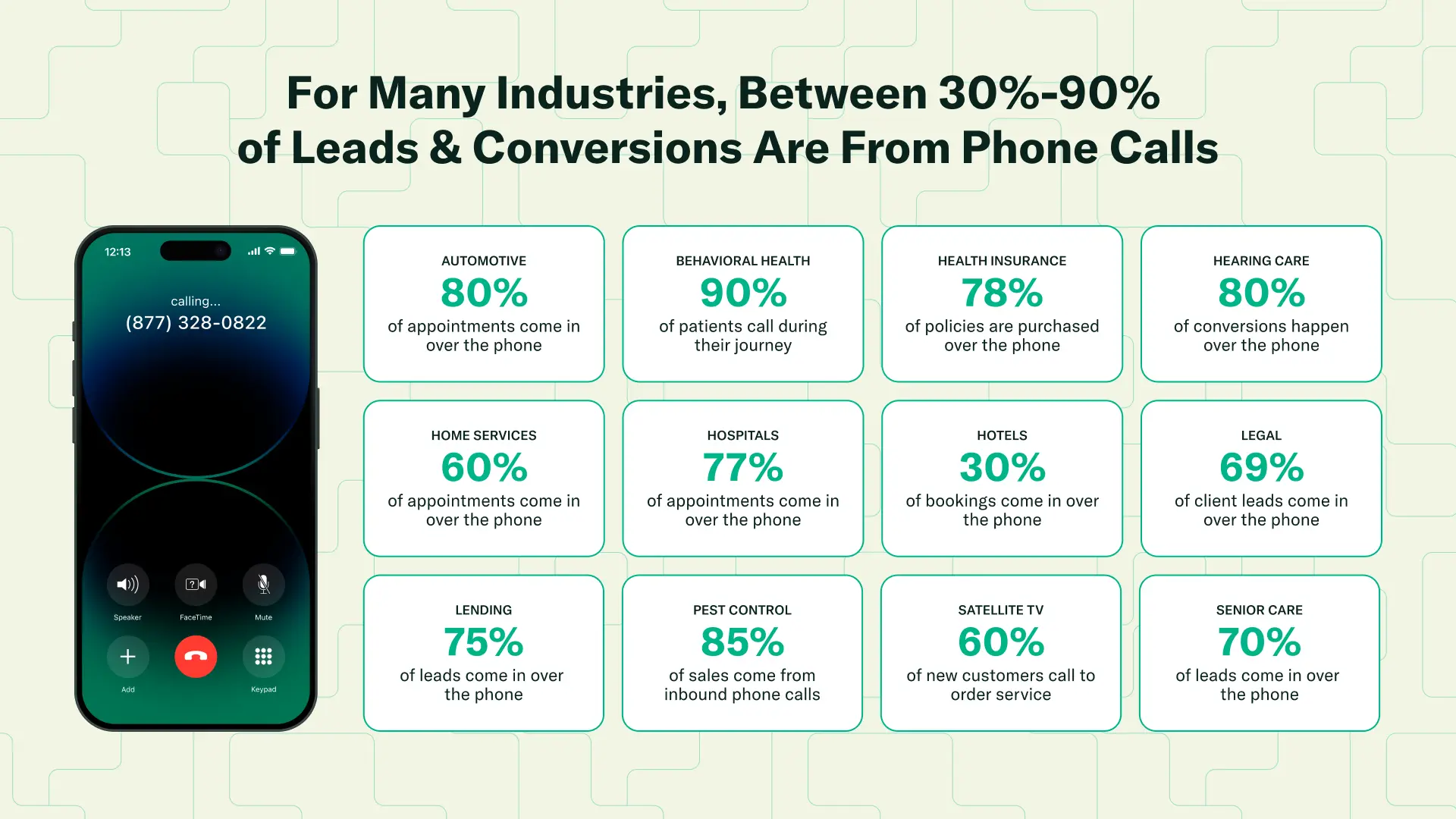
The buyer gets a recommendation from ChatGPT, clicks through to your website, and then does what motivated buyers do: they hit the "call" button or pick up the phone to speak with an agent to book an appointment or finalize a purchasing decision.
This creates a critical disconnect for marketing teams:
- The web analytics trap: If you only look at your web analytics, a visit from ChatGPT might appear as a bounce or an incomplete digital form. You see the traffic, but you don't see the revenue.
- The optimization blind spot: Without knowing which organic ChatGPT recommendations or paid ChatGPT ads actually led to real appointments and closed sales, you cannot accurately calculate your ROI. Even worse, you can't feed the accurate conversion data back to your marketing team and your bidding algorithms to optimize on the results
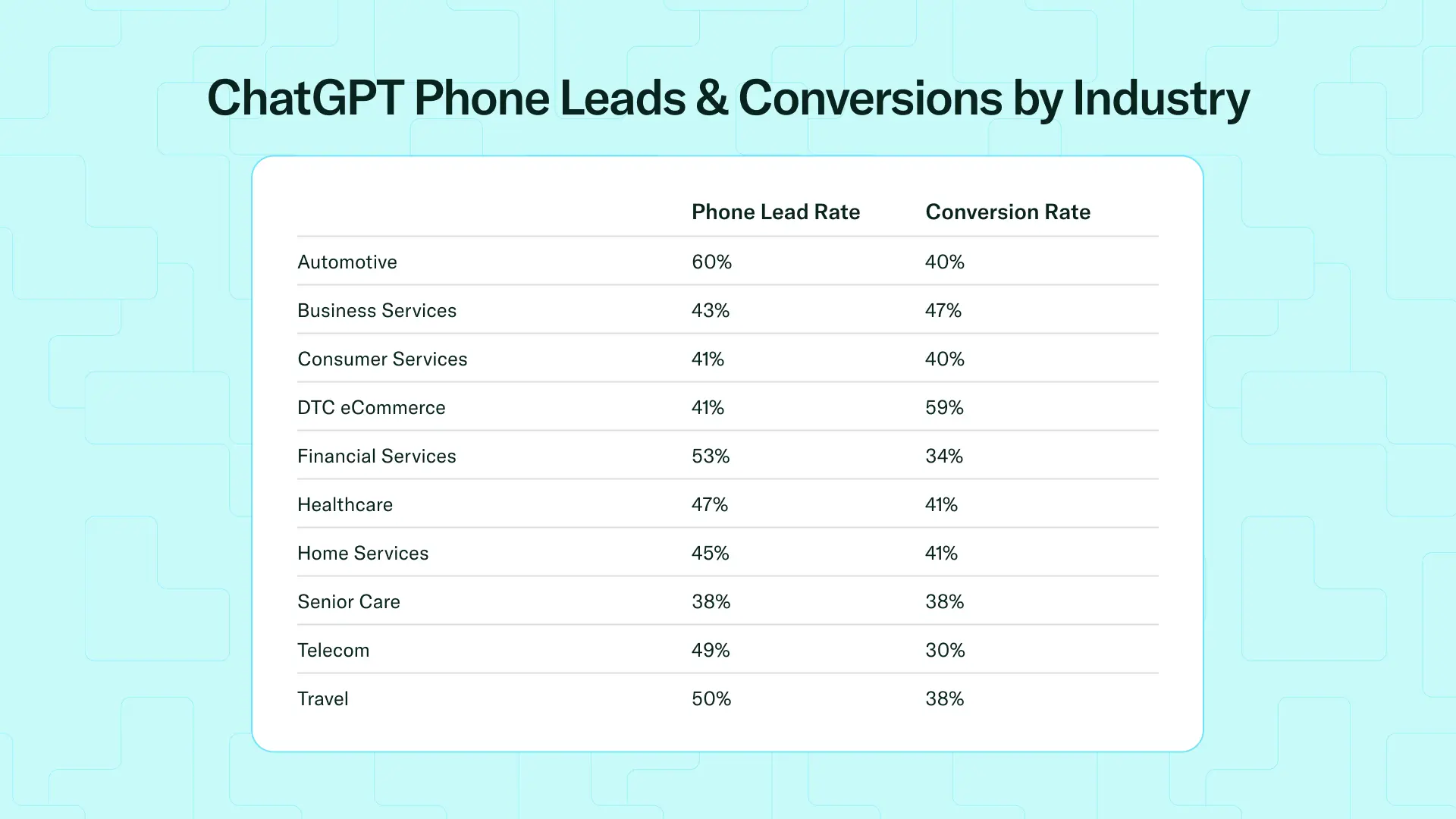
To win in the era of AI search, marketers need to connect the dots between ChatGPT traffic and offline conversations. This is particularly important for ChatGPT, as research shows that calls to businesses that follow ChatGPT searches are among the highest-value leads from any marketing channel.
How Invoca Helps You Measure and Drive Revenue From ChatGPT
Invoca provides the missing link, enabling marketing teams to measure the full-funnel impact of both organic ChatGPT traffic and ChatGPT Ads, ensuring you don’t leave revenue on the table.
Here are the key strategies to optimize your marketing performance and capture high-value leads from AI search.
1. Benchmark leads and conversions from organic AI search
Before you can optimize your strategy, you need to establish a baseline. When a user queries ChatGPT, clicks an organic citation link to your website, and makes a phone call, Invoca automatically tracks the source of that visit.

By leveraging Invoca’s AI-powered conversational analytics, you don't just see that a call happened; you gain deep insight into the conversation's intent and outcome. Invoca detects whether the call was successfully answered, if the caller was a qualified lead, and if it resulted in an appointment or sale. This data allows you to prove marketing’s direct impact on customer acquisition from organic AI channels.
2. Map the changing AI customer journey
AI search is evolving rapidly. Marketers must keep a finger on the pulse of how these platforms are reshaping consumer touchpoints over time. Invoca allows you to monitor exactly what percentage of your new customers or patients are originating from ChatGPT versus traditional search or social media.
Furthermore, you can isolate the specific landing pages or content assets that drive the highest volume of phone conversions from AI engines. If a particular blog post or service page is frequently referenced by ChatGPT and yields high-converting calls, your team can double down on creating similar content to scale your footprint.
3. Maximize return on ad spend from ChatGPT Ads
As OpenAI expands its monetization models, advertising on conversational AI platforms is becoming a core line item for forward-thinking digital marketers. It will become the most effective way to ensure your links appear in the high-intent searches on ChatGPT. To scale these ad campaigns successfully, you need the same data rigor you apply to Google or Meta ads.
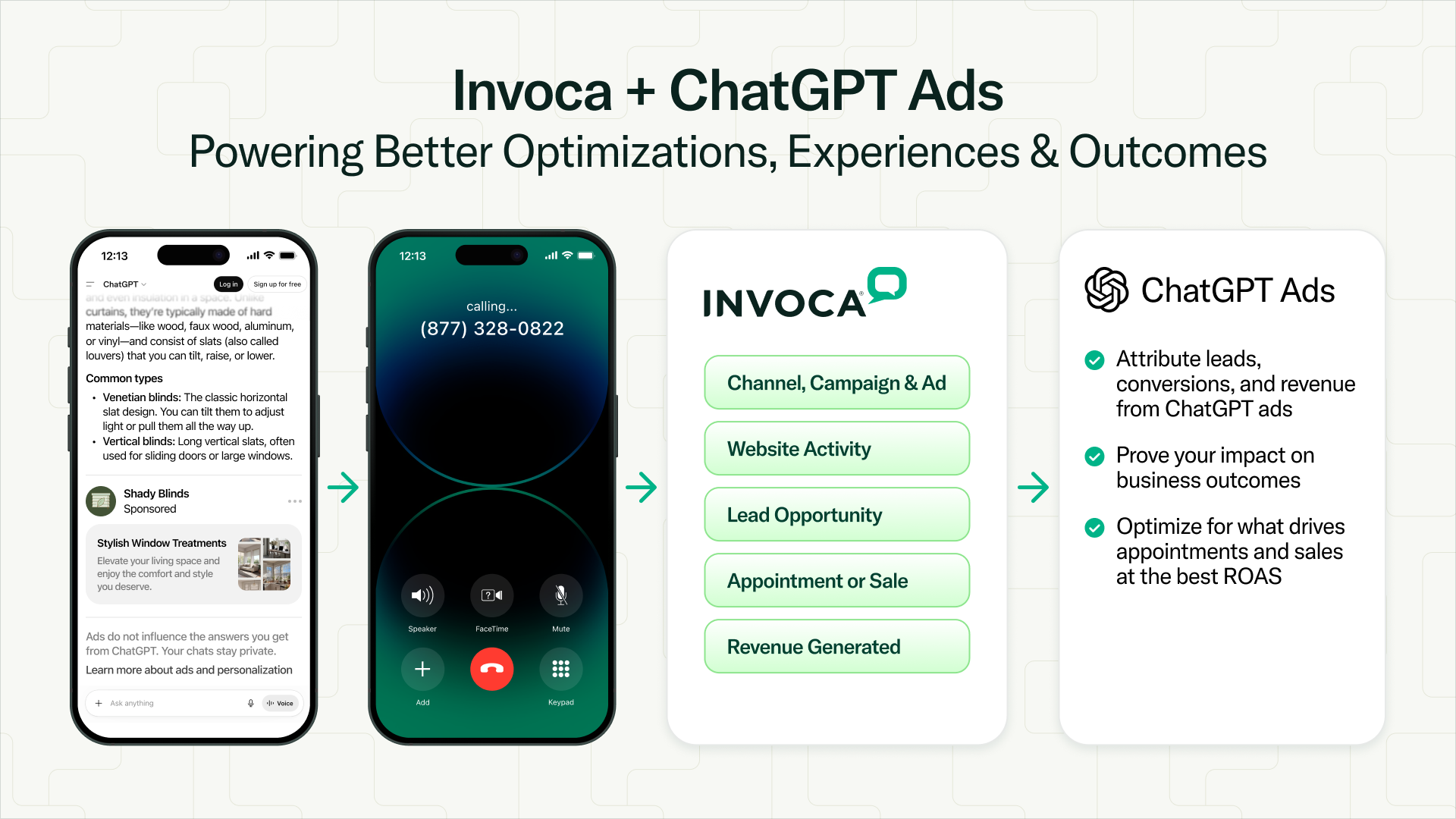
Invoca is the first to offer a no-code integration with the Conversions API for ChatGPT Ads. This powerful integration enables advertisers to bridge the gap between AI ad spend and offline revenue:
- Enable offline conversion attribution: Map contact center phone calls and SMS conversions back to the precise user who engaged with your ChatGPT ad using privacy-safe, hashed identifiers.
- Feed the OpenAI optimization engine: Pass your offline appointment and sales data directly into OpenAI's algorithms. This gives the AI the conversion intelligence it needs to identify which audiences and ad placements drive real business outcomes, enabling it to optimize delivery to users most likely to convert.
- Stop wasting budget on ire-kickers: Distinguish between research-driven, informational queries and high-intent buyers who are ready to buy, ensuring your ad dollars are funneled exclusively into revenue-generating outcomes.
4. Unify conversions in Google Analytics and Adobe Analytics
To maintain a single source of truth, Invoca seamlessly passes ChatGPT-driven phone lead and conversion data directly into your website analytics platforms, such as Adobe Analytics or Google Analytics 4.
When your digital click data and offline call outcomes live side by side, you gain an unobstructed, holistic view of performance. This enables your team to accurately A/B test landing page layouts, phone number placements, and call-based CTAs to relentlessly improve conversion rates across the board.
5. Segment callers into the right audiences to improve digital advertising results
Phone conversations give you clear data on each caller’s intent and the outcome of the call. You can use that data to segment callers into the best audiences to improve the performance of your search, social, and display campaigns:
- Retarget in-market leads: For phone leads who didn’t convert, retarget them with ads for the product/service they called about to help more SEO leads convert to customers.
- Improve lookalike campaigns: For callers who converted, put them into the most relevant upsell or cross-sell campaigns. You can also add them to lookalike campaigns to target new consumers resembling your best SEO leads.
- Suppress low-intent audiences: For callers who aren’t leads or have already converted over the phone, reduce wasted ad spend by suppressing them from seeing and clicking your paid media ads.

6. Convert more leads from ChatGPT with Invoca AI Agents
Driving demand from AI search is only half the battle — you also have to provide the right experiences to convert them. Otherwise, you’re just wasting ad budget. If your business fails to respond right away to form leads, or they don’t answer the phone or route callers to the wrong agent, you can lose them forever.
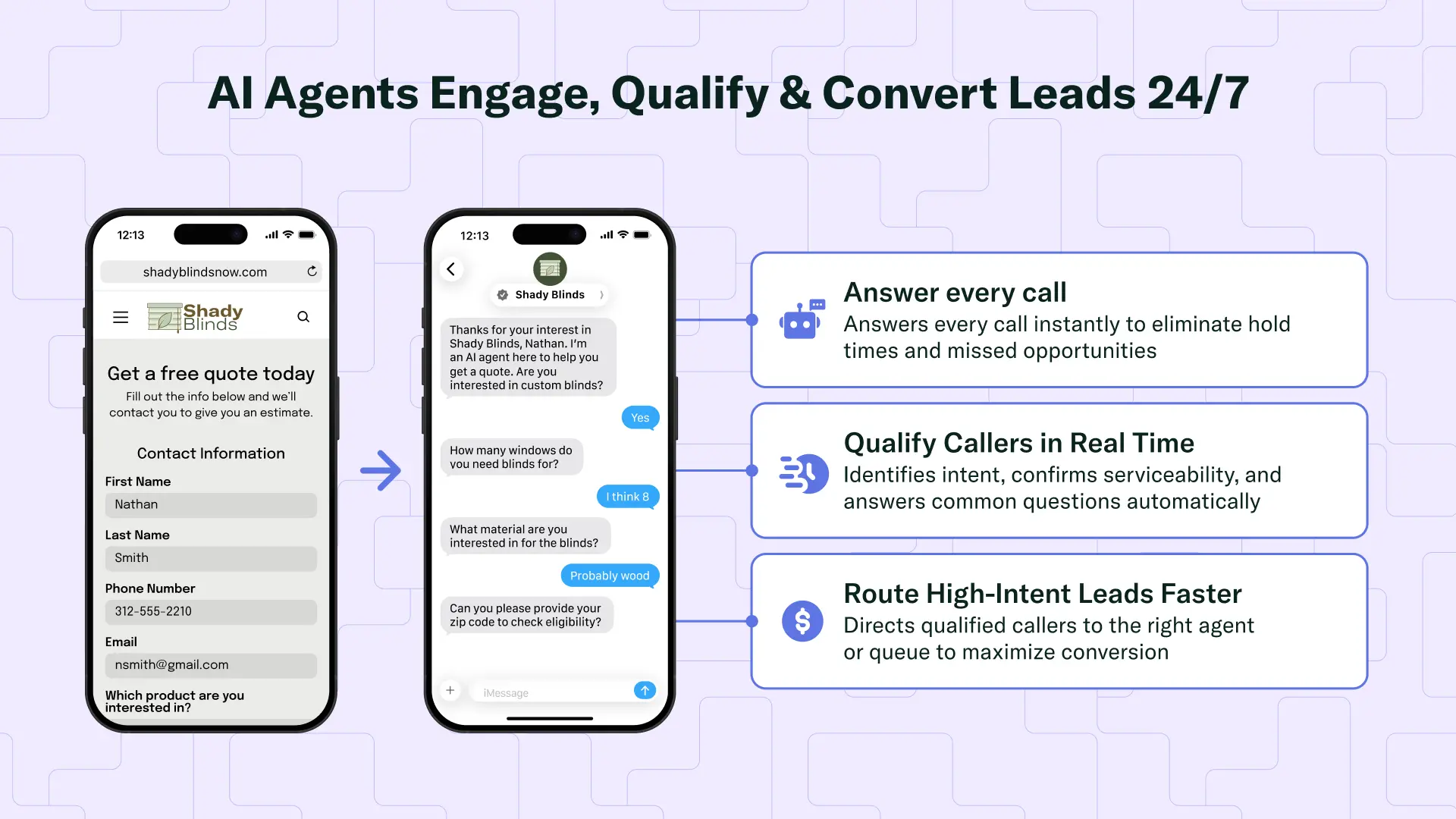
Invoca AI agents immediately engage, qualify, and convert web form and phone leads 24/7, so no lead falls through the cracks:
- AI Messaging Agent responds via SMS when a consumer fills out a form, qualifying their intent and either converting the lead or passing them to a human agent.
- AI Voice Agent assists callers 24/7, passing qualified leads to sales agents while deflecting spam, non-leads, and routine inquiries from wasting their time.
Don't Let ChatGPT Search Become a Blind Spot
As consumers look less at traditional listings and engage more with conversational assistants, the brands that can track, analyze, and optimize these interactions will dominate the market.
By tying offline appointments, bookings, and closed sales back to organic and paid ChatGPT interactions, Invoca gives marketers the tools to prove ROI, optimize campaigns with surgical precision, and turn AI search into a predictable revenue driver.
Ready to start driving and measuring more revenue from AI search? Schedule a personalized demo of Invoca today.
.svg)
.svg)