.svg)


You still pay only for valid leads like phone calls and text messages, and your ads keep serving in the same spots on Google Search. What's changed is Google's definition of a valid lead.
Starting October 1, 2026, a missed call received during your stated business hours can be charged as a lead if the caller remains on the line for more than roughly 20 seconds. Text message leads have no response time buffer, so you are charged for them as soon as they are sent.
The move to PMax also deprecates manual bidding adjustments, so having lead and conversion data from every channel to feed the algorithm is more important than ever. And since this is a pay-per-lead model, it remains critical that you answer calls and respond to text messages promptly, lest you pour your ad budget down the drain and your future ad ranking suffers.
What's Changing with Local Services Ads
Thankfully, most of the migration will be handled automatically by Google. Your LSA campaigns will move into the Google Ads platform, where you'll manage budgets, targeting, and lead replies alongside the rest of your advertising instead of in the separate Local Services Ads dashboard. Placements don't change, and targeting remains driven by your service categories and areas rather than keyword lists.
There are a few changes you'll need to prepare for. Manual CPL bidding is being deprecated to align with standard Google Ads bidding, so if you've been running different targets under a single campaign — a higher CPL for implants or LASIK, a lower one for routine visits — you'll need to either accept a single blended target or split them into separate campaigns. And in the new setup, the metric Google labels as "conversions" simply counts the leads you were charged for, not actual appointments booked or patients acquired.
That last detail is critical, and it's the main reason this shift raises the stakes for healthcare marketers.
Why this Change Hits Healthcare Marketers Hard
Patients want to talk to someone when they're choosing a provider. Invoca's Healthcare Consumer Experience Report found that 44% of healthcare consumers prefer calling when they have a problem and need help, more than any other channel. And 29% called because the information they needed wasn't available online — a number that has barely moved in three years despite continued investment in digital experiences.
They won't wait, either. The report found that 85% of healthcare consumers will switch to a competitor that responds faster, higher than the 79% cross-industry average. Healthcare buyers also hang up more readily than consumers in other categories: 83% have abandoned a call after being placed on hold too long, compared with 75% across all verticals.
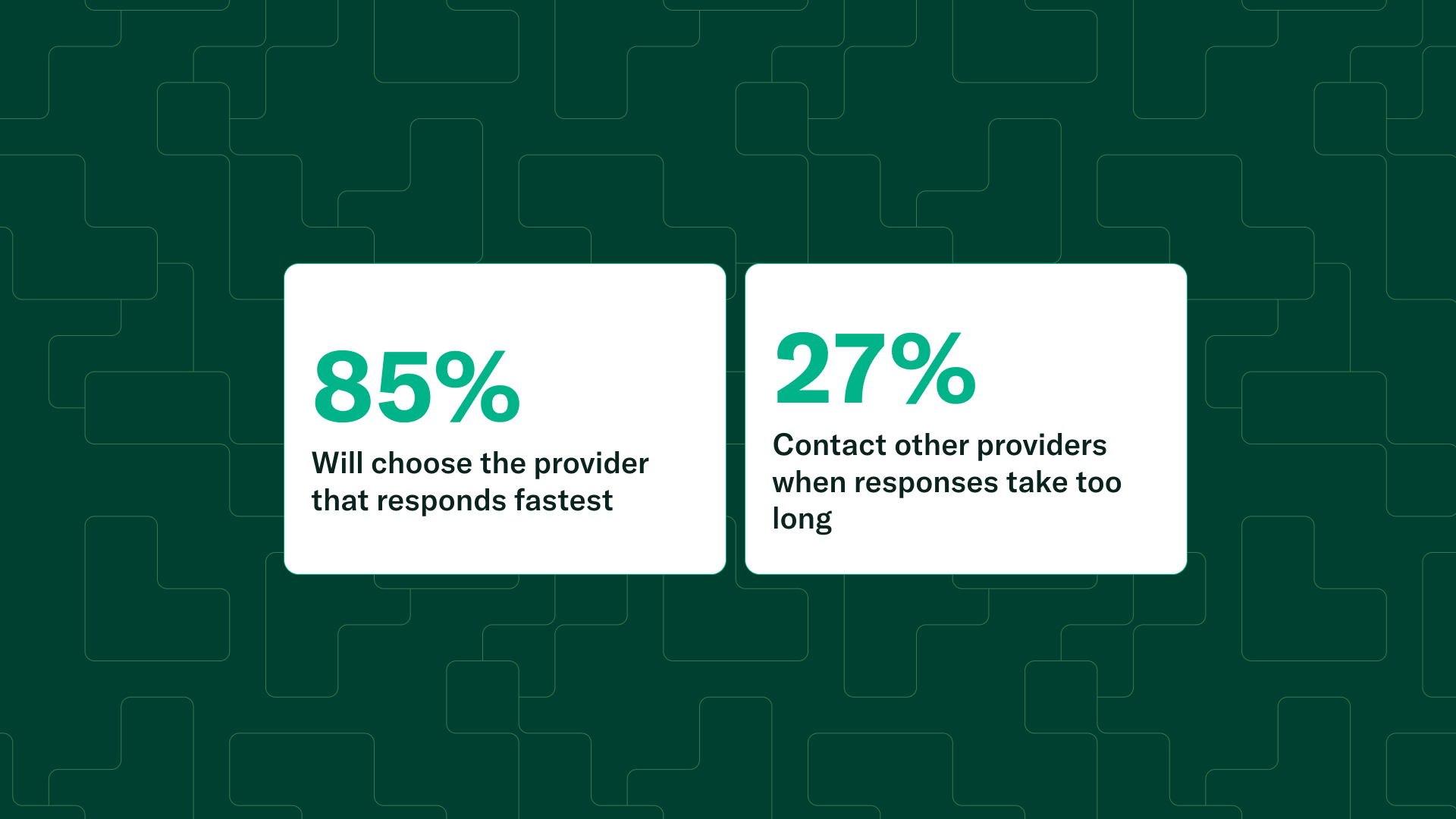
Read that last statistic next to the new billing rules and the problem becomes obvious. A prospective patient who holds for 30 seconds and hangs up in frustration has already generated a charge. You paid for the lead, delivered a bad first impression, and got no appointment out of it.
Google will send you those calls and text messages and charge you for each valid one. But a lead you pay for doesn't drive revenue until someone follows up on it, qualifies it, verifies coverage, and books the appointment. If you don't answer the call or respond slowly to texts, you lose the demand you have already paid to generate.
Call answer rates and text response speed are critical, as Google uses them as ranking signals for your ads. If you don't answer calls or respond to text messages quickly, Google will show your ad less often. That means you're paying more for a diminishing share of the auction, and the bill arrives before the ranking penalty does. Additionally, for message leads, your average response time may be displayed in your ad, and quick response times can drive greater consumer engagement.
Lead Conversion Best Practices for Performance Max Local Services Ads
Google has shifted the cost of lead quality onto the advertiser. A missed call or slow text message response during your posted hours used to be a lost opportunity, but starting October 1, you'll be charged for it, and your ad impressions may also be impacted.
To maximize your ROI on the new PMax LSA ads, work through these seven steps before your billing change takes effect:
1. Audit your stated business hours against actual coverage
- Audit your phone call coverage and look for opportunities to expand it with an AI Voice Agent that can answer and qualify all calls automatically, even after hours, during the lunch hour when your front desk is thin, and on days you're closed.
- Ensure you have 24/7 coverage for text message leads by using an AI Messaging Agent to instantly engage, qualify, and convert them to appointments.
- Align your LSA profile hours with your real staffing schedule, hour by hour and location by location. Practices with staggered provider schedules or half-days are especially exposed here.
- Where you can't staff the hours you've posted, either add AI agent coverage or narrow the posted hours.
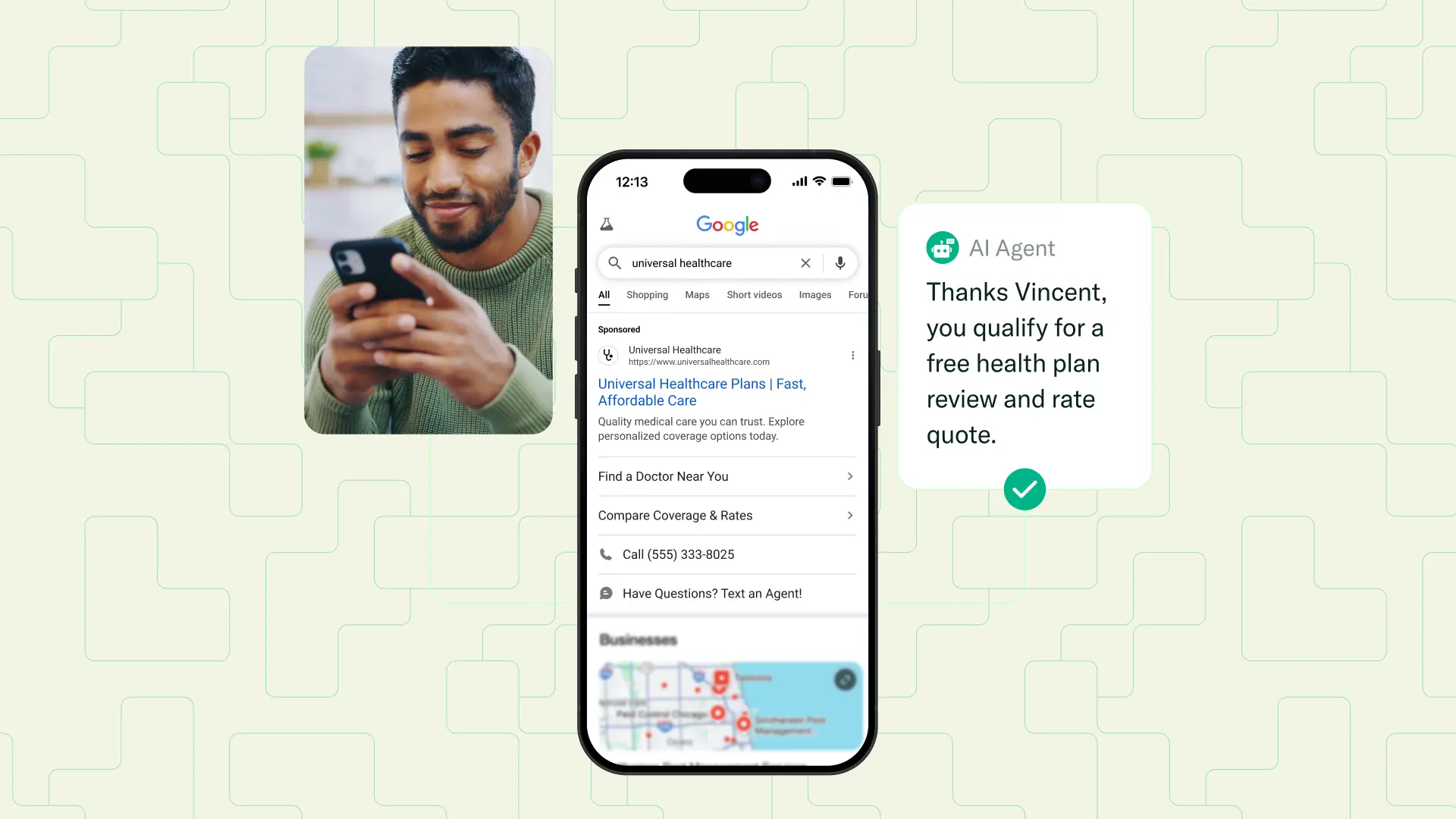
2. Map every path an inbound lead can take
- How overflow is handled when the front desk is with patients and every line is busy.
- After-hours, weekend, and holiday call routing and AI agent coverage.
- If voicemail is in use, consider replacing it with an AI voice agent that can book appointments and set callback times.
- For multi-location groups, DSOs, and health systems, what happens when a location line goes unanswered? Does it roll to a central patient access team, another location, an AI agent, or nowhere?
- How are text messages handled, and are they answered immediately?
- Where the answering service fits, and whether it captures enough to book rather than just taking a name.
3. Set a lead response SLA and staff to it
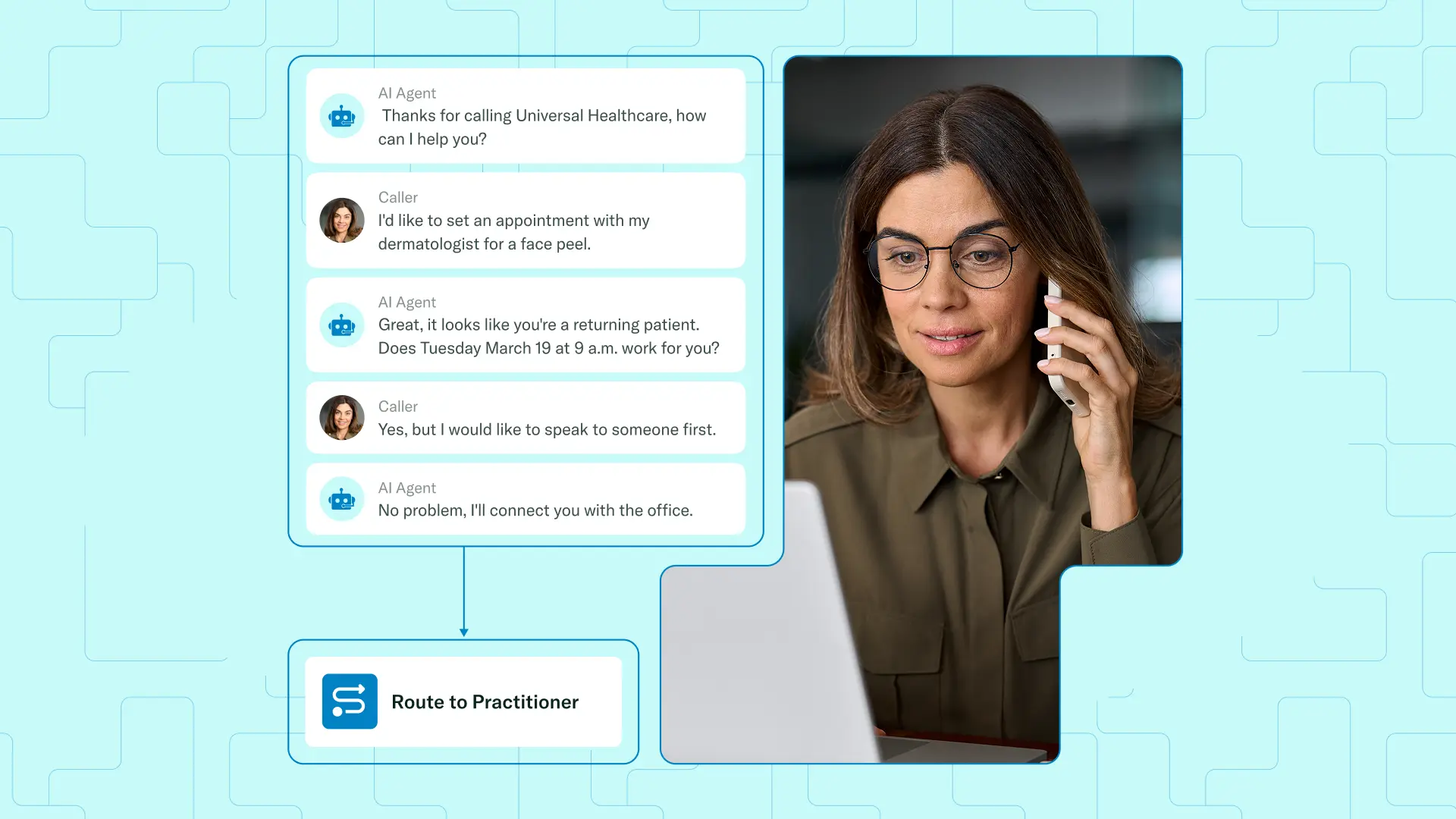
- Use AI voice agents to reduce volume and schedule callbacks. Agents can answer questions, qualify callers, and schedule appointments and callbacks.
- Use an AI messaging agent to engage text leads immediately. Ensure that it can hold a two-way conversation and take actions such as booking appointments, scheduling callbacks, and answering questions.
- Set a hard target for callback and text response speed. Under five minutes is a reasonable starting point for calls, and text messages should be instantaneous.
- Assign ownership by location or queue so the SLA has a name attached.
- Track compliance against the SLA weekly. A fast callback can still convert a lead you've already paid for, which makes the recovery rate a revenue metric.
- Re-train front desk and patient access staff on hold times and hang-up handling. Seconds on the line now carry direct cost implications, and healthcare consumers hang up faster than most.
4. Confirm how your routing and phone menus are treated under the new rules
- Some reports suggest that certain IVR and phone-menu interactions are handled differently under the new billing logic.
- The billing threshold for missed calls has been reported to be roughly 20 seconds, and Google has been staging this rollout by category and market.
- Verify current treatment in your own Google Ads account before you rewrite IVR flows or commit to internal SLAs. Don't assume last quarter's behavior still holds.
- Consider using an AI Voice Agent, as they can route calls faster than an IVR or voice response system. A new patient in pain should not be working through a phone tree to reach scheduling.
5. Build a source of truth for qualified leads and outcomes that doesn't depend on the LSA dashboard
- Export or archive your historical LSA reporting before your account migrates. It won't carry over, and you'll want it for trend analysis and agency reporting.
- This matters more in healthcare than in other verticals. Reporting indicates that healthcare advertisers have more limited access to lead review and dispute tools inside the LSA platform because of HIPAA constraints, so the native dashboard was never a complete record to begin with. Confirm what your account actually gives you.
- Capture the duration, outcome, and disposition for every inbound lead, independent of native LSA reporting, using a HIPAA-compliant platform with a BAA in place.
- Disposition every lead: appointment booked, out of network, wrong service line, existing patient, spam, and missed but recovered.
- Reconcile what Google charged you against what actually converted. Under duration-based billing, lead volume is no longer a defensible success metric.
6. Manage the cost per conversion, not cost per lead
- With manual CPL bidding deprecated, the levers you have left are budget, targeting, and the conversion data you send back to Google.
- Report cost per conversion by location, service line, and time of day. That's where you'll find the real variance, and it's how you learn which service lines are actually carrying your patient acquisition budget.
- Watch the gap between leads charged and appointments booked. A widening gap means you're paying for demand you aren't converting, and neither Google nor the LSA dashboard will tell you that.
- Be deliberate about what conversion data leaves your systems. Send the outcome and value signals the bidding algorithm needs without sending protected health information.
- Budgets also shift from a weekly to a daily cadence during migration, so pacing decisions that used to smooth out over a week now show up day-to-day.
7. Lock down booking integrations and profile hygiene
- Direct booking is expanding from roughly 20 Reserve with Google partners to more than 500, and it auto-enables for advertisers whose Google Business Profile already has an active partner booking link. If your patient scheduling platform is on that list, bookings made this way are treated as paid leads, so confirm whether this is on for your accounts.
- Keep your Google Business Profile accurate. Hours, address, and service categories now sync one-way into your Google Ads setup, affecting both eligibility and billing logic. Multi-provider and multi-location practices should confirm each listing individually.
- Maintain your provider verification and badge status. Healthcare categories carry additional requirements, including license verification and NPI checks, and badge status still affects trust signals and ranking. Renewals lapse quietly, so put them on a calendar.
30-Day Readiness Checklist
- Export and archive all historical LSA reporting before your account migrates
- Audit stated business hours against actual phone coverage, including lunch hours and after-hours
- Find where AI agents can eliminate coverage gaps across locations
- Use an AI messaging agent to instantly respond to text leads
- Set a missed-call callback and text message response SLA
- Confirm current call duration and billing treatment directly in Google Ads
- Stand up or verify independent, HIPAA-compliant call tracking and disposition tagging
- Shift internal reporting from cost per lead to cost per booked appointment
- Check Reserve with Google direct-booking auto-enablement status
- Confirm Google Business Profile hours, categories, provider verification, and badge status are current
Google is handing advertisers more of the cost and more of the control over lead quality at the same time. Treat this as a billing update, and you'll absorb the higher cost. Treat it as a forcing function to tighten call coverage, verify lead quality with your own data, and report on booked appointments instead of raw lead counts, and you come out of the migration with a better-performing account than you went in with.
Note: Google is still clarifying some details, including exact duration thresholds, phone-menu treatment, and category rollout timing. Healthcare categories also carry their own eligibility and verification requirements. Verify the current settings in your Google Ads account before changing staffing or internal policies.
How to Convert More Leads and Give Google Performance Max Better Data with Invoca
The Invoca platform improves campaign performance and does two jobs at once.
First, it converts more of the leads you're already paying for. Invoca's AI Voice Agent immediately engages phone leads 24/7, so you don't have to rely on returning voicemails or following up on missed calls. That matters more under the new billing rules. Once a caller stays on the line beyond the duration threshold, the lead is billable regardless of whether anyone answers. Answering doesn't avoid the charge, but it's the difference between a booked appointment and money spent on nothing.
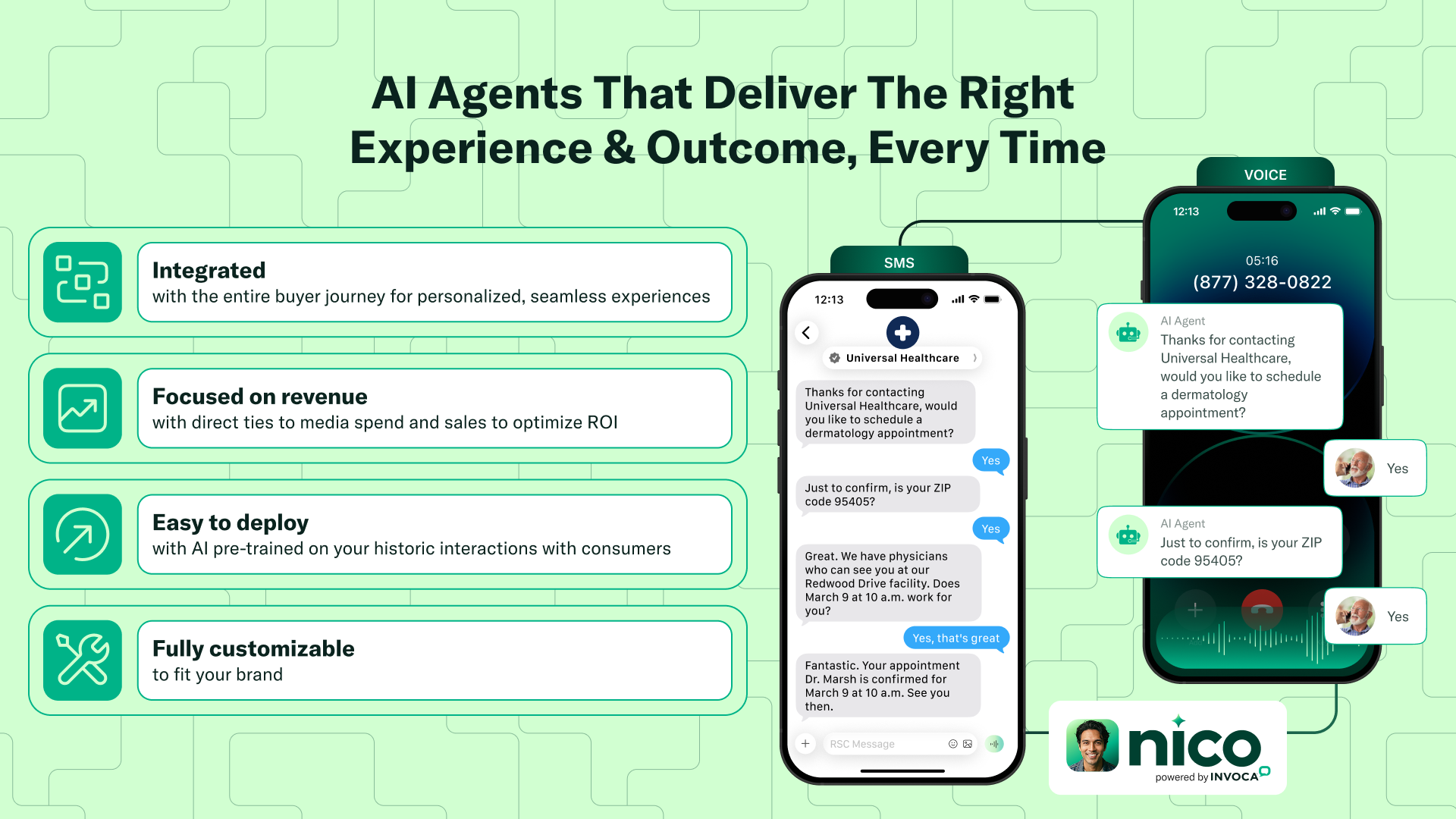
Invoca's AI Voice Agent can answer questions, qualify the lead, book appointments or callbacks, or route the call to your team to convert them. The AI Voice Agent can also route urgent or high-value calls to a contact center, location, or staff member who can provide immediate assistance.
Invoca's AI Messaging Agent can instantly respond to LSA text leads, 24/7. It can hold a two-way conversation to answer questions, qualify leads, and schedule appointments and callbacks. The instant response also protects your ad ranking and response time rating, so you get better ROI from your LSA investment.
Both agents run on a HIPAA-compliant platform with BAA support, and they identify themselves as AI — which patients expect. The Healthcare Consumer Experience Report found that 85% of healthcare consumers say it matters that a brand's AI clearly identifies itself, and 63% say it matters a great deal.
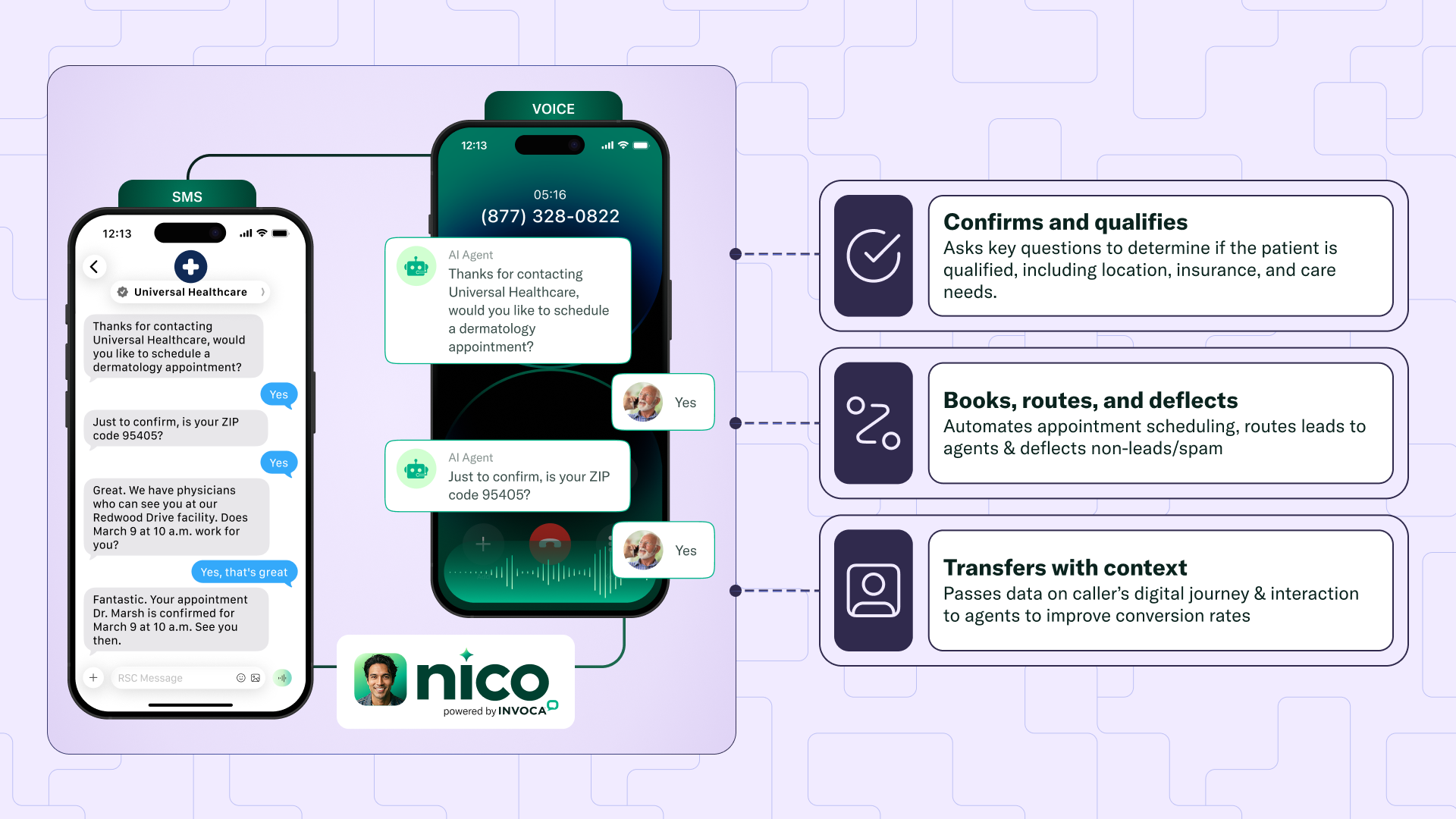
Second, Invoca feeds the conversion outcome of every conversation — whether it occurs via phone, AI Voice Agent, or AI Messaging Agent — back into Google Ads. Invoca captures what happened on each call and text conversation, including what the patient wanted, whether they qualified, whether they converted, and the value of the conversion. Those outcomes feed Google Performance Max's AI-powered bidding, so it can optimize against revenue signals rather than raw lead counts.
The campaign stops rewarding whatever produces the most phone calls and texts and starts rewarding what produces revenue. Over time, that reshapes where your budget goes, toward the service lines, locations, times, and audiences that actually convert. Invoca also enables you to connect the entire buying journey from your ads, to calls, texts, web conversions, and AI agent interactions and attribute it all to revenue so you can prove your ROAS — with the governance controls healthcare marketing teams need to do it safely.
This combination of converting demand and measuring it turns a pay-per-lead campaign from a volume game into a revenue engine. It's also grounded in first-party data, making the optimization trustworthy by connecting your buyer journey data from the LSA ad click through to the conversation and the booked appointment.
The healthcare organizations that come out ahead in this transition will be the ones that convert the demand they're paying for and have the data to train Performance Max on what a good lead actually looks like.
Schedule a demo to see how you can convert more of your Google LSA leads.
.svg)
.svg)