.svg)


Every customer call is a chance to earn trust or lose it. One good conversation can turn a frustrated caller into a loyal customer, while one bad call can push them to a competitor.
This is why more companies are investing in providing a high-quality customer experience. The contact centre quality assurance software market is growing from $2.25 billion in 2025 to $4.09 billion by 2032.
A standardised quality assurance process separates strong contact centres from those that struggle. It helps your team deliver the same helpful, reliable service on every call. Great service needs more than good intentions — it needs clear processes that show agents what "great" looks like.
With the right call centre quality assurance best practices, every call becomes an opportunity to build stronger relationships.
Main Takeaways:
- Clear standards and strong documentation improve service quality. They give agents the guidance they need to deliver consistent and confident support.
- AI-powered monitoring makes QA faster and more accurate. It reviews every interaction and reveals trends your team might miss on their own.
- Key metrics and focused call reviews strengthen performance. Tracking data and prioritising high-impact calls help teams solve issues more effectively.
- Coaching, feedback, and agent involvement build a high-performing team. Real-time support and fair scoring keep agents motivated and improving.
- Compliance checks, omnichannel quality, and regular audits keep your QA program effective. Ongoing updates ensure your process stays aligned with customer needs and industry standards.
What Is Call Centre Quality Assurance and Why Does It Matter?
Call centre quality assurance (QA) is the process of checking and improving customer interactions. It makes sure every call meets your standards. QA helps your team stay consistent, follow rules, and keep customers satisfied.
A strong QA program does several things:
- Helps agents deliver better results. It gives agents clear guidance on how to communicate, solve problems, and support customers.
- Identifies areas for process improvement. It shows where your workflows or tools are causing problems or slowing agents down.
- Ensures teams meet customer expectations. It keeps service levels aligned with what customers want and need from your brand.
- Protects your brand's reputation. It reduces mistakes that can harm trust or create negative experiences.
- Supports revenue growth. It improves the value of every conversation by helping agents serve customers more effectively.
Quality assurance should focus on helping agents grow, not punishing them. QA contact centre teams use data from calls to guide coaching, training, and feedback. When done well, QA creates a positive cycle. Agents improve, customers have better experiences, and the whole contact centre performs at a higher level.
17 Essential Call Centre Quality Assurance Best Practices
Whether you're building a QA program from scratch or updating the one you have, these best practices will keep your team on the right track. They will also help your call centre deliver stronger performance as it grows.
1. Set Clear Quality Standards for Your Team
Great service starts with clear expectations. Agents need to know exactly what "good" sounds like on every call. Use a simple scorecard that measures accuracy, empathy, and compliance. A 2018 study found that QA maturity varies widely across call centres, so clear standards help remove confusion.
Assign ownership of the call centre quality assurance guidelines to ensure consistent scoring. Share these standards during onboarding so new agents understand expectations from day one. Hold calibration sessions to keep all reviewers aligned and scoring fairly.
2. Document Your QA Processes and Build a Strong Knowledge Base
Create easy-to-follow documentation that outlines how your call centre quality assurance program works. Include call type guidelines, scoring rules, examples of strong calls, and common mistakes to avoid. Build an internal knowledge base where agents can quickly find scripts, troubleshooting steps, and policy details.
Clear documentation saves time, reduces errors, and helps agents deliver accurate and confident support. It also ensures new hires can ramp up faster with fewer gaps.
3. Use AI Tools to Review Every Call
AI lets you analyse 100% of your calls, not just a small sample. It detects changes in tone, missed steps, and signs of customer frustration. AI helps teams catch issues early and reduces the time spent on manual review.
These tools are expected to cut labor costs by $80 billion by 2026. The result: managers can focus on coaching while AI handles repetitive tasks. This leads to faster insights and better decisions.
4. Track and Improve First Call Resolution
First Call Resolution (FCR) shows how often customers get the help they need on the first try. High FCR leads to fewer repeat calls, lower frustration, and better experiences. To measure FCR correctly, your team must agree on what "resolved" means.
Use the same rules across agents, teams, and shifts. Review FCR often to find patterns, training gaps, or process issues. Strong FCR scores show that your agents understand your products and can solve problems quickly. Improving FCR helps the whole centre run smoother while creating happier customers.
5. Balance Speed With Quality
Speed is helpful, but not if service suffers. Average Handle Time (AHT) shows how long calls last, but a short call is not always a good one. If an agent rushes, the customer may leave confused or unhappy.
Compare AHT with quality scores to find the right balance. Train agents to listen fully, explain clearly, and solve the customer's entire problem. Good service means being both fast and correct—not choosing one over the other. When agents focus on complete solutions, customer trust grows.
6. Use Customer Feedback to Improve Quality
Customer feedback gives you a true view of your service. Review CSAT, NPS, and written comments to understand what customers appreciate and what frustrates them. Compare this feedback with your QA scores. If a call scores well but customers are still unhappy, your standards may need updating.
Companies that provide strong customer experiences earn 4–8% more revenue than competitors. Listening closely to your customers helps your team raise service quality and business results.
7. Select the Right Sample Size for Call Reviews
Reviewing too many calls wastes time, but reviewing too few hides important trends. Choose a sample size that gives a clear picture of performance without overwhelming your QA team.
Adjust sample size by skill level, call type, or customer impact. A balanced approach ensures your insights are accurate and actionable.
8. Focus Your Reviews on High-Impact Calls
Not every call has the same impact. Spend more time reviewing calls that involve escalations, high-value customers, sales conversations, or strict compliance rules.
Group calls into categories and score them using criteria that match the type of interaction. Focusing on high-impact calls gives you faster improvements and clearer insights into your biggest opportunities.
9. Conduct Root Cause Analysis on Repeated Issues
When a problem shows up often, look deeper than the surface. Root Cause Analysis (RCA) helps you find the true source of recurring issues.
Instead of fixing the same mistake over and over, RCA helps you correct the system, not just the symptom. This leads to fewer repeated errors and a more efficient operation.
10. Give Real-Time Coaching to Agents
Agents improve faster when feedback comes quickly. Offer live coaching during calls or give feedback immediately after the call ends.
Use call recordings and transcripts to point out specific moments. Provide short microlearning modules to build skills over time. Real-time coaching boosts confidence and helps agents form good habits more quickly.
11. Help Agents Learn From Each Other
Agents learn a lot from each other. Hold team discussions, call-listening sessions, or short workshops where agents share tips and examples of strong calls.
Peer learning builds teamwork, increases engagement, and spreads best practices across the whole team.
12. Let Agents Take Part in Their Own Score Reviews
Let agents score their own calls so they can reflect on what they did well and what they need to improve. Give them an easy way to ask questions about their QA scores and discuss decisions with reviewers.
This builds fairness, trust, and stronger engagement. Agents who feel heard are more motivated to grow.
13. Build Compliance Checks Into Every Review
Many industries require strict rules for handling customer data, security, payments, and disclosures. Include compliance checkpoints in your scorecards so you never miss them.
Run regular audits and refresh training on compliance topics. Strong compliance protects customer trust and reduces risk for your organisation.
14. Audit and Update Your QA Program Regularly
Your contact centre QA program should evolve as your customers and processes change. Run audits on a regular schedule—such as every 6 to 12 months—to check if standards are being followed and scoring is consistent.
Use trends and feedback to find gaps or repeated issues. Then update your scripts, scorecards, and training materials based on what you learn. Regular audits and steady improvements help keep your QA program strong and effective over time.
15. Build a Positive QA Culture and Recognise Great Performance
A strong QA program should help agents grow, not create stress. Set clear goals, give kind and specific feedback, and celebrate great calls. Recognise agents who deliver high-quality service through shout-outs, rewards, or friendly competitions.
Gamification can make improvement more fun and keep teams motivated. Invite agents to share ideas, help test scorecards, and shape QA goals. When people feel supported and appreciated, they stay engaged, work better together, and deliver stronger customer experiences.
16. Ensure Consistency Across Teams and Locations
Large contact centres often struggle with consistency. Use one shared scorecard and unified standards so every team follows the same rules.
Hold calibration sessions to keep reviewers aligned across regions and languages. Consistency builds trust and ensures agents everywhere receive fair feedback.
17. Apply QA Standards Across All Customer Channels
Customers move between phone, chat, email, SMS, social media, and self-service tools. Review quality across every channel—not just calls. Track handoffs between channels and look for points of friction.
Evaluate chatbot interactions as well, including accuracy and escalation patterns. An omnichannel QA approach gives customers a smooth, reliable experience everywhere they reach you.
Essential Tools and Technologies for Modern Call Centre QA
Modern tools help teams understand performance. They find issues faster and help agents give better service.
Here are the main tools that support a strong QA program:
- AI-powered interaction monitoring. As mentioned earlier, AI can review all customer interactions rather than a small sample. These systems detect sentiment shifts, missed steps, and compliance risks, giving QA teams faster and more reliable insights. Tools like Invoca's Signal AI Studio make this even stronger by allowing teams to create custom AI signals that detect lead intent, call outcomes, and other business-specific insights with high accuracy.
- Conversation analytics platforms. These tools turn large amounts of call data into clear patterns. They show common issues and reveal customer intent. Invoca's conversation analytics software provides these insights in real time.
- Quality assurance software. Quality platforms store scorecards, evaluations, coaching notes, and performance metrics in one place. This helps reviewers stay aligned across teams and locations. Invoca's call centre quality management software also uses AI to score calls, spot coaching needs, and highlight key moments.
- Coaching dashboards and performance tracking tools. Dashboards give supervisors and agents real-time visibility into quality scores and behavior trends. With clearer data, managers can prioritise coaching, and agents can self-correct more effectively.
- Knowledge base and documentation systems. These tools make it easy for agents to find scripts, steps, and policies. This reduces errors and supports consistent service.
- Omnichannel engagement platforms. These tools measure quality across phone, chat, email, SMS, and social. They help teams keep the customer experience consistent on every channel.
Together, these tools reduce manual work, improve accuracy, and support strong QA programs.
Drive Consistent Quality and Performance with Invoca
When you focus on continuous improvement and build a positive team culture, every call becomes a chance to earn trust and create value. Strong contact centre QA programs that combine simple rules with powerful technology lead to real business results.
Invoca's call centre quality management software uses AI to review every call, spot important trends, and share insights your team can use instantly. This saves time, improves accuracy, and helps agents grow faster.
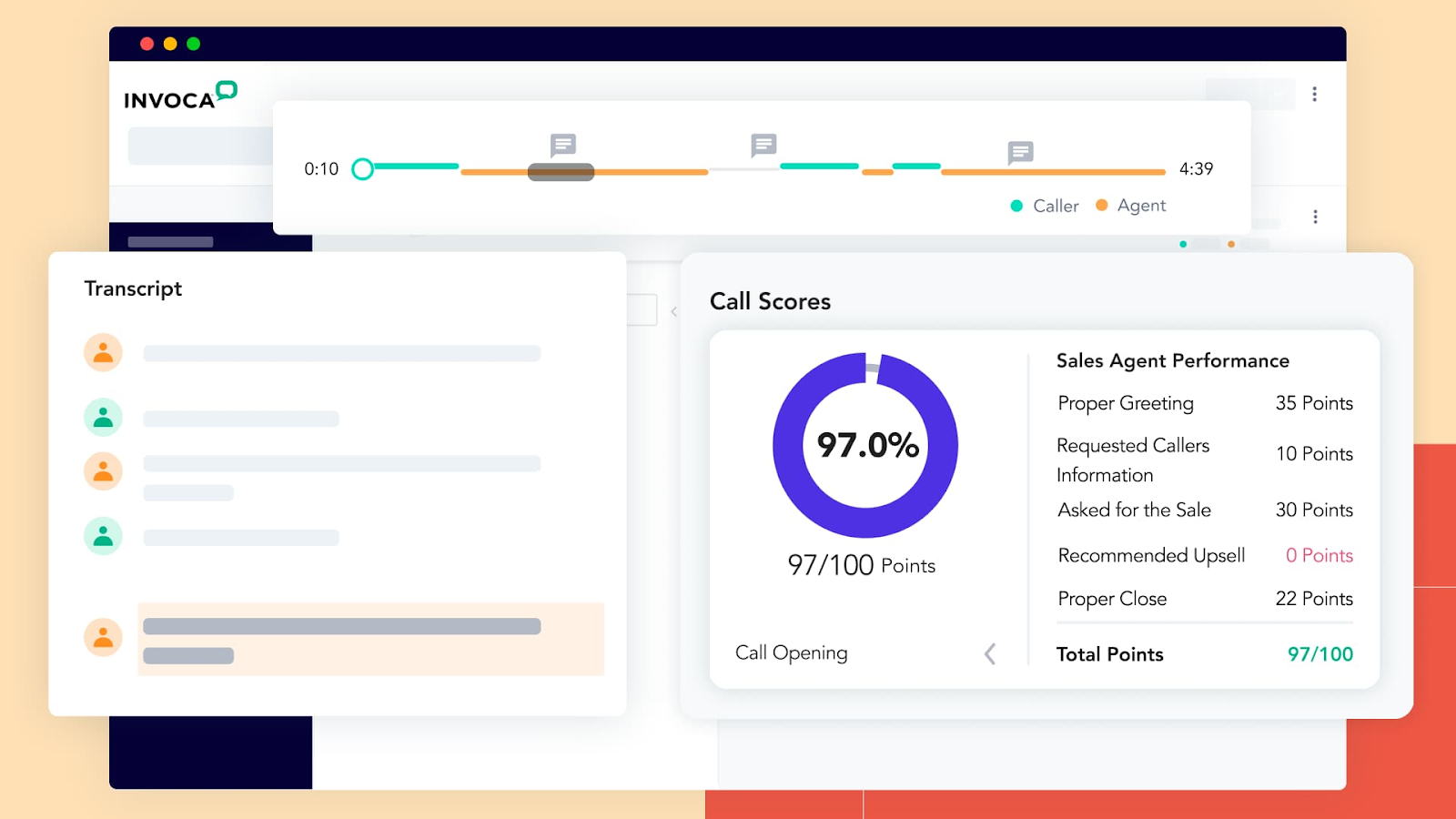
To see how Invoca can help you improve your QA and agent coaching program, book a demo.
Additional Reading
Want to learn more about how Invoca can help you improve your quality assurance process? Check out these resources:
- Speech Analytics Call Centre Explained: Benefits and Features
- How to Improve Agent Productivity: 9 Proven Strategies
- Machine Learning Call Centre: The Complete Guide

FAQs About Call Centre Quality Assurance
What are the 5 P's of quality assurance in call centres?
The 5 P's are Purpose, Process, People, Product, and Performance. Together, they create a simple framework for maintaining strong service standards.
What is the 80/20 rule in call centre quality management?
The 80/20 rule suggests that 80% of quality issues usually come from 20% of the main causes. This helps teams focus their improvement efforts where they will have the biggest impact.
What is the complete quality assurance process in a call centre?
The QA process includes setting standards, monitoring interactions, scoring performance, giving feedback, and making improvements. These steps help teams maintain consistent and high-quality service.
What are the 5 stages of quality assurance implementation?
The five stages are planning, design, execution, monitoring, and improvement. Each stage helps build a strong and effective QA program over time.
.svg)
.svg)