

.svg)


The moment a lead raises their hand is more important than just about any other part of the buying journey. Whether they’ve filled out a form or called your business, they’ve moved from browsing to buying intent. It’s basically the moment that they’re pulling out their wallets, and what happens next determines whether you generate revenue or donate that opportunity to a competitor.
Most teams treat speed-to-lead like a service-level metric, a contact center benchmark, or a line item on an ops dashboard. In reality, it’s one of the most powerful revenue levers in your entire business.
When speed-to-lead breaks down, it tends to fail quietly when lead follow-ups stall, calls go unanswered, and leads cool off and slowly disappear while your systems catch up.
The Buyer Journey Moves Faster Than Your Systems Do
Today’s buyer journey isn’t linear. It spans digital ads, search, websites, messaging, voice, AI agents, and human conversations. Consumers now have 12 to 30 touchpoints before making a high-stakes purchase across industries such as automotive, home services, healthcare, and financial services.
That means by the time someone fills out a form or calls your business, they’ve already invested a lot of time doing research, comparison shopping, and narrowing down options. More importantly, they’ve likely chosen the brand that they’re going to go with.
But internally, many organizations still operate in data silos. Marketing drives demand, a digital team owns the website, and contact centers or business locations handle calls and convert leads. More often than not, data from all of these departments and their disparate systems are not connected. When those pieces don’t operate as a connected system, lead progression stalls at the exact moment it should accelerate.
You might respond quickly to a form fill, but if the follow-up is just an acknowledgement that you received it, the conversation resets instead of progressing. A call may be answered quickly, but if the agent has no visibility into the lead's digital journey, they’re basically starting again from square one. The buyer ends up repeating themselves, and momentum fades.
Speed at one touchpoint doesn’t mean much if the rest of the journey lags behind, and that lag shows up in revenue.
The First Responder Wins the Customers
Patience is in short supply these days, and consumers don’t want to wait around for you to get back to them. Research shows that nearly 80% of leads purchase from the first company to respond. to their inquiry. After an hour, your odds of converting that lead drop by around 80%.
Now layer in the reality that many businesses still rely on manual follow-up for lead form submissions. Leads get routed into queues, notifications go out to call center agents or business locations, but meaningful engagement can take hours or even days.
The fact is, consumers expect immediate help when they’re ready to move forward. Invoca’s recent B2C Buyer Experience Report found that 67% of consumers called a business when making a high-stakes purchase. At the same time, 50% have hung up after being placed on hold. And when they have a bad experience, 66% say they’re likely to stop doing business with that brand.
Imagine a home services customer who fills out a request for an estimate. They don’t hear back for hours. They call. They’re put on hold. They hang up and search again. The next company answers immediately. That’s not just a missed call, it’s lost revenue, lost lifetime value, and lost marketing ROI.
What buyers want is simple: quick answers, clear next steps, and the feeling that your business understands why they reached out in the first place.
How AI Messaging Changes the Speed-to-Lead Equation
This is where AI-powered SMS engagement becomes a force multiplier. Invoca’s AI Messaging Agent was designed to engage high-intent leads instantly, the moment they raise their hand. When someone submits a form or a call goes unanswered, the agent can immediately respond with a personalized, two-way SMS conversation, so the lead doesn't have to wait hours for a response.
The impact is immediate. There’s no waiting for business hours. No dependency on outbound call attempts that may go ignored. No one-way notification that leaves the buyer stranded. Instead, the conversation continues in a channel buyers already use every day.
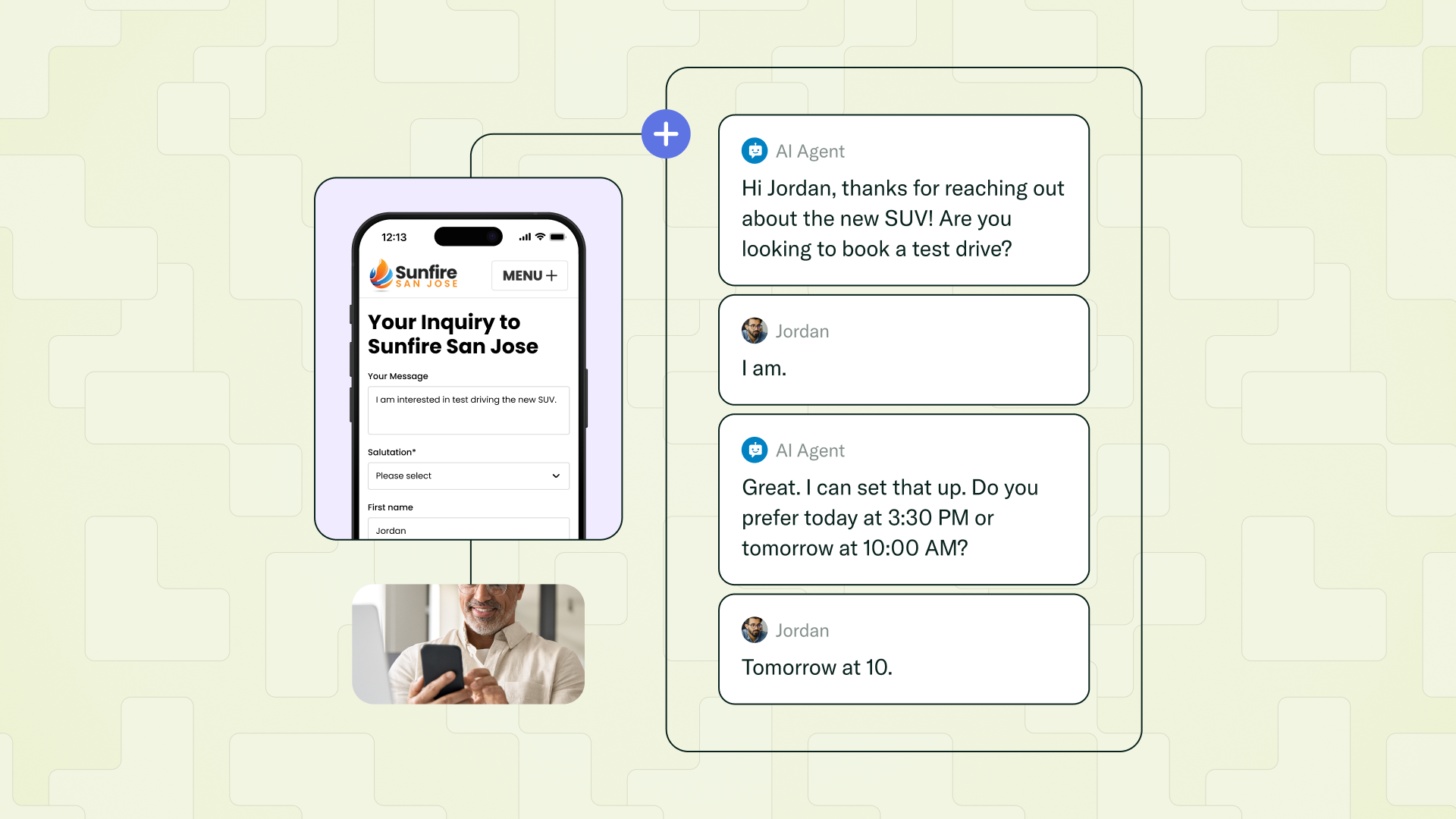
The AI Messaging Agent can answer questions, qualify intent, capture consent, book and manage appointments, and schedule callbacks. It keeps demand from stalling and ensures that high-intent opportunities don’t slip through the cracks.
For contact centers, that means human agents spend less time chasing cold or unresponsive leads and more time closing qualified opportunities. For marketing leaders, it means the demand they’ve invested heavily to generate actually converts, and every interaction is tied back to its originating campaign for closed-loop attribution.
In other words, speed becomes measurable revenue impact.
Running the Buyer Journey as a System
The bigger story here isn’t just about SMS or response times. It’s about running the buyer journey as a connected system.
Conversations are often the decisive step in the buyer journey, but to capitalize on them, you have to connect each conversation to the digital touchpoints that precede and follow it. When you can connect the dots from media spend to conversations to confirmed revenue, improvement becomes continuous. Demand gets optimized based on actual outcomes, and revenue performance improves across the full journey.
That’s how organizations move from reacting to missed opportunities to systematically capturing them.
Every business talks about growth. Fewer talk about leakage. Speed-to-lead is where leakage hides. It hides in delayed responses, disconnected systems, and generic follow-ups that fail to move buyers forward.
Fixing it doesn’t require moving faster in isolation. It requires connecting the full journey so that when a buyer raises their hand, your business responds instantly—and intelligently. That’s how you convert more of the demand you’ve already paid to generate, prove marketing ROI, and turn speed into revenue.
Learn more about how Invoca’s AI Messaging Agent increases speed-to-lead in this on-demand webinar.
.svg)
.svg)