.svg)


Running paid ads with Google for local lead generation can be one of the most rewarding—yet complex—areas of digital marketing. Whether you’re managing campaigns for a single franchise location, a national brand, or an enterprise with hundreds of retail branches, success hinges on smart targeting, relevant messaging, and accurate attribution.
In this guide, we’ll tackle the most common questions enterprise and multi-location marketers ask about local paid advertising—across Search and Performance Max (PMax) campaigns—and show you how to optimise your strategy for better results and clearer ROI. We’ll also explore how tools like Invoca’s AI-powered call tracking solution help connect the dots from click to call to conversion at scale.
Targeting Local Audiences
1. How do I target local customers effectively in paid search?
With Search campaigns, start with radius targeting or city-level geotargeting. Use geographic bid adjustments to increase visibility in high-performing zip codes. Add location-specific keywords and location assets to make your ads hyper-relevant.
For Performance Max campaigns, Google uses automated signals to identify user location and intent, but you can guide targeting by:
- Setting specific locations in your asset group settings
- Uploading customer match lists with local data
- Providing location-rich creative assets
2. Is it better to run one national campaign or separate local campaigns?
For Search, separate regional campaigns provide better control over creative, budgets, and insights. This is especially important for multi-location organisations where local nuances matter.
PMax campaigns consolidate channels into a single campaign, but you can still structure asset groups by location or service type and feed localised creative (headlines, descriptions, and images) to influence output by geography. If you have enough conversion data (Google recommends a minimum 50-100 per PMax campaign per month) consider multiple PMax campaigns separated by region.
3. What’s the best way to structure Google Ads accounts for multi-location businesses?
For Search, segment by region, service line, or franchise group. This simplifies budgeting, creative testing, and reporting.
For PMax, structure asset groups based on specific locations, products, or customer types. Use distinct creative per asset group and include location signals like maps, city names, or local services in your copy and visuals.
4. Do local modifiers in keywords (e.g., “near me,” city names) still matter?
Yes, especially in Search campaigns. “Near me” and geo-modified queries are still strong intent signals. For PMax, you don’t use keywords directly—but you can reinforce local relevance through creative assets and feed data.
5. How do I tailor landing pages to match local intent?
Each location should have its own landing page or dynamically generated content blocks with local branding, service areas, contact info, maps, and reviews. This is critical for Search and PMax, especially as Final URL expansion in PMax often chooses the landing page for you. Use URL exclusions and headline copy to guide it appropriately.
AI-Powered Call Tracking and Optimisation
6. How do I track phone calls as leads and conversions in my paid ad campaigns?
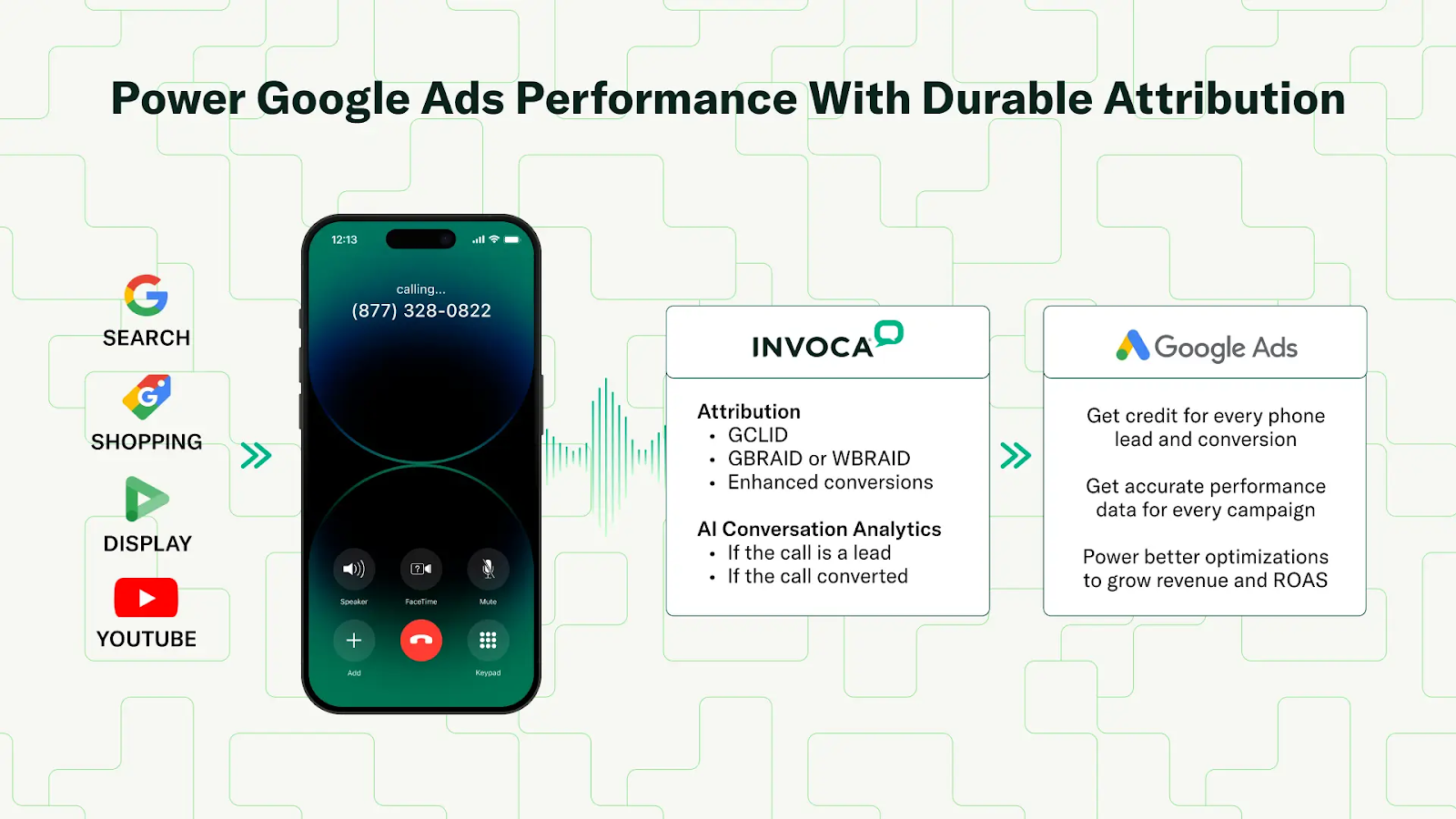
Use call tracking dynamic number insertion (DNI) to assign unique phone numbers to sessions or campaigns. Platforms like Invoca support this at scale and integrate with both Search and PMax campaigns through:
- Direct integrations with Google Ads and Data Manager
- Direct integrations with Search Ads 360, Google Campaign Manager, Adobe, and bid optimisation platforms
- Direct integrations with CRMs
7. How can I tell if a lead from paid search or PMax actually became a customer?
Search campaigns may drive either form fills or calls; PMax campaigns often generate calls through Local Services Ads-style placements, Maps, and Display elements.
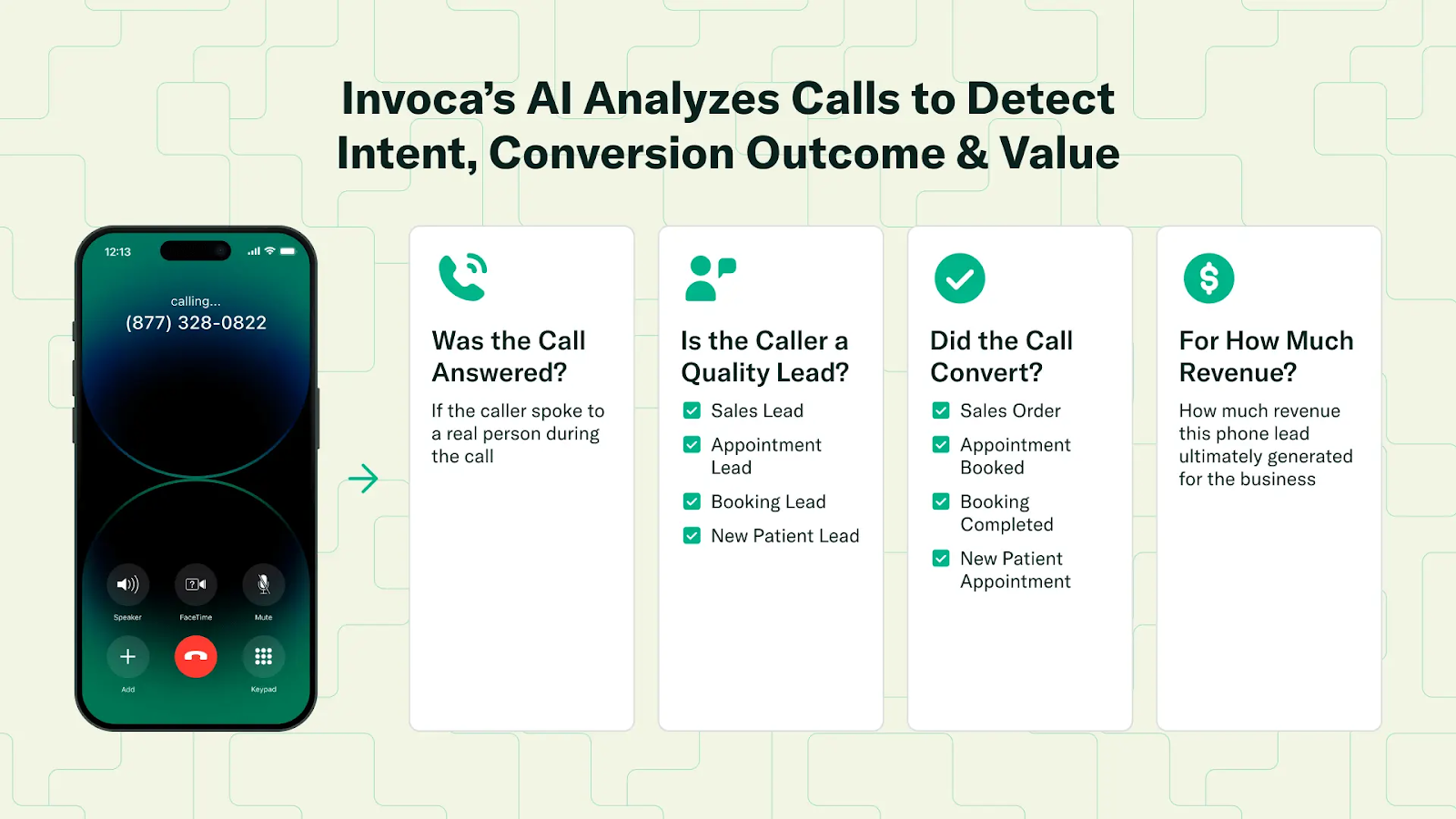
When consumers call, Invoca uses AI to analyse the conversation with your locations, measuring the intent and outcome to helps you understand whether those calls led to:
- Sales-qualified leads (SQLs)
- Booked appointments or sales
- Revenue outcomes
This powers true ROI tracking and value-based optimisations across both campaign types.
8. Are form fills or phone calls better for local leads?
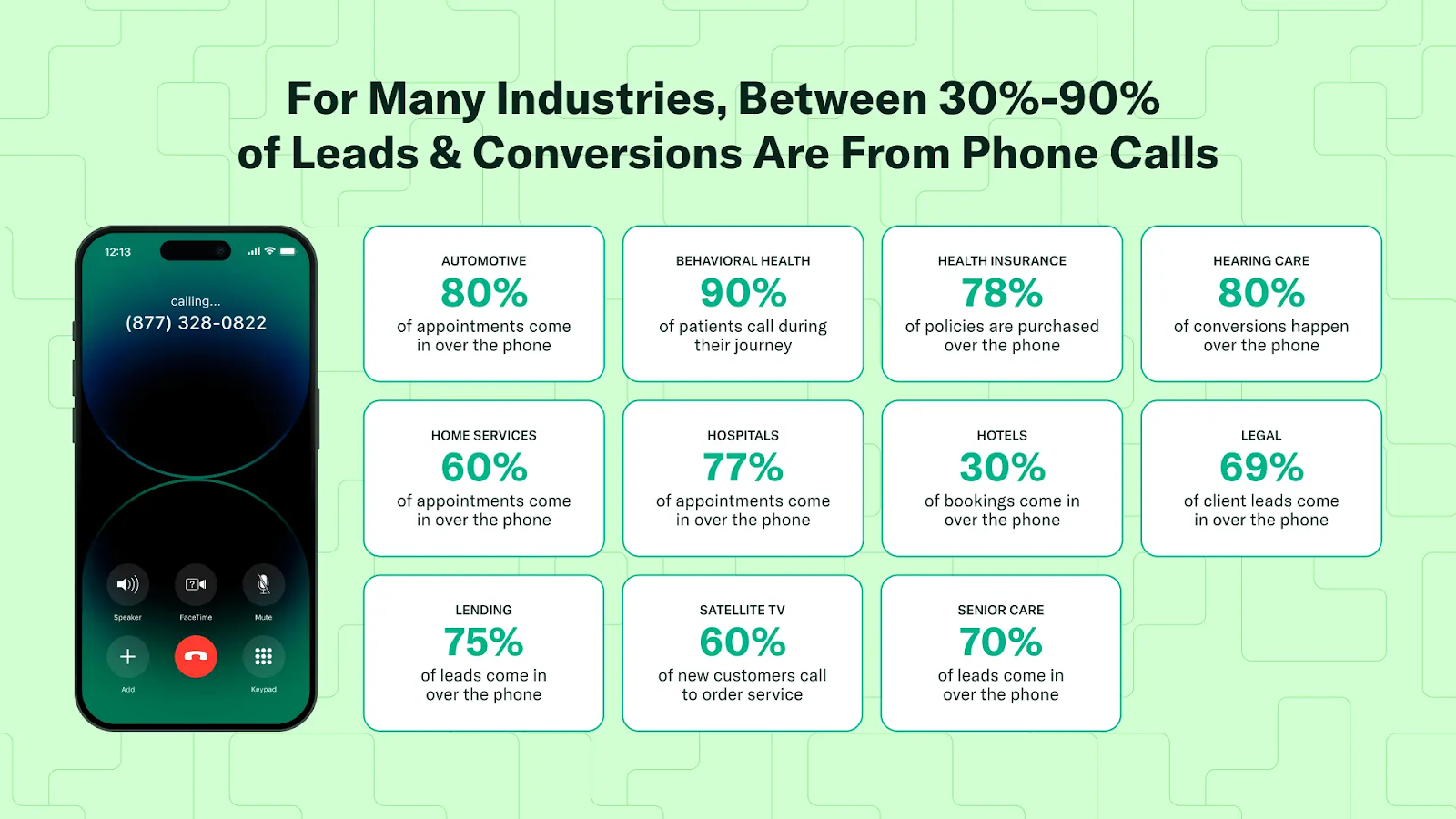
Calls are more immediate, more valuable, and convert faster in verticals like home services, legal, automotive, healthcare, consumer services, and financial services. Google data shows calls can convert at 3x the rate of form fills. PMax often drives calls via mobile-heavy placements, which can be high-value—but only if you track and score them properly.
9. How do I measure ROI when conversions happen offline?
Both Search and PMax campaigns support offline conversion imports. Invoca makes this easy by using AI to capture call intent and outcomes (SQLs, booked appointments, closed sales), importing revenue data from CRMs into Invoca, and passing it all to Google Ads—so Smart Bidding can optimise for real business outcomes, not just clicks.
Performance and Optimisation
10. What’s a good cost per lead (CPL) for multi-location businesses?
It depends on the market and vertical. However, focusing on cost per qualified lead (CPQL) is smarter. Invoca scores call intent, product/service interest, and outcomes so you can evaluate leads by quality—not just volume—across both Search and PMax.
11. How do I know which keywords or assets bring in the best local leads?
In Search, link keyword reports with call analytics. Invoca shows which search terms drive high-value calls in its own reporting and passes that data to Google Ads and other tools you use to measure performance.
In PMax, asset-level reporting is less detailed, but Invoca connects campaign IDs to call outcomes—so you can identify which asset groups or campaigns drive business, not noise.
12. Why am I getting clicks but not calls or form fills?
In Search, look at landing page performance, CTA clarity, and keyword intent. In PMax, issues can stem from irrelevant placements or a mismatch between creative and user intent. Invoca reports show you where you’re generating volume but not conversions from campaigns, ads, keywords, and landing pages—so you can refine asset groups or suppress poor placements.
13. How do I use Smart Bidding effectively for local campaigns?
Accuracy of conversion signals is everything. Invoca can supercharge your Smart Bidding by:
- Quantifying calls by lead quality and conversion outcome
- Pushing sales-qualified leads and conversions into Google Ads
This improves Smart Bidding for Search and PMax, letting the system prioritise budget toward profitable outcomes.
14. What’s the best way to suppress low-quality leads from certain regions?
In Search, apply negative bid adjustments or exclude zip codes. In PMax, geographic exclusions are limited, but you can guide results by:
- Excluding certain locations entirely from campaign settings
- Feeding negative location signals into your CRM feedback loop
Invoca’s AI call scoring surfaces location-level lead quality so you can suppress or shift strategy.
Local Search Advertising Tech and Tools
15. What tools do I need to manage and optimise multi-location ad campaigns?
- Google Ads with Search and Performance Max campaigns
- Call tracking and conversation intelligence like Invoca
- A CRM like Salesforce or HubSpot
- Localised landing pages or a CMS with dynamic geo blocks
- Lead scoring and offline conversion sync to automate feedback loops
16. How do I integrate Google Ads with my call tracking solution?
Invoca supports:
- Direct integration with Google Ads and all the tools you use to optimise paid search
- Enhanced conversions for phone leads
- Supports campaign-level call attribution for Google Search and Pmax, including support for keyword-level data
This ensures your call outcomes inform bidding algorithms and campaign optimisation automatically.
17. Can AI or automation help with managing multi-location campaigns?
Yes, especially when paired with Invoca to:
- Analyse large volumes of phone conversations across locations
- Auto-classify leads, measure conversions, and flag unqualified inquiries
- Identify geographic patterns and campaign attribution gaps
This scales your ability to manage hundreds of locations and ensures no insights are left behind—whether from Search or PMax.
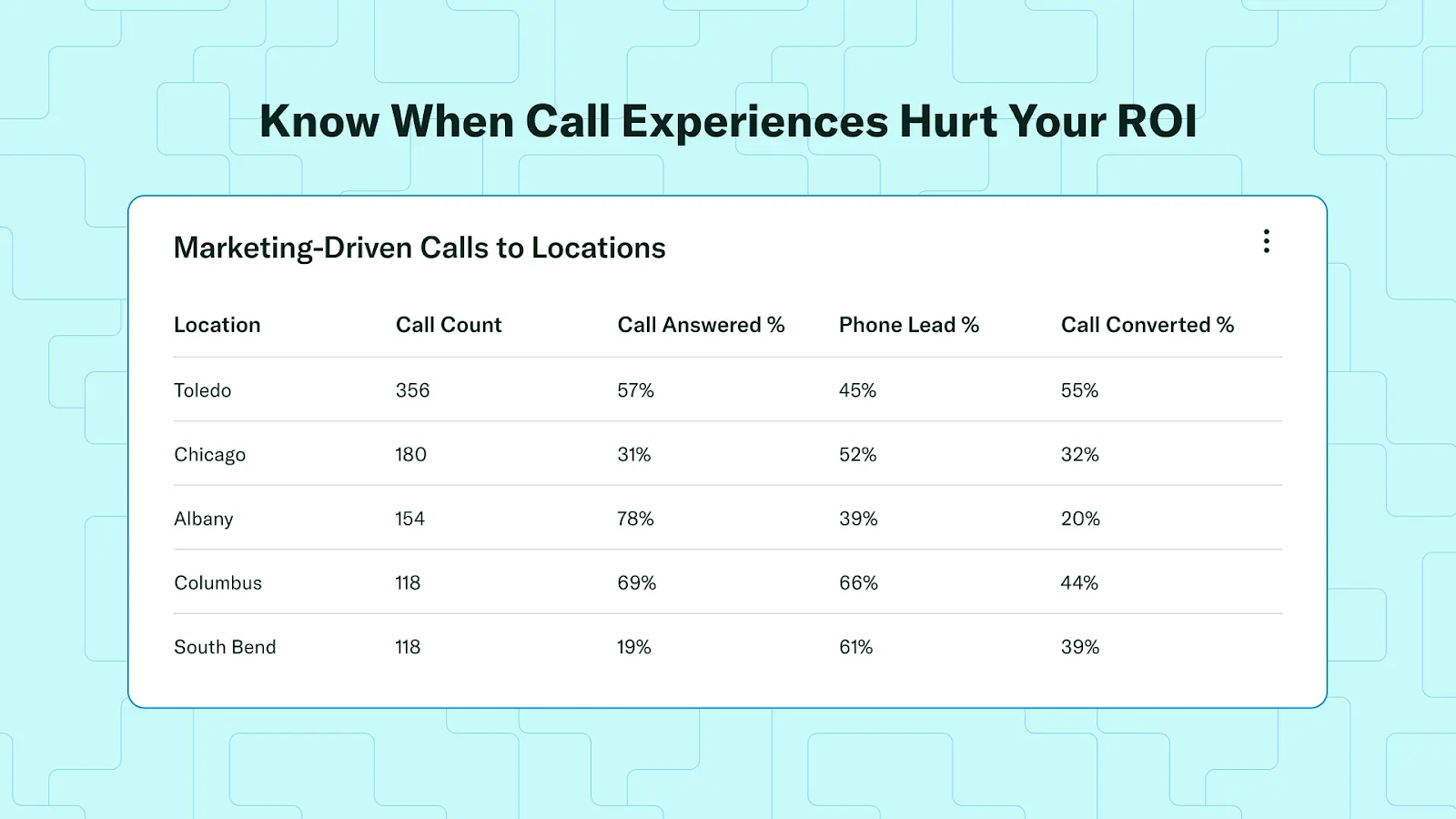
18. How do I know if the phone leads I’m sending locations are being converted?
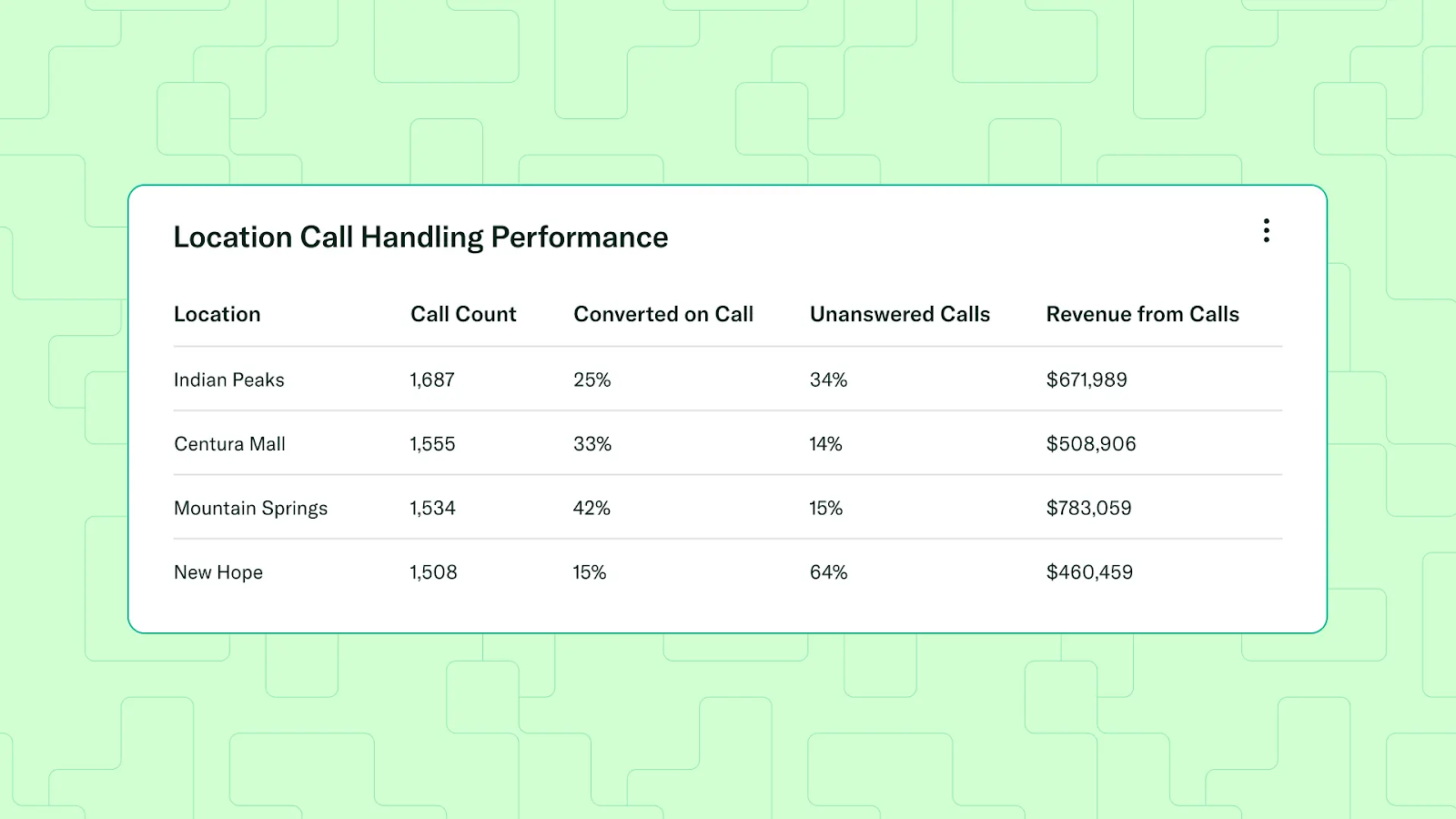
It can be frustrating for marketers and devastating to campaign performance when you spend budget driving qualified calls to locations that fail to answer or convert them. Invoca enables you to see how many calls you send to each location, if they were answered, if the calls are leads, and if they resulted in a conversion. You can also access the actual summaries and transcripts of calls from leads that didn’t convert to learn why and help location managers correct issues costing you conversions.
Strategies That Are Driving Value for Multi-Location Leaders
- Home Franchise Concepts (HFC) is one of the world’s largest franchising systems in the home improvement goods and services space and among the world’s largest franchise businesses. They use Invoca to track calls across 10 brands and 2,600 territories. Invoca allows Home Franchise Concepts to see not just how many calls, but how many high-quality phone leads each campaign drives. Invoca integrates with the marketing tools they use every day, including Google Ads and Google Analytics 4, allowing them to take action on the data in real time. This allows them to calculate their true ROI and make smarter decisions about where to spend their budget.
- Nemours Children’s Health is one of the nation’s largest multistate pediatric health systems, including two free-standing children's hospitals and a network of more than 70 primary and specialty care practices. Phone calls make up approximately 70% of leads for Nemours Children’s Health, while appointment requests and online scheduling account for 30%. With Invoca, they can track which efforts are driving not only phone calls, but high-quality phone leads and conversions, so the marketing team can understand the true returns of each marketing campaign. This allows them to double down on what’s working and reduce wasted spend on campaigns that are underperforming. As a result, they drove a 45% increase in marketing-driven leads.
Final Thoughts: Prove Value and Scale Success with AI-Powered Call Tracking
For enterprise and multi-location marketers, winning in local paid search today means mastering both Search and Performance Max campaigns. Success goes beyond the click—it’s about driving real conversations, tracking outcomes, and proving ROI.
Whether you're managing 10 or 1,000 locations, the formula includes:
- Hyperlocal targeting in both Search and PMax
- Tailored landing experiences that match local needs
- AI-powered call tracking to track intent and outcomes
- Smart Bidding signals fed with true lead value
With Invoca, you gain full visibility into the buying journey—across all locations, all campaign types, and all devices—turning paid media investments into measurable business growth. Request a demo of Invoca to see how phone lead and conversion data can help you drive more appointments and sales from local paid advertising.
Want to dive deeper into optimisation strategies for Google Ads? Watch our Google Ads Masterclass webinar on-demand now →
.svg)
.svg)