.svg)


Many contact centre agents are as stressed as Carmy from the hit show The Bear — they’re juggling multiple requests, correcting mistakes they didn’t create, and holding everything together by a thread while the phones incessantly ring. That’s because contact centres often operate as the last stop in the customer journey, cleaning up issues that began long before a call was ever placed: confusing checkout paths, unclear product details, or broken self-service flows. And every one of those unnecessary calls comes at a price — with the average support call costing over $7 to handle, the chaos isn’t just exhausting, it’s expensive.
Your contact centre shouldn’t feel like The Beef during a Saturday dinner rush. So how do you calm the chaos and keep things moving? With a secret ingredient: AI. By tapping into this powerful technology, leading contact centres are identifying breaks in the customer journey before they lead to floods of frustrated phone calls. They’re also improving training and sharpening agents’ ability to deliver fast, empathetic support.
This blog will unpack four ways your contact centre can use Invoca’s AI to deflect unnecessary calls, improve agent performance, and build customer satisfaction. We’ll also dive into how you can pair Invoca with other tools in your contact centre stack, like Quantum Metric, to multiply your impact. As a result, you’ll cut waste and boost efficiency across your contact centre. Remember: every second counts, cousin!
1. Identify CX Issues and Breaks in the Funnel
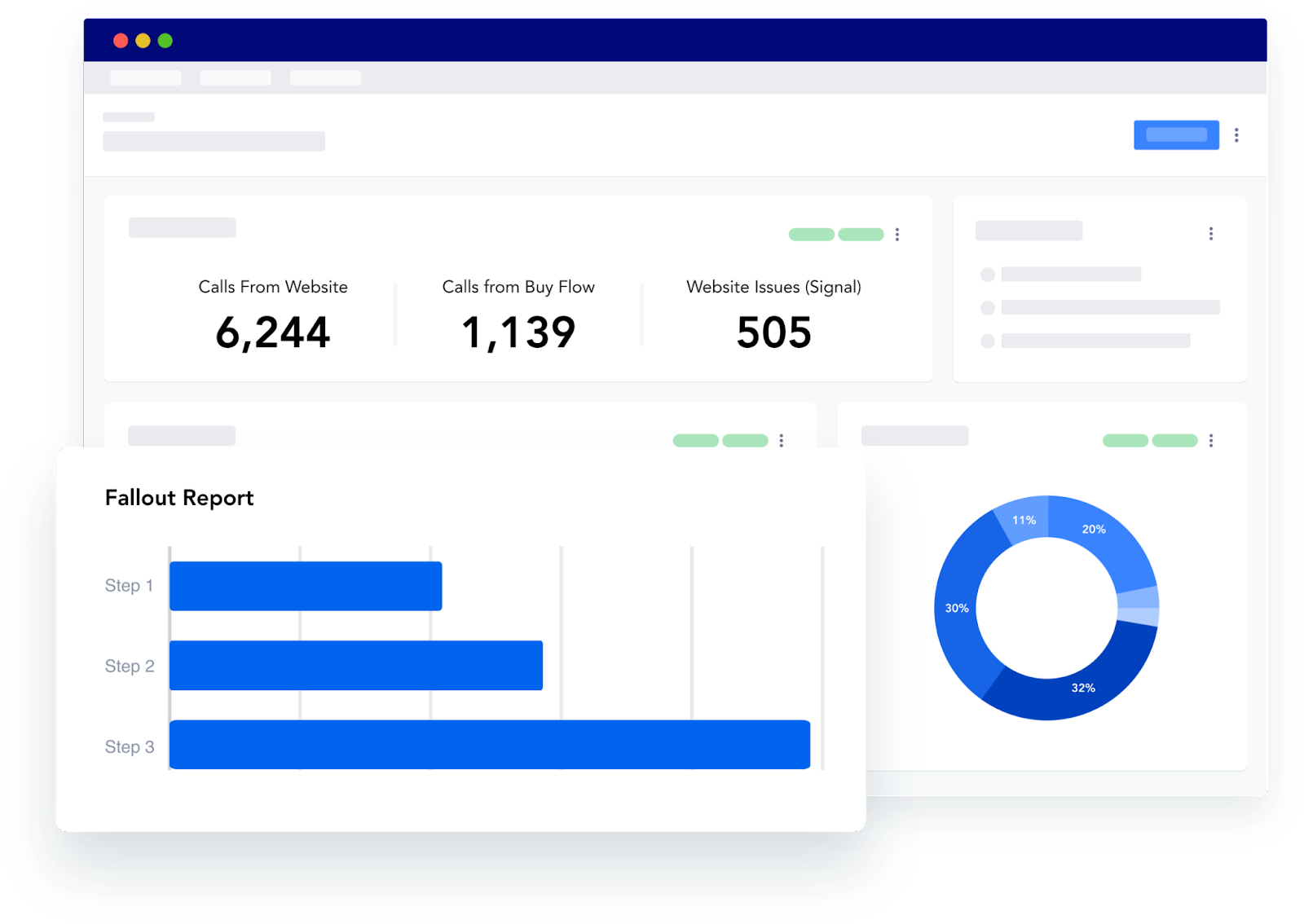
If you want to fix leaks in your funnel, you have to spot customer experience issues early — before they snowball into widespread drop-off. However, these problems don't always announce themselves clearly in dashboards or KPIs — they often hide in the conversations customers have when something goes wrong. Leading brands use tools like Quantum Metric to identify where digital friction happens — stalled shopping carts, confusing form fields, rage clicks, dead-end UX moments, and other places where customers get stuck or drop off.
However, while Quantum Metric can help you identify where leaks in the funnel occur, it can’t always tell you why. That’s where conversation analytics tools like Invoca come into play. With Invoca, you can track what frustrated customers say when they reach out to your business and identify trends at scale — the questions they ask, the objections they raise, and any barriers to purchase they face. This can help you further diagnose issues and take the right actions to correct them.
For example, Invoca’s AI can identify if multiple callers mention difficulty with your online shopping cart, confusion about a specific webpage, or frustration with a particular form field. You can then collaborate with your web team to address these issues promptly. This preventative approach ensures customers are empowered to complete their purchases.
Want to learn more about how Quantum Metric can help you improve contact centre performance? Check out their recent webinar with Google.
2. Deflect Unnecessary Calls from Your Contact Centre
When call volumes spike unexpectedly, it’s usually a sign that something upstream in the digital journey has broken. However, identifying the exact reason for the spike can be challenging.
Solutions like Quantum Metric help solve this all-too-common problem by pinpointing where in the digital journey friction points occur. For example, it can identify an unclear form field that is causing customers to call and reach out for help. You can then dive deeper with Invoca, tapping into call transcriptions and trends to understand how you could improve the form to make the phrasing clearer.
This approach helps you eliminate unnecessary calls that put strain on agents and drive up operating costs for your contact centre.
3. Assist Customers with AI Agents Trained on Your Best Calls
Another way to lighten the load for your contact centre agents is to offer self-service channels for simple questions and straightforward tasks. SMS is quickly becoming a preferred channel for these quick, low-effort interactions, and Invoca’s AI Messaging Agent makes it even more effective. The agent can instantly handle routine needs — answering FAQs, sharing product details, capturing key information, and managing appointments or callbacks — without requiring a live agent. By resolving these self-service requests via SMS before they become calls, you keep low-value inquiries out of the contact centre and free your team to focus on high-intent, complex, or emotionally nuanced issues where human expertise truly shines.
However, your AI agent’s outputs are only as good as the inputs you train them on. That’s why Invoca’s AI Messaging Agent is pre-trained on call transcripts, summaries, and conversation insights from your highest-scoring calls. These authentic conversations teach the AI what great interactions actually sound like. Feeding this data into AI models helps them better interpret intent, stay on-brand, and emulate the behaviors of top-performing agents.
4. Automate Call Scoring to Improve Agent Training
Now that you’ve deflected unnecessary calls, it’s time to make the most of the high-value calls that get through to your agents. Providing top-tier experiences starts with giving your agents the right training and coaching. However, most managers can only review around 2-5% of contact centre calls, making it difficult to identify each agent’s strengths, skill gaps, and coaching needs.
AI can strengthen this process by automatically scoring every conversation against your company’s unique criteria, whether that’s proper qualifying questions, successful objection handling, adherence to compliance requirements, or effective closing techniques. Instead of managers manually reviewing a handful of calls each week, AI analyses 100% of conversations and identifies exactly which agents are excelling, which need support, and which specific behaviors drive the best outcomes.
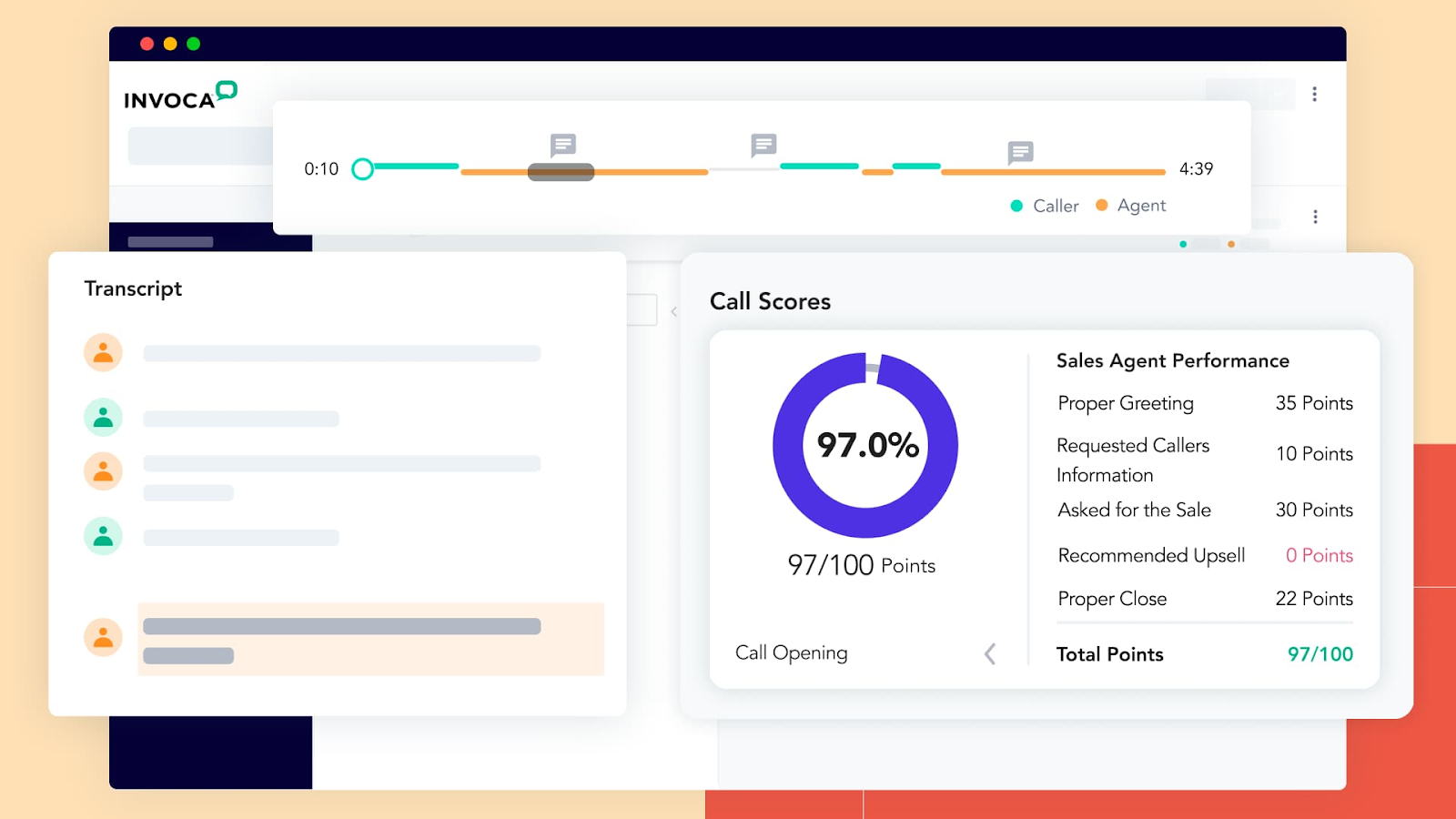
Automated quality management creates a data-driven coaching framework that scales across the organisation. Managers can quickly spot trends — perhaps agents who confirm intent earlier convert at twice the rate, or mentioning a specific financing option reduces objections by 30%. These insights, drawn from thousands of real conversations, become the foundation for targeted coaching that lifts performance across the entire team, not just the small sample of calls that previously got reviewed. The result is more consistent, higher-quality customer experiences that improve conversion rates, increase satisfaction, and build brand loyalty.
5. Track Call Handling Issues Across Contact Centre Locations
For businesses with multiple contact centres or locations, inconsistent phone call handling can be a silent revenue killer. One dealership or branch office might be converting 40% of inbound calls while another converts only 15%, and without visibility into these disparities, the problem can persist indefinitely. To solve this issue, leading brands use AI to get location-level performance analytics that reveal exactly how each site answers and converts phone leads. This transparency allows leadership to identify top performers, understand what they're doing differently, and replicate those successful tactics across underperforming locations.
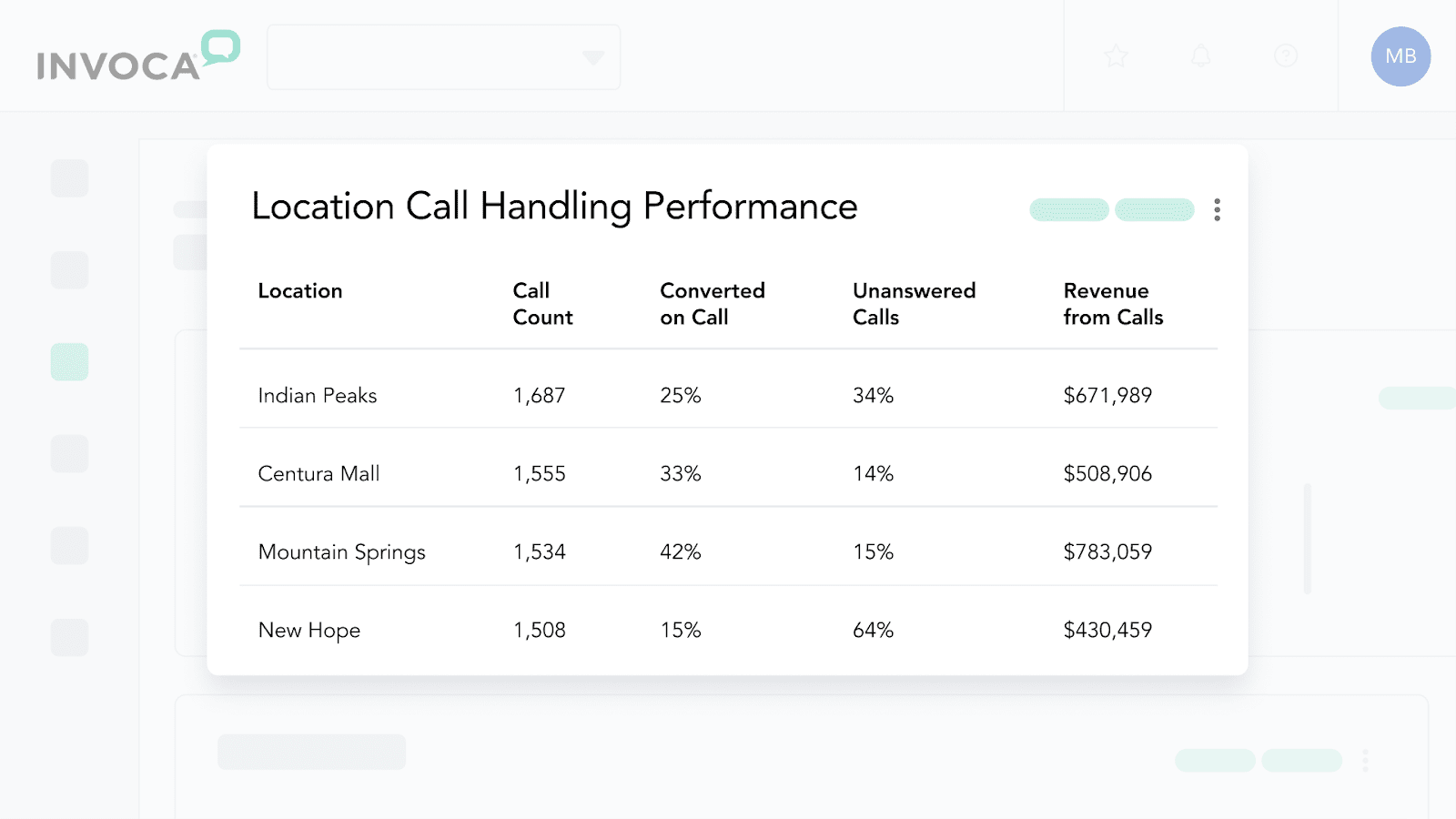
Invoca also ensures that missed opportunities don't become lost revenue. When calls go unanswered, the platform sends real-time alerts and identifies the callers that are most likely to be leads so you can prioritise your follow-ups. This allows your team to focus first on the highest-value prospects from your best-performing channels. As a result, you can repair relationships with frustrated callers, recover lost sales, and demonstrate that your brand values every customer — even when things don't go perfectly the first time.
Additional Reading
Want to learn more about how Invoca’s AI can help you improve contact centre performance? Check out these resources:
- AI is Making the Buyer Experience Less Personal. It Should Be the Opposite.
- Why Understanding Customer Sentiment Is Essential for Revenue Growth
- AI for the Customer Experience: Benefits, Challenges, and Examples

.svg)
.svg)