.svg)


Phone calls to businesses are one of the highest-intent moments in the customer journey. But for most marketing teams, they’re also the hardest to measure and optimise.
Even with call tracking, when the true intent and outcome of calls are hidden from marketers inside unstructured conversation data, it’s easy to over-credit the wrong campaigns, miss what’s actually driving conversions, and waste spend chasing volume instead of value.
Too often, teams fill that gap and attempt to prove ROAS with proxy metrics like call duration, making decisions without knowing what happened on the call. When the only signal you can act on is that a call occurred (or how long it lasted), it’s easy to optimise campaigns that generate activity without improving revenue.
Signal AI Studio solves this by turning phone conversations into reliable, actionable signals, so you can measure what matters (lead intent and conversion events), activate that data across your marketing stack to power better optimisations, and surface the insights you need to improve performance.
If phone calls influence revenue in your business, this post is designed to help you connect conversation outcomes to performance, so you can optimise with confidence.
Here’s what we’ll cover:
- Why phone leads create a blind spot for measurement and optimisation
- Three ways marketing teams are using Signal AI Studio to drive more revenue and efficiency
- Examples of how leading brands translate call insights into better marketing decisions
- What to do next
Most Marketing Teams Inform Optimisation with Incomplete Data
Many marketers can see that calls happened, but fewer can answer the most important questions that drive growth:
- Was the caller actually a qualified lead?
- Did the call convert (sale, appointment, quote, policy bound, etc.)?
- If it didn’t convert, why not?
- Are undetected call handling issues at contact centres and business locations dragging down marketing ROI?
Without those answers, you’re left optimising with incomplete data, often using proxies that won’t improve optimisation (i.e., call duration), and struggling to prove impact to leadership.
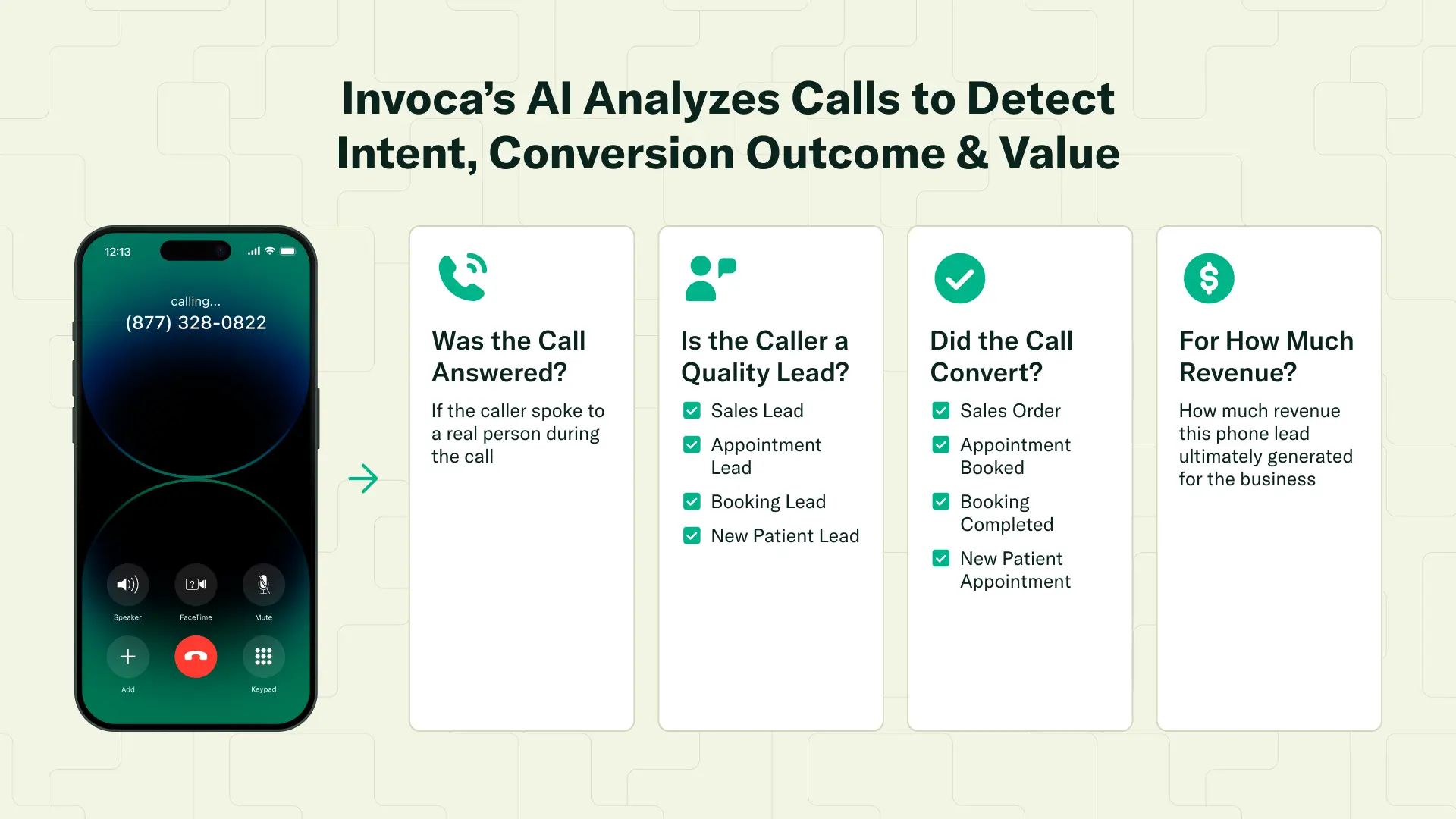
Signal AI Studio closes this gap by detecting lead intent and conversion outcomes from every conversation, making that data usable everywhere decisions get made. It’s invaluable insight that powers media optimisation and uncovers conversion leaks that happen after the call starts.
3 Ways Signal AI Studio Drives Revenue and Efficiency
1) Create AI signals that match your business, not generic categories
A “good lead” doesn’t look, or sound, the same across industries, sometimes not even across business lines inside the same company. A new patient appointment call for a dental practice sounds very different from an HVAC emergency appointment call. A call for a home insurance quote will sound different from adding another vehicle onto an existing auto policy.
Signal AI Studio is built to reflect real-world differences by training custom AI models on your calls so your lead and conversion signals align with your definitions, products and services, and customer language.
What that enables:
- More accurate lead intent and conversion measurement
- Cleaner reporting across campaigns and channels
- Better decision-making because you trust the data you’re acting on
This level of precision is exactly how home improvement and facility service brands are moving beyond basic call tracking. When your business has over 2,000 franchise locations, Signal AI Studio is key to distinguishing exactly when and where an appointment is set.
.webp)
By training the AI to recognise the specific language used for high-value home improvement projects or restoration emergencies as opposed to callers with general inquiries, marketing teams ensure their data isn't skewed by non-lead volume. Now, they can optimise their spend toward the specific channels and keywords that drive the most urgent and profitable calls for each local franchise.
2) Move from resource-heavy “AI projects” to fast, self-serve signal creation
Even when marketing teams want better call intelligence, the path to getting it can be slow: limited analyst time, complicated workflows, and disconnected data can turn seemingly basic questions into long waits for answers.
Signal AI Studio makes signal creation approachable for marketers with a no-code experience that helps you train and validate signals efficiently, without developer dependency.
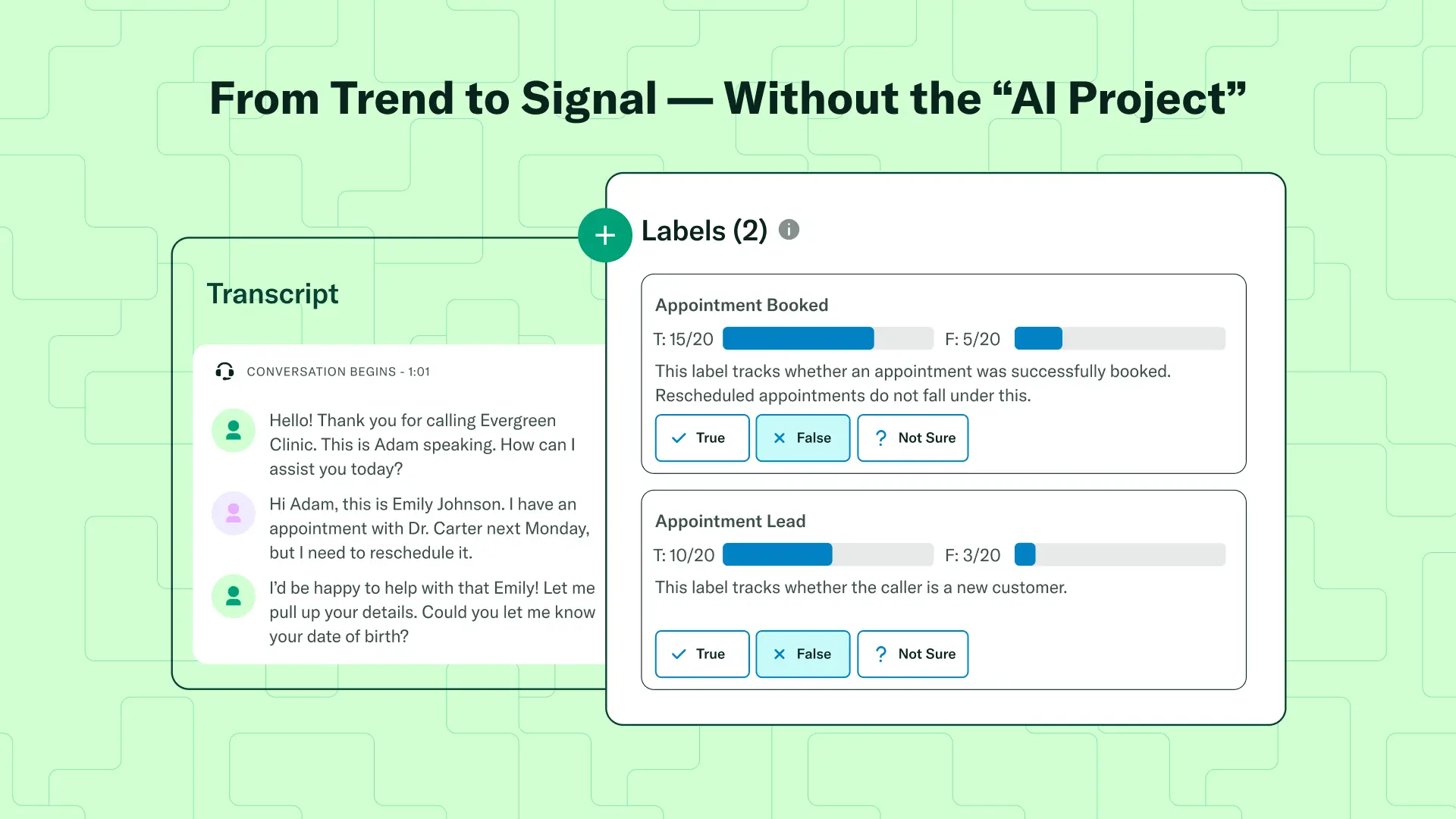
Marketing moves too fast to wait for a multi-month “AI project” to reach the finish line. You need to be able to identify new trends and start creating new signals the moment you spot a change in customer behavior. Signal AI Studio makes this level of agility possible by serving up the right calls to review and providing a simple UI that makes AI training a self-serve process.
A leading insurance provider uses this self-serve flexibility to move with certainty. As their senior account manager noted, “Invoca is amazingly accurate and easy to use. It allows us to build the signals we need to identify what’s working and what isn’t, so we can invest in the right campaigns with certainty.”
What teams typically do with this capability:
- Build and refine multiple signals in parallel (intent + outcome + key drivers)
- Validate predictions quickly so you know when a signal is ready to use
- Deploy signals faster—so optimisation happens in days and weeks, not quarters
3) Activate call insights to improve spend efficiency and conversion rates
Data is only as valuable as the actions it fuels. With clear, accurate signals, you can move beyond simple reporting and start activating that data in your media buying platforms. By pushing call conversion data back into tools like Google Ads and Meta, you give those algorithms the “fuel” they need to find more of your best customers and stop wasting budget on clicks that lead nowhere. Instead of optimising to proxies like form fills, call starts, or call duration, you’re optimising to qualified calls and real outcomes.
In practice, that activation shows up in a few repeatable plays that teams use to improve efficiency and lift conversion rates.
A few high-impact activation plays:
- Smarter retargeting: reach high-intent callers who didn’t convert with messaging aligned to what they actually asked about
- Suppression: stop spending ad dollars on callers who already converted
- Better automated bidding: fuel systems like Smart Bidding/Performance Max with real conversion outcomes from phone calls (not assumptions)
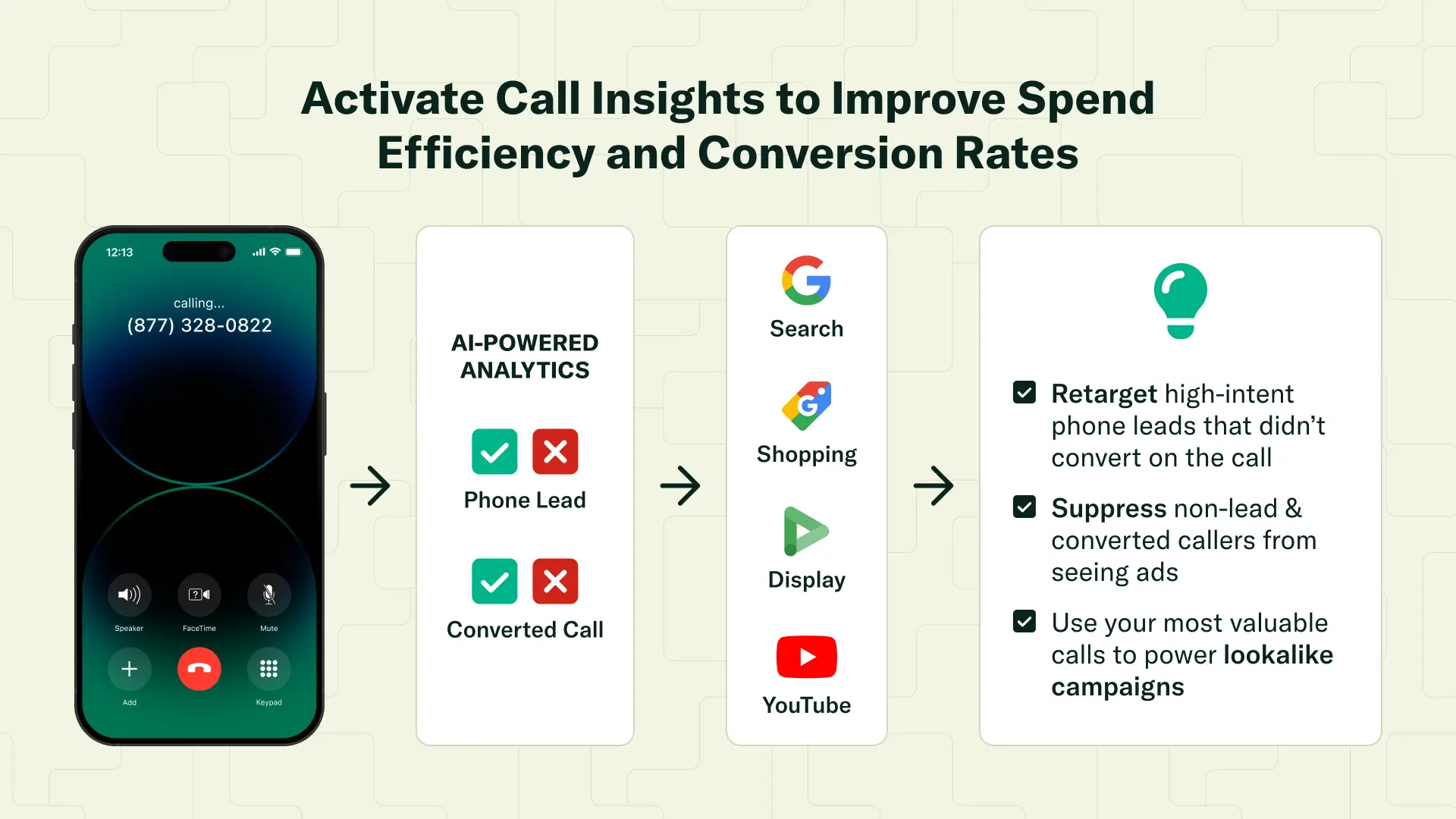
Most marketing teams follow a simple workflow: define what a qualified lead and conversion mean for your business, train and validate those signals in Signal AI Studio, and then send outcomes into Google Ads, Meta, and analytics tools to improve optimisation. From there, the same signals help you pinpoint where conversions break down after the call starts, so marketing and the contact centre can fix what’s costing revenue.
What to Do Next: Turn Call Outcomes Into a Repeatable Growth Loop
Once you’re capturing lead intent and conversion outcomes from calls, the next step is to operationalise them so your business can consistently improve performance, not just measure it.
Start small, pick one outcome that matters most
Choose a single revenue-critical conversion to optimise around (like an appointment scheduled, sale completed, or policy bound) and make it the shared source of truth across marketing, analytics, and the contact centre.
Benefit: Everyone measures success the same way, so optimisation decisions happen faster, with less debate.
Put outcomes where decisions happen
Use those call outcomes in the systems your team already runs every day, such as ad platforms, analytics, and reporting. This way, optimisation is driven by what actually generated conversions, not by what merely generated activity.
Benefit: Budget naturally shifts toward the campaigns, keywords, and audiences that produce the highest-quality conversations and real results.
Use the same signals to protect conversions after the call starts
When outcomes dip, use call signals and conversation evidence to quickly pinpoint whether the issue is demand quality or call handling. That clarity makes it easier to prioritise the fixes that protect revenue at scale—routing, staffing, coaching, and process improvements.
Benefit: You don’t just drive more demand—you capture more of the demand you already paid for.
If you want to see what this workflow looks like with your calls and conversion definitions, request a demo.
.svg)
.svg)