.svg)


When a consumer calls your business, marketers need to know more than how the caller felt. You need to know if they were a lead and if the call resulted in an appointment or sale.
Most sentiment tools only capture the first part. They tell you if a caller sounded “positive” or “negative,” maybe even chart the emotional swings across the call. That’s helpful, but if marketers can’t connect those feelings to the reason why they called (intent) and whether they actually converted (outcome), you’re flying blind on what matters most: revenue, retention, and brand trust.
This blog proposes a way to fill this knowledge gap and drive better marketing results and business outcomes with better data.
What we’ll cover:
- How sentiment is a great metric to add when trying to gain a more comprehensive analysis around customer intent, conversion, and journey data
- The 4 sentiment + conversion scenarios hiding in your calls (and what to do about each)
- How to use moment-level sentiment to find the “oh no” script moments that tank good leads
- How to close the loop between digital journeys and live call experiences
- How Invoca’s Signal AI Studio lets marketers and your contact centre leaders operationalise these insights without writing a line of code
Sentiment Analysis Is Everywhere, but Calls Are Still a Blind Spot
In the broader AI world, sentiment analysis is nothing new. Industry experts like Bernard Marr describe it as the way machines “read between the lines” of text, audio, or video to understand someone’s attitude or emotional state, not just their exact words.
Social listening platforms like Brand24 use AI-powered sentiment to scan millions of online mentions, detect crises, and measure how people feel about brands and campaigns in real time.
But here’s the catch for performance marketers: Most of that innovation has focused on text like tweets, reviews, and comments. Meanwhile, some of your highest-intent, highest-value interactions are still happening on phone calls. And those calls are where expectations are set, trust is won or lost, and revenue either shows up… or doesn’t.
If you’re only using call sentiment as a “nice to know” CX metric (ie. a green/red score in a dashboard), you’re leaving a ton of value on the table.
To unlock that value, you need to connect how people feel on the call with what actually happened:
- Was it a qualified lead?
- Did they book the appointment, enroll, buy, or renew?
- Did they leave upset or delighted?
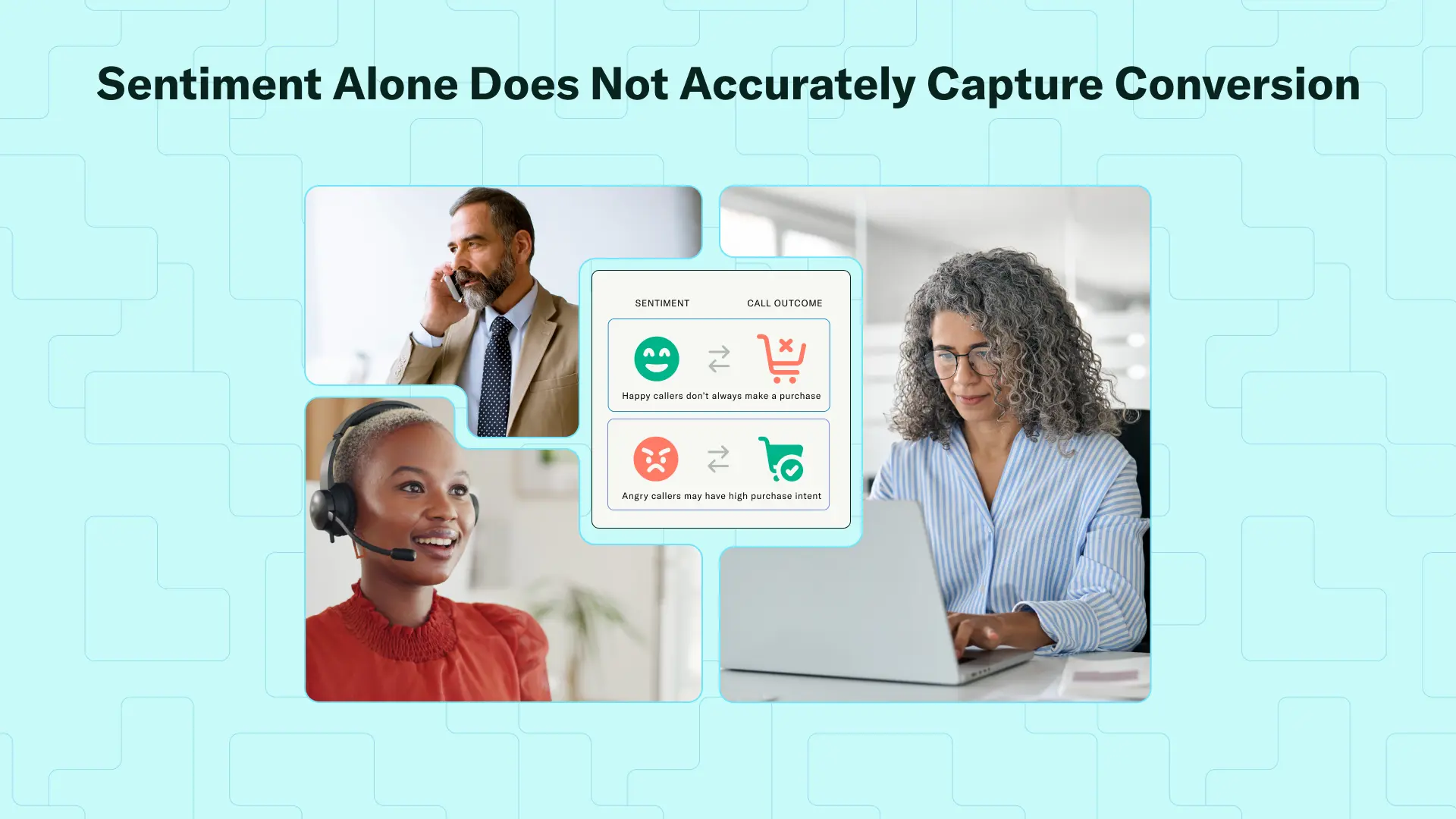
That’s where Invoca’s Signal AI Studio comes in. It allows you to combine caller and agent sentiment with lead intent and conversion outcomes on every call, so you can measure and optimise both experience and revenue.
Why Sentiment Alone Doesn’t Cut it for Marketers
In Blair Symes’ earlier post on caller sentiment, 5 Ways to Use Caller Sentiment Data to Improve Your Digital Marketing, he showed how marketers can track sentiment by marketing source, product, or location and use it to fix broken experiences, retarget frustrated callers, and improve digital performance. That’s your foundation.
Let’s build on that by asking a harder question:
“Is sentiment actually helping you make better decisions about your marketing and your contact centre, or is it just another largely ignored CX score on a dashboard?”
Be warned, sentiment in isolation will mislead you when:
- Leads call in angry because they are in a tough situation (medical condition, auto issue, plumbing disaster, etc.), but they want your business to be their hero.
- A sales call might sound cheerful the whole way through and still end without a sale.
- A caller might grumble their way through a transaction but convert anyway because they had no alternative.
If you only look at the final sentiment score, you might be celebrating or panicking for the wrong reasons.
The trick is to pair sentiment with lead and conversion data on every call:
- Did the caller intend to buy or book?
- Did they actually convert?
- How did their sentiment change throughout the call?
Invoca’s conversation intelligence does exactly that by detecting caller and agent sentiment, identifying whether the call was a lead, and determining if it resulted in a conversion, all automatically. The sentiment data helps act as a red flag to show you calls to review, while the lead and conversion data power better attribution and campaign optimisations.
Once you have both emotions and outcomes in one view, you can categorise every revenue call into four simple scenarios and take targeted action on each.
The Sentiment + Conversion Matrix: 4 Scenarios Hiding in Your Call Data
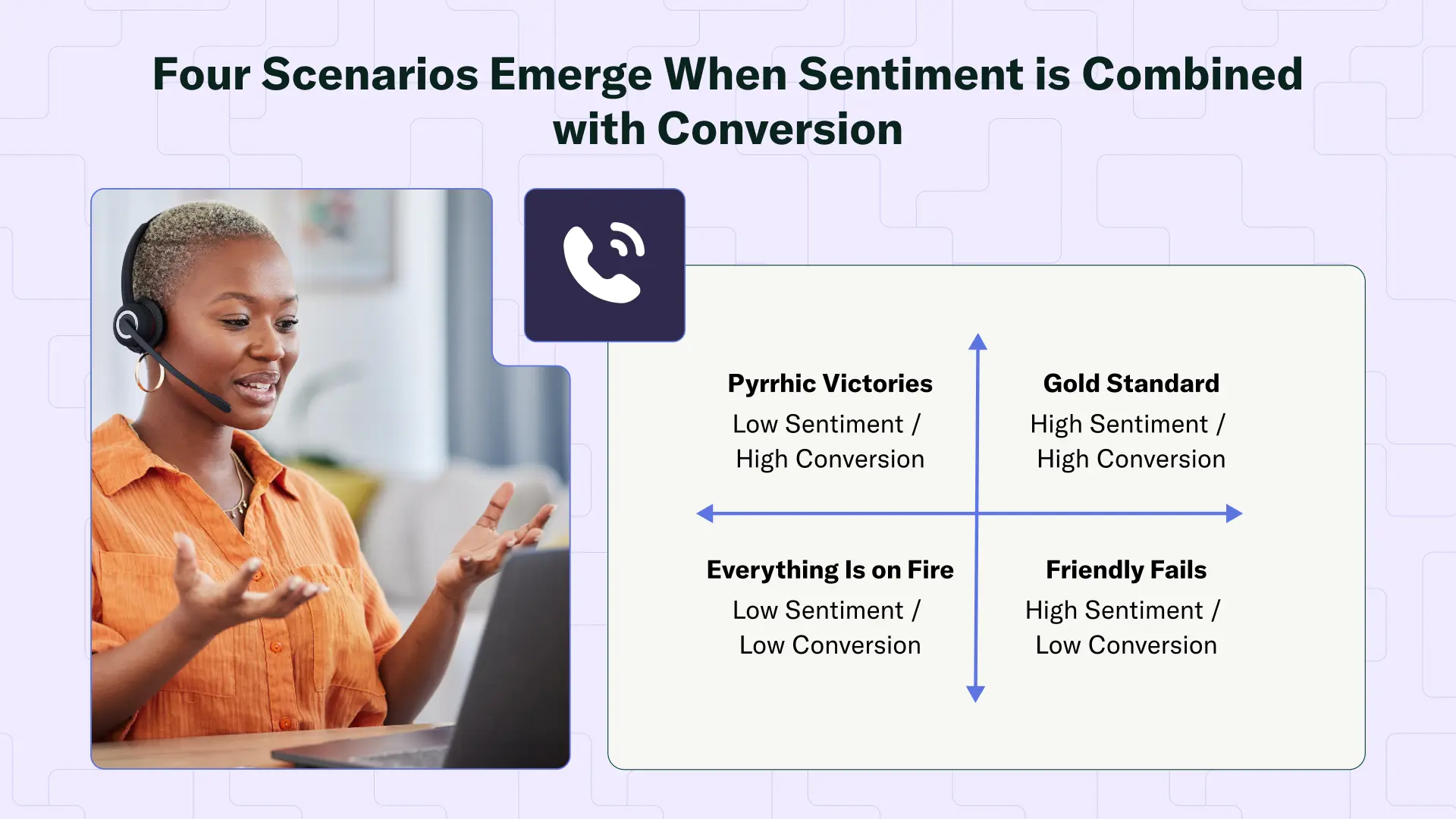
Think of your calls on a 2x2 grid:
- X-axis: For lead calls, did it result in a conversion (yes/no)?
- Y-axis: Was their overall sentiment positive or negative?
You end up with four scenarios:
- Top-right: High Sentiment / High Conversion
- Top-left: High Sentiment / Low Conversion
- Bottom-right: Low Sentiment / High Conversion
- Bottom-left: Low Sentiment / Low Conversion
Let’s walk through each quadrant and what it means for marketers. We'll also cover how to use this chart to improve campaign performance.
Scenario 1: High Sentiment, High Conversion: “Gold Standard” Calls
These are the calls where everything clicks. The caller is happy, the agent is confident, expectations are aligned, and the sale or booking happens smoothly.
Why it matters:
This is your blueprint for what “great” looks like in your marketing, as well as your contact centre experience (from routing to call handling).
What marketers should do:
- Identify the campaigns, ad keywords, and website activity feeding these calls in Invoca.
- Shift more budget toward those high-sentiment, high-conversion sources.
- Copy the messaging and offers into other campaigns that underperform.
How your contact centre can support:
- Use these calls as coaching gold — real examples of how to handle objections, explain pricing, and close confidently.
- Turn them into short call snippets or “highlight reels” for onboarding and ongoing training.
You’re not just looking at conversion rate anymore, you’re optimising for conversion + delight.
Alternative: This way you’re not solely looking at conversion rates, you’re optimising marketing to drive high-quality leads + setting those leads up for success.
Scenario 2: High Sentiment, Low Conversion: The Friendly Fails
These are the calls where everyone sounds happy, but no sale or booking happens.
The caller likes you, the tone is upbeat. Maybe they even say “this sounds great” then they hang up without committing.
Why it matters:
This is quiet leakage in your funnel. They’re not mad. They’re just… gone.
What marketers should do:
- Use Invoca and Signal AI Studio to build an audience of “positive sentiment, no conversion” callers and retarget them with:
- Follow-up offers
- Financing options
- Educational content that addresses common hesitations
- Test campaign variants that tackle the patterns you see in call transcripts like pricing questions or product confusion.
- Be sure to segment these calls by marketing channel to understand how they’re impacting your paid media programs and ROAS.
How your contact centre can support:
- Find agents who consistently have happy calls without conversions.
- Coach on closing techniques and next-step language (“Can we go ahead and book that now?” instead of “Let us know if you decide to move forward”).
- Use sentiment analysis to see where calls drift into friendly chit-chat instead of moving toward a decision.
These are high-potential opportunities. You don’t need more leads, you need to unlock the ones already smiling at you.
Scenario 3: Low Sentiment, High Conversion: The Pyrrhic Victories
Here, phone leads are frustrated, stressed, or annoyed, yet they buy or book anyway. Maybe they urgently need the service. Maybe your offer is strong enough to overcome a rough experience.
Why it matters:
On paper, these calls look like wins. In reality, they could be churn and bad-review landmines.
What marketers should do:
- Tie these calls back to specific sources and journeys. Are certain ads, landing pages, or promos consistently driving angry yet converting callers?
- Use call summaries and transcripts to fast-track reviews of these calls. Is there something wrong with your campaigns or call experiences?
- Fix misaligned expectations, unclear fine print, misleading pricing, or broken online flows that force people to call in annoyed.
How your contact centre can support:
- Review summaries and transcripts of low-sentiment, high-conversion calls.
- Look for friction points like:
- Long hold times
- Confusing IVR menus
- Mandatory fees or policies that surprise customers
- Agents who sound rushed or unempathetic
- Use these examples in training to improve empathy, pacing, and how you communicate “hard” news like fees or eligibility.
The goal isn’t to stop these conversions, it’s to keep the revenue and remove the resentment.
Scenario 4: Low Sentiment, Low Conversion: Everything Is on Fire
This is the nightmare quadrant: callers are unhappy and they don’t convert.
They might be upset about a broken promotion, a failed checkout, a billing mistake, or a bad past experience. They leave without buying, and they’re the most likely to vent out about you online.
Why it matters:
This quadrant reveals systemic problems that hurt both your marketing efficiency and your brand reputation.
What marketers should do:
- Use Invoca to slice these calls by campaign, channel, landing page, or keyword.
- Look for clusters:
- A broken promo code
- A common calling page
- An offer that excludes existing customers
- Messaging that doesn’t match what agents can actually deliver
- Pause or adjust campaigns that are driving spikes in this quadrant until the issues are fixed.
How your contact centre can support:
- Track low sentiment + no conversion by agent and location.
- Identify who or where is creating the most “everything is on fire” calls.
- Share recordings and transcripts with supervisors and create specific coaching or staffing plans.
A pro-tip is to create real-time alerts for this quadrant, for example, flagging any call with very negative sentiment and no conversion, so a supervisor can review it or trigger a follow-up outreach attempt.
Find the “Oh No” Moments Inside Every Script
The 2x2 matrix above tells you which calls to focus on. Moment-level sentiment tells you why things went off the rails.
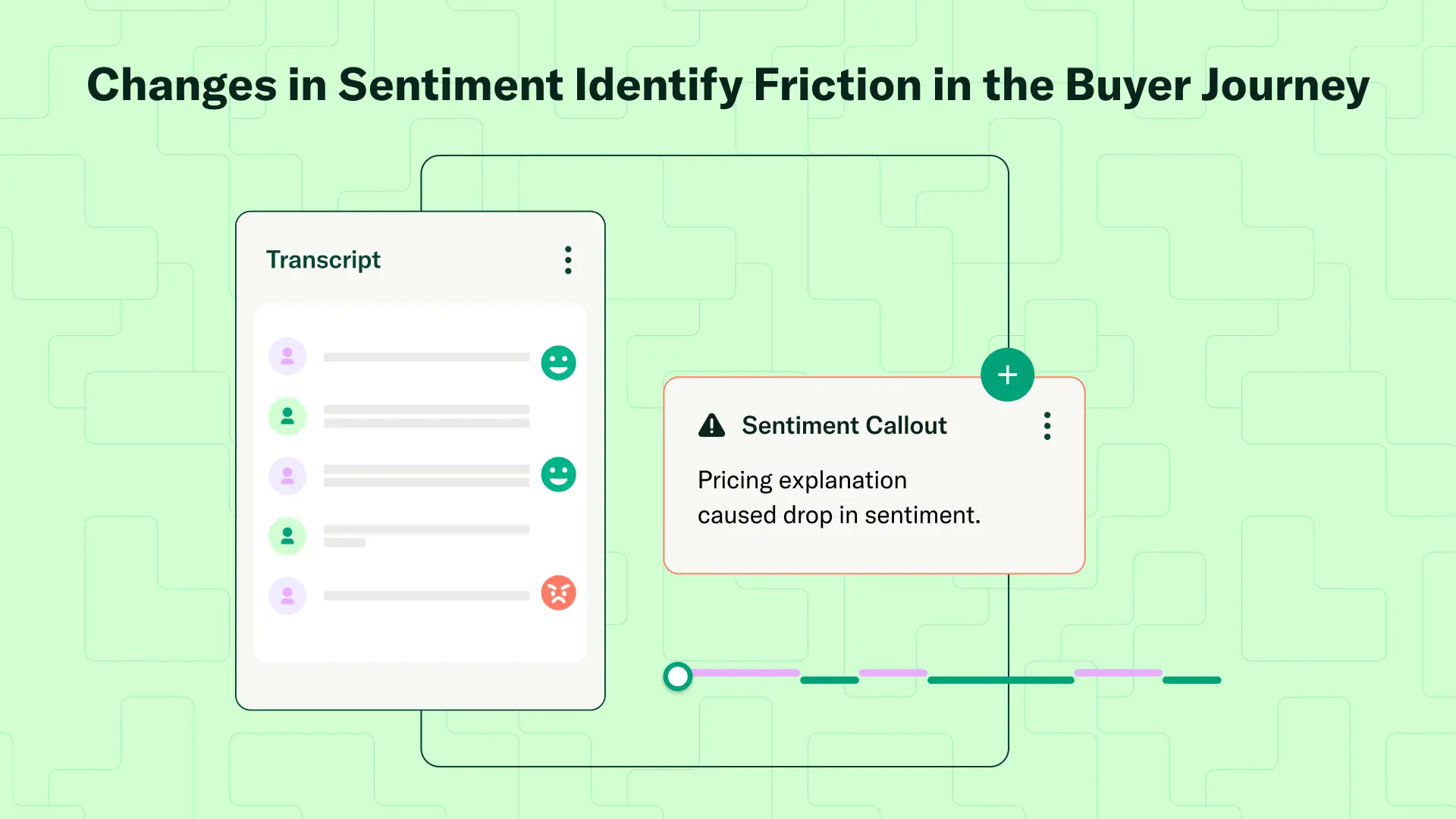
In every high-intent call, there are pivotal “oh no” moments, the instant a caller’s tone shifts from curious to confused, or from excited to skeptical.
With Invoca’s sentiment analysis and transcripts, marketers can:
- See exactly when sentiment drops: after a price is mentioned, when terms are explained, or when a promo turns out not to apply.
- Pinpoint phrases and script sections that repeatedly trigger frustration or hesitation.
- Test new language, offers, or objection-handling techniques, then measure whether those changes lift both sentiment and conversion.
This is where you move from generic “our NPS improved” reporting to concrete, fixable moments in real conversations.
For marketers, those “oh no” moments are golden opportunities to improve content or develop new promotions. If you see sentiment crash when customers learn about a fee or limitation, that’s a sign your ads and landing pages need to set better expectations before the call.
Close the Loop Between Digital Journeys and Live Call Experiences
In the earlier Invoca blog on caller sentiment for marketers, we focused on using sentiment data to:
- Track negative sentiment by marketing source and product
- Retarget frustrated non-converting callers
- Alert teams when sentiment spikes for certain campaigns or locations
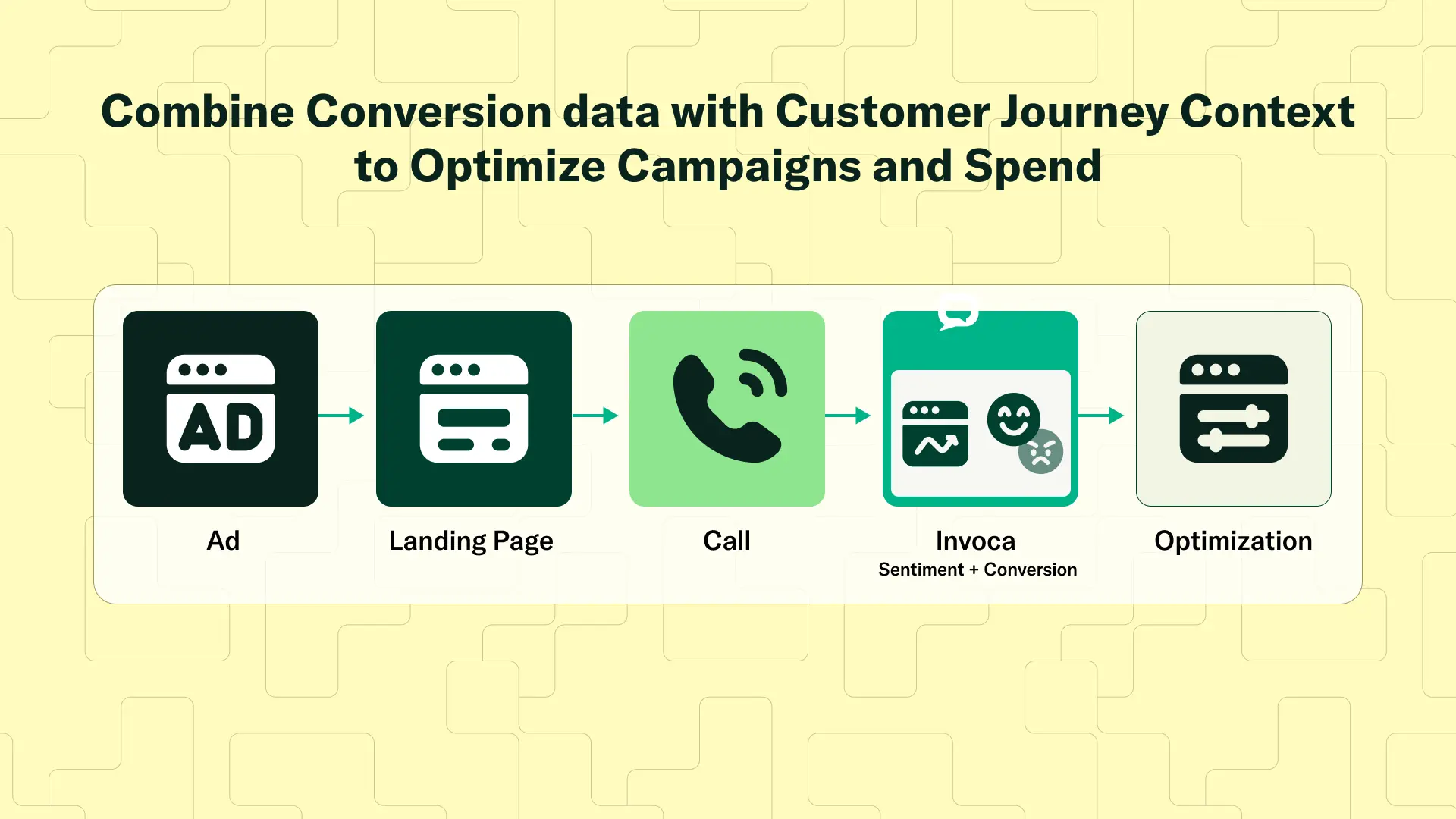
When you layer conversion data and journey context on top of that, you can build a closed-loop system that looks like this:
- Digital drives the call. A search ad, social ad, email, or SEO page drives a phone lead.
- Invoca captures the full picture. Signal AI identifies caller and agent sentiment, intent, and whether the call converted.
- You classify the call into one of the four scenarios.
- You act on it across channels:
- Suppress or rewrite campaigns that drive Scenario 4 calls
- Retarget Scenario 2 callers with tailored offers
- Fix on-site or policy issues creating Scenario 3 friction
- Double down on the campaigns and journeys behind Scenario
This is the evolution from “sentiment as a CX metric” to sentiment as a performance lever that directly improves ROAS and call conversion rates.
Operationalising it All With Invoca’s Signal AI
The best part: you don’t need a data science team to make this real.
With Signal AI, marketers and CX leaders can:
- Create custom AI signals that detect:
- When a call is a qualified lead
- Whether it resulted in a conversion
- Caller and agent sentiment patterns
- Combine those signals into audiences and alerts for each quadrant:
- Positive sentiment + no conversion (Scenario 2)
- Negative sentiment + conversion (Scenario 3)
- Negative sentiment + no conversion (Scenario 4)
- Push those audiences into platforms like Google, Meta, The Trade Desk, and your CDP to power retargeting, suppression, and lookalike campaigns.
- Feed sentiment + conversion insights back to contact centre leaders for more targeted coaching and QA.
Where to Go From Here
Sentiment analysis is valuable data. Brands use it every day to monitor reputation, catch crises early, and understand how customers feel about campaigns and products.
But for revenue-focused teams, sentiment alone isn’t enough.
- A happy phone lead who doesn’t buy is an opportunity.
- An unhappy caller who does buy is a warning.
- When you get both a great experience and a conversion, that’s the blueprint you should scale.
By combining sentiment with conversion and journey data and operationalising it with Invoca’s Signal AI, you move beyond vague “positive/negative” labels to a clear, actionable view of what’s really happening on your calls.
You’re not just listening to how leads feel. You’re connecting it to what they do and using that to drive smarter marketing, stronger contact centre performance, and more profitable growth.
Want to learn more about Invoca's AI-powered sentiment analysis? Request a demo to see it action.
.svg)
.svg)