.svg)


In 2026, the healthcare industry is no longer just "recovering" from the pandemic; it is grappling with a structural labor crisis that has become the new normal. While the initial wave of resignations has stabilised, the long-term impact of worker burnout and an aging workforce has left a permanent gap in clinical and administrative staffing. Current data indicates that the healthcare sector is struggling to fill hundreds of thousands of vacancies, with many veteran professionals having permanently exited the field in favor of early retirement or less demanding industries.
This shortage has collided head-on with skyrocketing patient expectations. In 2026, healthcare is judged by the standards of the modern retail experience. Patients expect instant, frictionless service, with 82% citing quality customer service as the deciding factor when selecting a provider. When staffing shortages lead to long wait times or rushed interactions, the patient’s first impression—and your organisation’s reputation—suffers.
The strain is most visible in the contact centre. There are fewer agents than ever available to handle high call volumes, and hold times have reached a breaking point. This creates a "leaky bucket" for marketing: you are spending budget to drive phone leads that your front office literally doesn't have the hands to catch.
If your healthcare organisation’s contact centre is strained from staffing shortages, there are several steps you can take to do more with less. With an AI-powered solution like Invoca, you can improve the efficiency of your contact centre and increase appointment conversion rates. Read on to learn how.
Intelligently Route Calls to the Best Agent or Office
One of the most frustrating parts of the call experience is going through unnecessary transfers. According to Invoca’s Buyer Experience Research Report, 79% of people say they’re rerouted at least once when they call a healthcare provider. This creates friction and makes people less likely to become patients. When callers aren’t transferred, you have a much higher chance of getting them to schedule an appointment.

Your team is already facing staffing shortages — putting callers through unnecessary transfers will only put more strain on your agents and increase the total amount of time each caller is engaged with your contact centre.
To ensure that callers are immediately sent to the best agent to meet their needs, leading healthcare providers are using intelligent call routing. Solutions like Invoca allow you to identify which marketing channel, digital ad, search keyword, and website page drove each call. It can then use this digital intent data to route the caller to the best agent to handle their inquiry. For example, calls driven by the insurance and billing page would be automatically routed to a billing support specialist. Calls driven by “schedule an appointment” search ads can be routed to the appropriate contact centre agent or the practitioner that’s nearest to the caller’s geographic location.
Reduce After-Call Work by Integrating Conversation Intelligence With Your CRM
After-call work is the amount of time your agents spend post-call logging the contact’s information, their reason for calling, the contact outcome, and any necessary follow-up items. Call centre agents often use a CRM, such as Salesforce, to record this information.
Every minute your agents spend doing after-call work is a minute they could be using to assist other callers who may be waiting on hold. But, at the same time, it’s critical that your call centre collects all of the relevant information about each caller. It allows you to track the effectiveness of your call centre, report on key KPIs, and personalise the journey to meet the needs of your existing patients.
To reduce after-call work while still capturing detailed data about each caller, leading healthcare providers use conversation intelligence. Invoca captures and sends call data such as lead source, demographic information, and call outcomes to Salesforce and associates this data with the contact or lead. Invoca’s website tag also captures the online patient journey data associated with each call and places it in the relevant record. If there isn’t an existing contact or lead, a new one is automatically created. This automates a significant portion of after-call activities and allows your agents to spend more time on the phones assisting patients.
Personalise Call Experiences With Invoca’s Salesforce Integration
Invoca’s Salesforce integration also helps your agents have more impactful conversations with patients. Invoca delivers pre-call data about each caller’s service interest or campaign interaction to your agents via a screenpop or whisper message before they answer the call. Your agents can use this information to anticipate the caller’s needs and tailor the conversation accordingly. This also decreases call times, as your agents are able to pull up the necessary information before the conversation begins.
How University Hospitals uses Invoca’s Salesforce Marketing Cloud integration to personalise routing
To improve the patient experience, University Hospitals connected Invoca conversation intelligence data to Salesforce Marketing Cloud. This integration allowed them to send each patient directly to their preferred specialist, without bouncing them around in the call centre first. As a result, they cut wait times in half and increased conversion rates by 300%.
“We can use the Invoca connector for Salesforce Marketing Cloud and include the number in the email that links directly to the healthcare provider. Just being able to personalise this experience has given us a big improvement in the experience for those patients,” said the manager of analytics and digital engagement.
Check out the full University Hospitals case study here.
Identify Friction in the Online Patient Journey and Reduce Unnecessary Calls
Not all patients prefer to call to schedule an appointment — some would rather handle it on your website. It’s important to ensure that you’re providing a seamless online experience so that patients can schedule their appointments the way they want to. This will not only increase patient satisfaction, but it will also reduce unnecessary calls, ensuring wait times stay low.
To identify issues that are driving unnecessary calls, healthcare providers use conversation intelligence. With this solution, you can quickly identify “problem” pages that are causing patients to call when they’d rather schedule an appointment online. You can then tap into the phone conversations to fully understand the issues. Conversation intelligence solutions like Invoca automatically record and transcribe every phone conversation, so you can hear exactly what your patients are saying when they call you.
Don’t want to sift through your transcriptions manually? No problem — you can use Invoca’s Signal AI to automatically detect certain words or phrases that you’ve deemed important. For example, you could set up a signal that identifies when patients ask questions about insurance coverage or when they mention an issue with your website. This will allow you to quickly address key issues on your webpages.
Sometimes, however, you may not know what words or phrases to look for. There may be issues impacting your patients that you haven’t detected yet. To identify topics and trends you may not have known to look for, you can use Invoca’s Signal Discovery. This feature uses machine learning to discover macro and micro trends that are happening in your patients’ phone conversations. As a result, you can detect new patient issues and barriers to conversion at scale, without having to listen to call recordings to find them.
How University Hospitals uses Invoca IVRs to divert callers to online scheduling and reduce call volumes
University Hospitals recently set up an Invoca IVR that helps people easily schedule an appointment online when wait times at locations are high. When the caller selects the prompt from the IVR, they’re instantly sent a link to the online scheduling platform. This improves the user experience of somebody that was on the phone when they didn't actually want to talk to somebody. It also improves efficiency on University Hospitals’ end by shortening queues at the call centre.
University Hospitals is also using an IVR to divert people calling in for directions so that they’re instantly texted a Google Maps link to the location. This further reduces call volumes and allows agents to focus on scheduling appointments.
Use AI SMS Agents to Help with Appointment Scheduling
Invoca’s AI Messaging Agents act as a critical "digital relief valve" for your overstretched teams. By automatically offering a transition to SMS when call volumes spike or an inquiry occurs after hours, these agents ensure that no patient is left waiting in a hold queue. This shifts the burden from a live agent to a scalable AI system that can handle multiple patient inquiries simultaneously.
Unlike basic chatbots that offer canned responses, Invoca’s agents are trained on the successful interactions of your top-performing human agents, allowing them to book, reschedule, and confirm appointments with the same brand voice and empathy a patient expects. For a short-staffed clinic, this means the AI handles the repetitive, high-volume logistics of scheduling, freeing up the remaining human staff to focus on complex patient needs that require more nuance and empathy.
The efficiency gain is further amplified by the deep context these agents possess. Because Invoca’s AI is integrated with digital journey data, the messaging agent knows exactly which treatment or location the patient was researching before they reached out. This eliminates the need for the "20 questions" routine that often slows down manual intake. By resolving simple inquiries via SMS, practices can effectively increase their total capacity for patient acquisition without adding a single dollar to their payroll, alleviating the pressure caused by staffing vacancies.
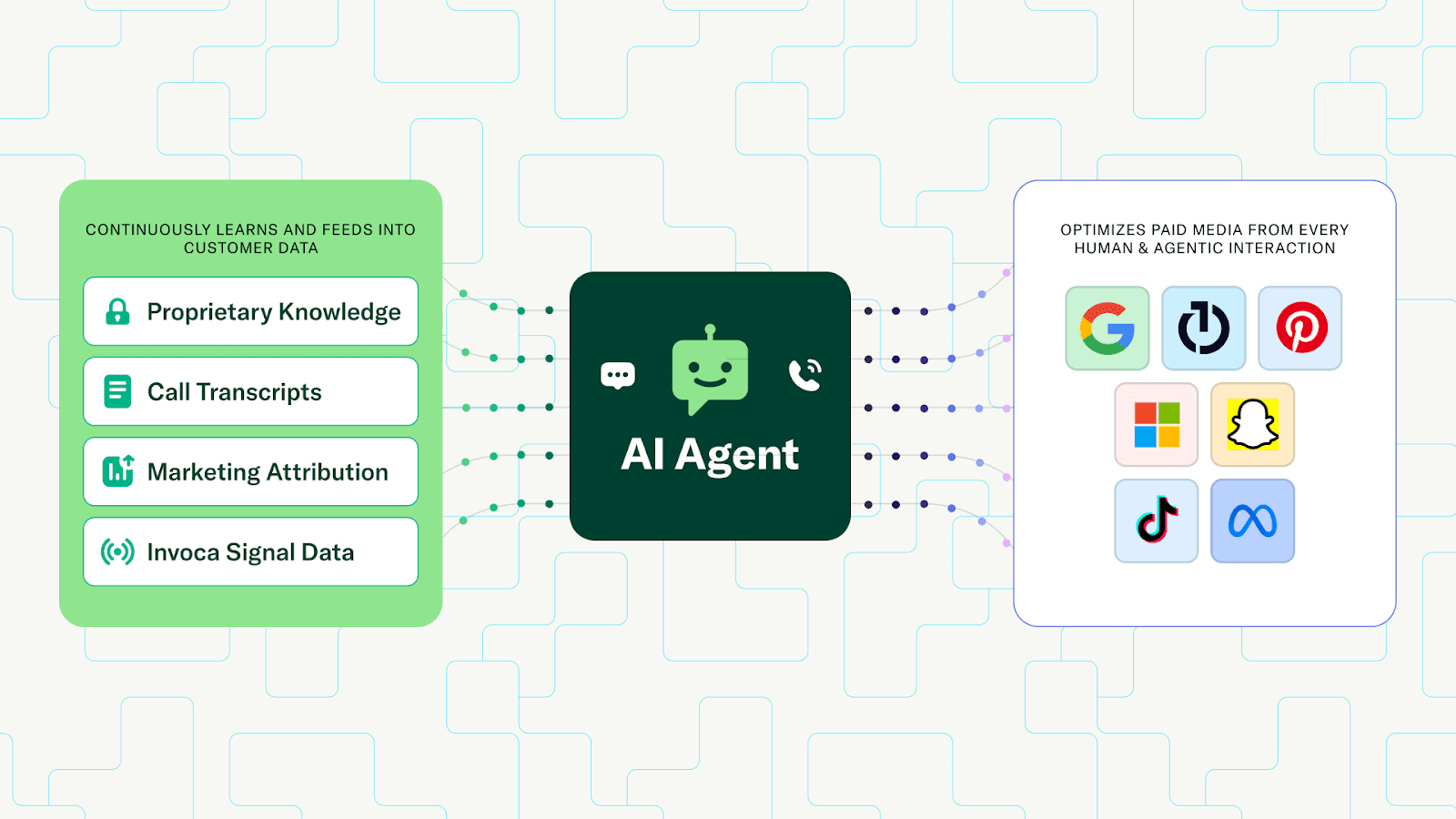
This automated layer also serves as a vital safety net for marketing ROI. When staffing shortages lead to missed calls, marketing budget is essentially wasted. By providing an immediate SMS response, the AI Messaging Agent "catches" the lead before they dial a competitor. This ensures that even on days when the office is understaffed, the practice remains open for business, maintaining high conversion rates and consistent revenue growth despite the challenging labor market.
Additional Reading
Want to learn more about how Invoca helps leading healthcare providers improve the patient experience? Check out these resources:
- 5 Mistakes that Are Harming Your Healthcare Appointment Conversion Rate
- Happier Patients and More Booked Appointments with Invoca for Healthcare
- How to Personalise the Patient Journey with Conversation Intelligence
Want to see our solution in action? Request your personalised demo today.
.svg)
.svg)